Unveiling the Nanomedicine Revolution Fueled by AI
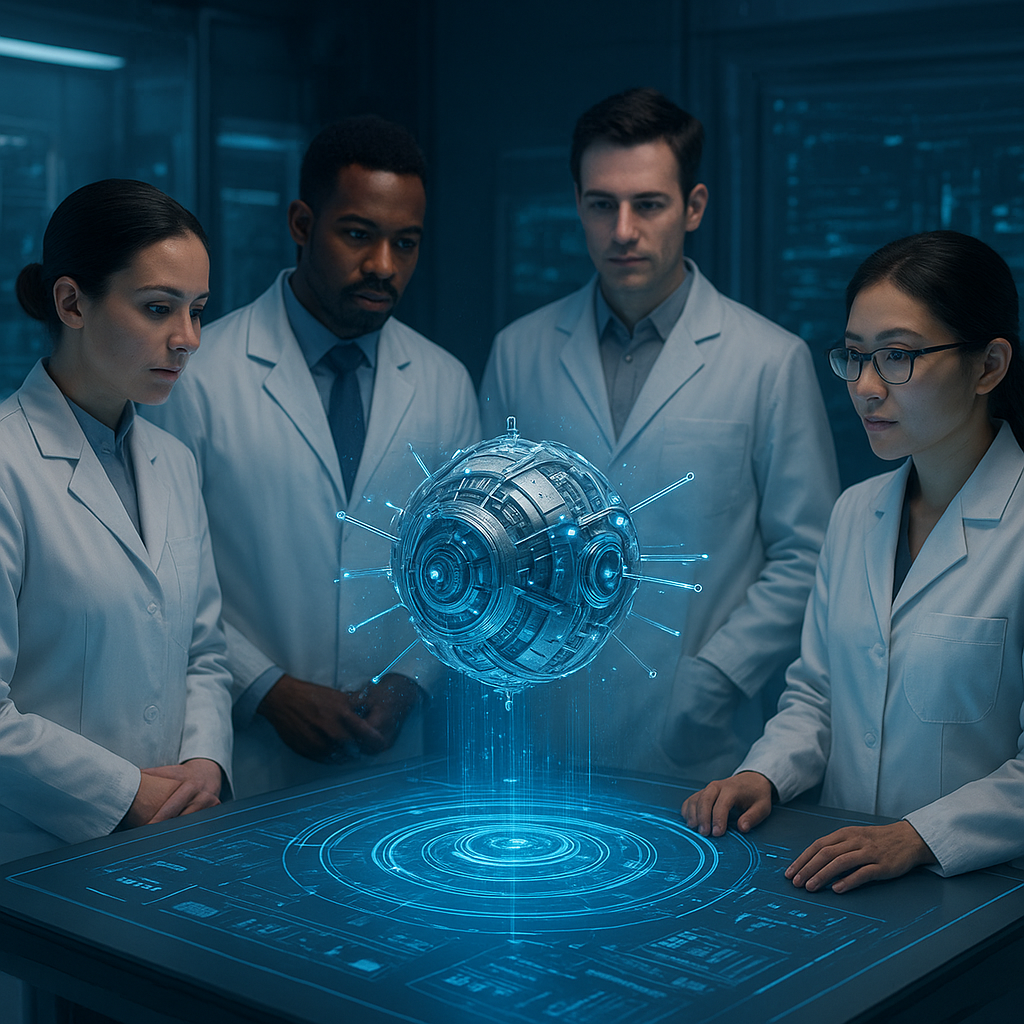
In a bustling lab at the Massachusetts Institute of Technology, a team of researchers recently achieved a milestone that encapsulates the promise of the 2020s: using machine learning algorithms to design nanoparticles capable of targeting aggressive cancer cells with unprecedented precision. This breakthrough is not merely a scientific curiosity; it signals a shift toward a new paradigm in healthcare where artificial intelligence (AI) and nanotechnology converge to redefine disease treatment at the molecular level.
As of 2026, the integration of AI and machine learning into nanomedicine is accelerating, driven by advances in computational power, improved algorithmic sophistication, and the explosive growth in biomedical data. The ability of AI to analyze vast datasets and predict nanoscale interactions is central to overcoming traditional challenges in drug delivery, diagnostics, and personalized therapies.
"Machine learning has transformed nanomedicine from an experimental field into a practical platform capable of tailoring treatments at the molecular scale," explains Dr. Alexandra Chen, a leading nanotechnologist at Stanford University.
This article explores how AI and machine learning are unlocking nanomedicine's full potential, the historical context that brought us here, current industry breakthroughs, expert insights, and what the future holds for this transformative intersection of technology and medicine.
The Genesis of AI-Driven Nanomedicine: A Historical Perspective
Nanomedicine, the medical application of nanotechnology, emerged in the early 2000s with the vision of manipulating matter at the nanoscale to diagnose, monitor, and treat diseases. However, early efforts were hindered by limited understanding of complex biological environments and a lack of precise control over nanoparticle behavior.
Simultaneously, artificial intelligence began its ascent, initially focused on rule-based expert systems and later evolving into machine learning techniques capable of digesting complex patterns in data. The synergy between these fields only became apparent around the mid-2010s, when the biomedical research community started harnessing AI to model biological systems and predict drug interactions.
Key milestones include the 2018 introduction of deep learning models to predict nanoparticle-cell interactions and the 2022 deployment of AI-driven platforms for rapid synthesis of nanomaterials with desired properties. These developments laid the groundwork for the sophisticated AI-nanomedicine tools now used in clinical research.
Understanding this evolution is crucial to appreciating how the current state-of-the-art systems emerged and why they are poised to disrupt traditional healthcare paradigms.
Core Analysis: How Machine Learning Enhances Nanomedicine Design and Application
At its core, nanomedicine deals with materials ranging from 1 to 100 nanometers, where quantum and surface phenomena dominate. Designing nanoparticles that efficiently navigate the human body, evade immune detection, and deliver therapeutic payloads precisely is enormously complex. Machine learning models excel at managing this complexity by identifying patterns and optimizing parameters in multidimensional spaces.
Several AI methodologies have been pivotal:
- Supervised learning: Used to predict nanoparticle toxicity based on chemical composition and structure, reducing experimental trial-and-error.
- Reinforcement learning: Applied to optimize drug release profiles by simulating interactions in dynamic biological environments.
- Generative adversarial networks (GANs): Employed to generate novel nanoparticle designs with enhanced targeting capabilities.
For example, a 2025 study at the University of Tokyo demonstrated that a deep learning model could predict the cellular uptake efficiency of lipid-based nanoparticles with 92% accuracy, significantly outperforming traditional computational chemistry methods.
Moreover, AI-enhanced molecular dynamics simulations now allow researchers to observe interactions at the nanoscale in silico, accelerating the discovery process. By integrating omics data, such as genomics and proteomics, with nanomaterial properties, AI facilitates the creation of personalized nanotherapeutics tailored to individual patient profiles.
"The convergence of AI and nanomedicine is enabling what we call ‘smart nanoparticles’—agents that can adapt their behavior based on real-time biological feedback," highlights Dr. Miguel Reyes, chief scientist at NanoMedix Technologies.
This intelligent design approach is revolutionizing how diseases like cancer, neurodegenerative disorders, and infectious diseases are treated.
2026 Developments: AI-Nanomedicine at the Frontier
2026 marks a watershed year for AI and nanomedicine integration, with multiple breakthroughs emerging from academia and industry. Notably, the FDA approved the first AI-designed nanotherapeutic for glioblastoma treatment—a nanoparticle engineered through machine learning to cross the blood-brain barrier and release chemotherapy agents precisely at tumor sites.
The commercialization of AI-powered nanomedicine platforms has surged, with startups like NanoSynapse and BioNanolytics raising hundreds of millions in venture capital. Their platforms utilize AI to rapidly accelerate nanoparticle synthesis, characterization, and functionalization, reducing development cycles from years to months.
Key trends defining the current landscape include:
- Integration of real-world patient data: AI models now incorporate electronic health records and wearable sensor data to dynamically adjust nanomedicine formulations.
- Hybrid AI models: Combining physics-based simulations with machine learning to improve predictive accuracy for nanoparticle behavior in vivo.
- Automated nanofabrication: Robotics and AI-driven manufacturing processes are enabling scalable, reproducible production of complex nanostructures.
Furthermore, collaborations between AI leaders and pharmaceutical giants have intensified. For example, AstraZeneca’s partnership with DeepNano AI has yielded a pipeline of AI-optimized nanocarriers for targeted RNA therapies.
TheOmniBuzz’s coverage on why AI is unlocking nanomedicine’s potential underscores these transformative developments, highlighting how AI’s predictive power is reshaping clinical outcomes.
Expert Perspectives: Industry Leaders on AI’s Impact in Nanomedicine
Industry experts emphasize that while AI has catalyzed remarkable advances, challenges remain. Data quality and interpretability of AI models are focal points for ongoing research. Dr. Sylvia Patel, CTO at NanoCure Inc., remarks,
"The promise of AI in nanomedicine hinges on transparent algorithms that clinicians can trust to make critical decisions."
Additionally, regulatory frameworks are evolving to accommodate AI-designed nanotherapeutics. Agencies like the FDA and EMA are collaborating with stakeholders to establish standards for validation and safety assessment, a process that will impact commercialization timelines.
From an investment standpoint, the fusion of AI and nanomedicine is one of the most promising sectors, attracting cross-disciplinary talent and resources. According to a 2026 report by MedTech Insights, global funding for AI-driven nanomedicine startups exceeded $2 billion in the first quarter alone.
These expert views resonate with a broader trend in healthcare technology, where AI complements human expertise rather than replacing it. TheOmniBuzz’s analysis in how machine learning is redefining intelligence elaborates on this synergy across industries, including medicine.
Looking Ahead: What to Watch in AI-Enabled Nanomedicine
The horizon for AI in nanomedicine is expansive and ripe with potential. Key areas to monitor in the next five years include:
- Adaptive nanomedicine: Development of nanoparticles that respond in real-time to changing biological environments, enhancing efficacy and reducing side effects.
- AI-powered diagnostics: Integration of nanosensors with machine learning for ultra-early disease detection at the point of care.
- Personalized nanotherapeutics: Leveraging patient-specific data to customize nanoparticle design, optimizing therapy outcomes.
- Ethical frameworks: Establishing guidelines for data privacy, algorithmic fairness, and equitable access to AI-driven nanomedicine.
"The future of healthcare lies in intelligent systems that harmonize molecular precision with computational insight," predicts Dr. Chen.
As AI algorithms become more transparent and datasets more robust, we can expect accelerated translation of nanomedicine from research labs to clinical practice, fundamentally changing how chronic and acute diseases are managed worldwide.
For those interested in the broader implications of AI’s evolving role, TheOmniBuzz’s feature on rethinking intelligence offers valuable context on AI’s transformative journey.
In sum, the marriage of machine learning and nanomedicine heralds a new era of precision healthcare, promising therapies that are not only more effective but also safer and tailored to individual needs. The coming years will be pivotal in translating this promise into tangible health benefits for millions.