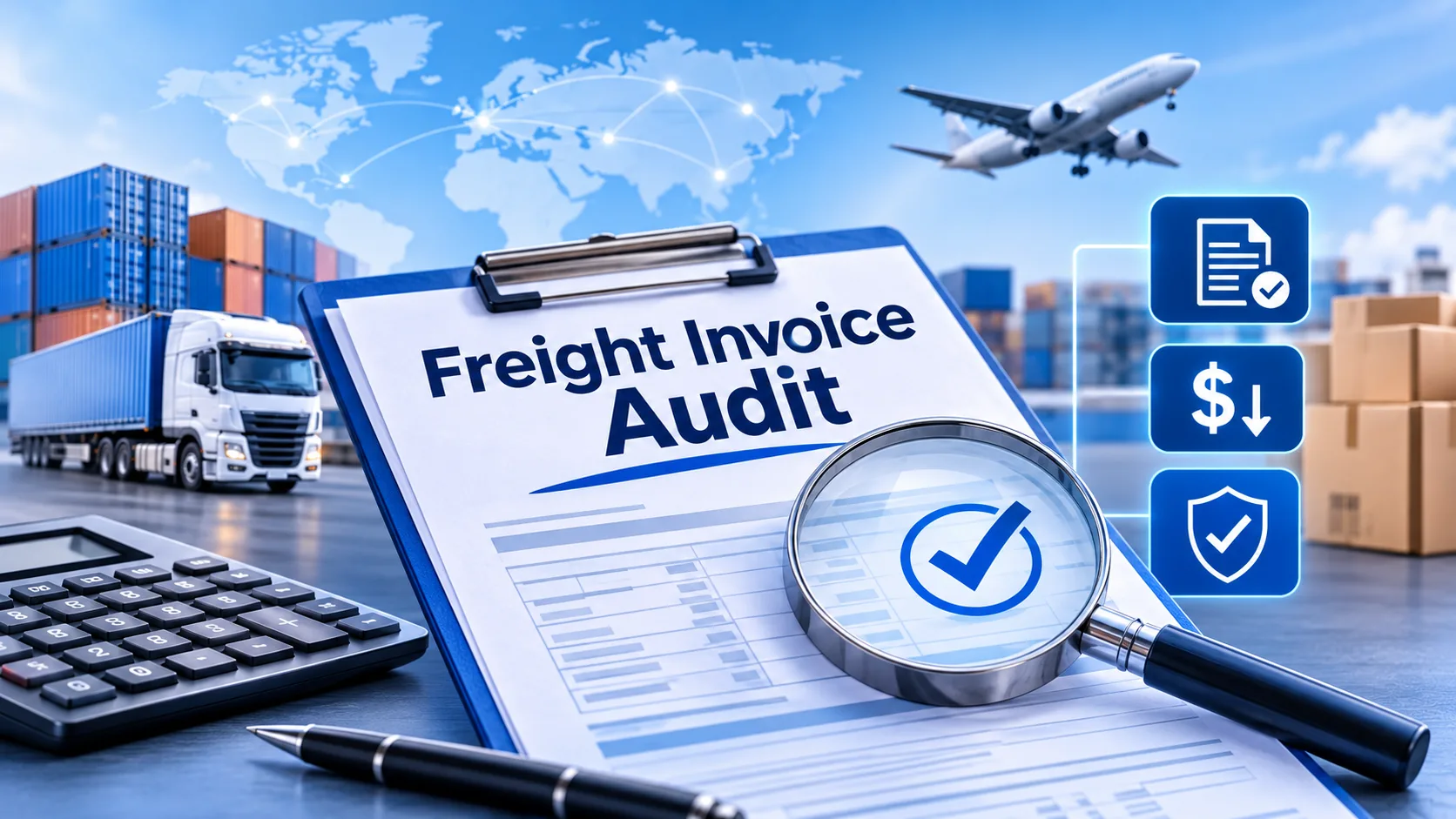
A freight invoice audit is the review of carrier bills against contracted rates, shipment records, and service terms to make sure a shipper pays only what is truly owed. AI has made this review faster, broader, and more accurate than manual checking ever allowed. Instead of sampling a few invoices, it reads every line of every bill and flags mismatches the moment they appear.
Why Does Manual Freight Bill Auditing Fall Short?
Traditional freight bill auditing relies on people comparing invoices with rate sheets, bills of lading, and delivery records. Auditors tend to focus on large invoices and skip smaller ones, yet small overcharges repeated across thousands of shipments quietly drain budgets. Rate tables, accessorial rules, and fuel surcharge formulas change often, and reviewers working in spreadsheets inevitably miss patterns buried in the data.
How Does AI Improve the Freight Audit Process?
AI begins with data capture. Machine learning reads invoices in any format, whether electronic files, scanned documents, or portal downloads, and converts them into clean, structured records. Automated matching then compares each charge with the contract, the shipment record, and proof of delivery, flagging anything that does not line up with a reason attached.
The real shift is anomaly detection. Models learn what a normal charge looks like for each lane, carrier, and service level, and they raise any bill that drifts from that baseline even when the amount looks plausible. Over time they also predict which carriers tend to make which kinds of errors, so audit effort goes where recovery potential is highest.
Manual Versus AI-Driven Auditing
Manual auditing is sample based and slow, catching mostly obvious rate mismatches, with evidence assembled by hand after the fact. AI covers every invoice and line item continuously, finds duplicates, misclassified weight, and invalid accessorials, and packages evidence automatically with each claim. It also gives ongoing visibility into carrier behavior and lane costs instead of relying on periodic reports.
What Does This Look Like in Practice?
Consider a mid-sized distributor that approved invoices for years because the totals looked reasonable. Once AI was applied, the system found a fuel surcharge calculated on a base rate that ignored a negotiated discount. It caught the same shipment billed on separate invoices with slightly different reference numbers, and a detention charge on a delivery whose gate timestamps showed quick unloading. None of these would have stood out in a spot check. Each was recovered with documented evidence, and the findings strengthened the distributor's next carrier negotiation.
What Belongs in a Modern Freight Audit Checklist?
A sound freight audit checklist confirms that the billed rate matches the active contract, weight and dimensions agree with shipment records, accessorials were authorized and actually incurred, and fuel surcharges follow the agreed formula. Duplicate billing checks and proof of delivery validation complete it. AI automates each step, but the checklist defines the rules the technology enforces, so it should be reviewed whenever contracts or operations change.
What Should You Look for in an AI Audit Partner?
Choose a partner that combines automation with experienced freight analysts who understand carrier contracts and can interpret exceptions. Ask how disputes are handled, how transparent the reporting is, and whether insights feed back into procurement and planning. The best partners treat auditing as continuous improvement rather than a one-time cleanup, using findings to refine carrier selection, routing, and contract terms.
Frequently Asked Questions
What is a freight invoice audit?
It compares carrier invoices with contracted rates, shipment details, and delivery records to confirm that every charge is accurate and authorized before payment is made.
Can AI replace human auditors?
AI handles capture, matching, and anomaly detection at a scale people cannot match, but experts remain essential for complex exceptions, carrier disputes, and contract interpretation.
How often should the audit process be reviewed?
Review it whenever contracts are renegotiated, carriers are added, or shipping patterns change, so the rules inside the audit system stay aligned with real operations.
Take the Next Step Toward Smarter Freight Spend
AI has turned the freight audit process from a reactive chore into a strategic advantage, giving shippers control over costs they once accepted as unavoidable. nVision Global helps businesses put this into practice with intelligent freight invoice audit solutions that combine advanced automation with expert human oversight. Ready to uncover hidden overcharges, strengthen carrier accountability, and gain clear visibility into your freight spend? Connect with nVision Global today and request your freight audit assessment.