Customer engagement plays an important role in business growth, customer satisfaction, and long-term relationships. Today's customers expect quick responses, personalized experiences, and convenient communication across digital platforms.
Artificial intelligence is helping businesses meet these expectations through intelligent automation. AI agents can understand customer requests, retrieve information, and complete tasks with limited human involvement.
From personalized recommendations to proactive customer support, AI agents are changing how businesses communicate with their audiences and deliver meaningful digital experiences.
What Are AI Agents in Customer Engagement?
AI agents are intelligent software systems that use artificial intelligence to understand instructions, process information, and perform specific actions.
Unlike traditional chatbots that primarily respond to predefined questions, AI agents can interact with business applications, access authorized customer information, and manage multi-step workflows.
For example, an AI customer service agent can check order details, provide delivery updates, and initiate return requests.
These capabilities help businesses create faster, more convenient, and personalized customer interactions.
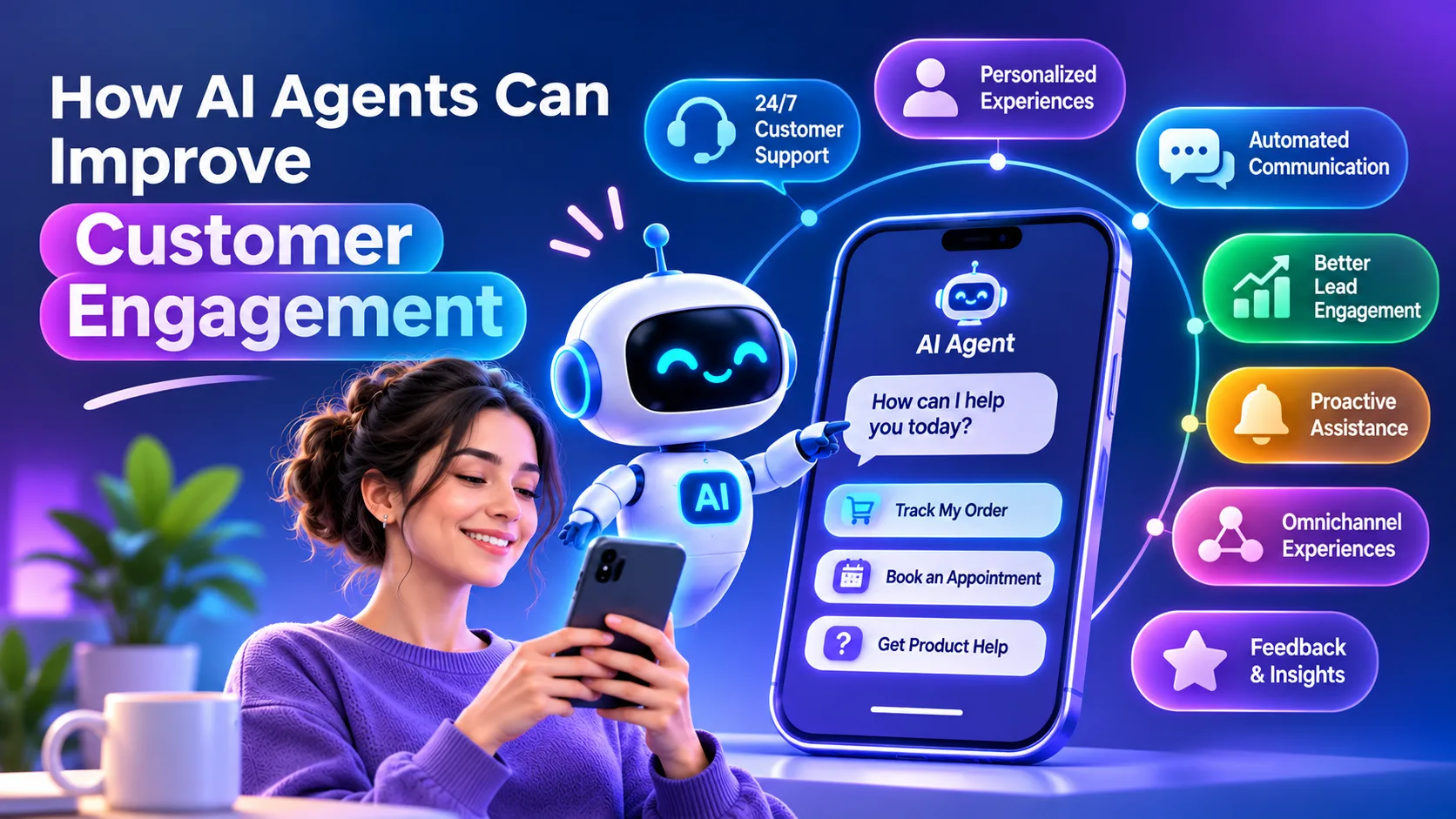
Top 7 Ways AI Agents Improve Customer Engagement
1. Providing 24/7 Customer Support
Customers often need assistance outside regular business hours. AI agents can provide continuous support by answering common questions and helping users complete routine tasks.
For example, an eCommerce business can use an AI agent to provide order updates, explain return policies, and answer product-related questions.
Benefits: Faster responses, improved service availability, and reduced customer waiting times.
Complex inquiries should still be transferred to human support representatives.
2. Delivering Personalized Customer Experiences
Personalization helps businesses provide relevant recommendations based on customer preferences and previous interactions.
AI agents can analyze authorized customer information to suggest products, services, or content that matches individual interests.
For example, a shopping application might recommend products based on browsing history and previous purchases.
Businesses can Hire AI ML Developers to build intelligent recommendation systems that support personalized customer experiences.
Benefits: Improved product discovery, stronger engagement, and more relevant interactions.
3. Automating Customer Communication
Businesses frequently manage repetitive communication tasks, including appointment reminders, order confirmations, and service updates.
AI agents can automate these activities by connecting with CRM platforms, scheduling applications, and communication tools.
For example, a healthcare appointment assistant could send reminders and help patients reschedule visits.
Organizations can Hire AI Agent Developers to build customized communication agents that integrate with existing business systems.
Benefits: Reduced administrative work, timely updates, and improved communication consistency.
4. Improving Lead Engagement and Follow-Ups
Responding quickly to potential customers can improve the overall sales experience.
AI agents can organize incoming inquiries, identify customer requirements, and prepare relevant follow-up messages.
For example, an AI sales assistant might collect information about a customer's service requirements and schedule a consultation.
These capabilities help sales teams focus on meaningful conversations instead of repetitive administrative tasks.
Benefits: Faster lead responses, improved organization, and better sales coordination.
5. Offering Proactive Customer Assistance
Traditional customer support usually begins when users report a problem.
AI agents can provide proactive assistance by identifying situations where customers may need additional information.
For example, a delivery application could detect shipment delays and automatically notify affected customers.
Similarly, a subscription service might remind users about upcoming renewals.
Benefits: Improved transparency, timely assistance, and fewer unnecessary support inquiries.
6. Creating Omnichannel Customer Experiences
Customers interact with businesses through websites, mobile applications, email, and messaging platforms.
AI agents can help maintain consistent communication across these channels when integrated with centralized customer management systems.
For example, a customer could begin an inquiry through a website and continue the conversation through a mobile application.
Benefits: Smoother interactions, improved communication continuity, and greater customer convenience.
7. Collecting and Analyzing Customer Feedback
Understanding customer feedback helps businesses improve products and services.
AI agents can collect survey responses, categorize customer concerns, and summarize recurring issues.
For example, an AI agent might analyze support conversations to identify frequently reported application problems.
These insights can help businesses prioritize improvements and respond to customer expectations.
Benefits: Faster feedback analysis, improved service quality, and better understanding of customer needs.
Challenges of Using AI Agents for Customer Engagement
Despite their advantages, AI agents introduce several implementation challenges.
- Data privacy: Businesses must protect customer information and follow applicable regulations.
- Response accuracy: Incorrect information can negatively affect customer trust.
- Integration complexity: Agents require secure connections with existing applications.
- Customer preferences: Some users prefer speaking directly with human representatives.
- Security risks: AI systems must prevent unauthorized access and actions.
Addressing these concerns is essential for building reliable customer engagement solutions.
Best Practices for Implementing AI Agents
Businesses should begin by identifying customer interactions that can benefit from automation.
Development teams should establish clear agent responsibilities, secure integrations, and measurable performance goals.
Regular testing helps evaluate response quality, task completion, and customer satisfaction.
Organizations should also provide easy access to human support when automated assistance cannot resolve an issue.
Conclusion
AI agents are transforming customer engagement through personalized assistance, automated communication, proactive support, and intelligent feedback analysis.
By combining AI automation with secure technology and human oversight, businesses can create more responsive customer experiences.
Organizations that prioritize customer needs and responsible AI implementation can strengthen engagement while improving operational efficiency.