Artificial Intelligence is no longer limited to software developers and technology specialists. Today, professionals from marketing, finance, human resources, education, sales, administration, and other non-technical fields can use AI tools to improve productivity and simplify daily activities.
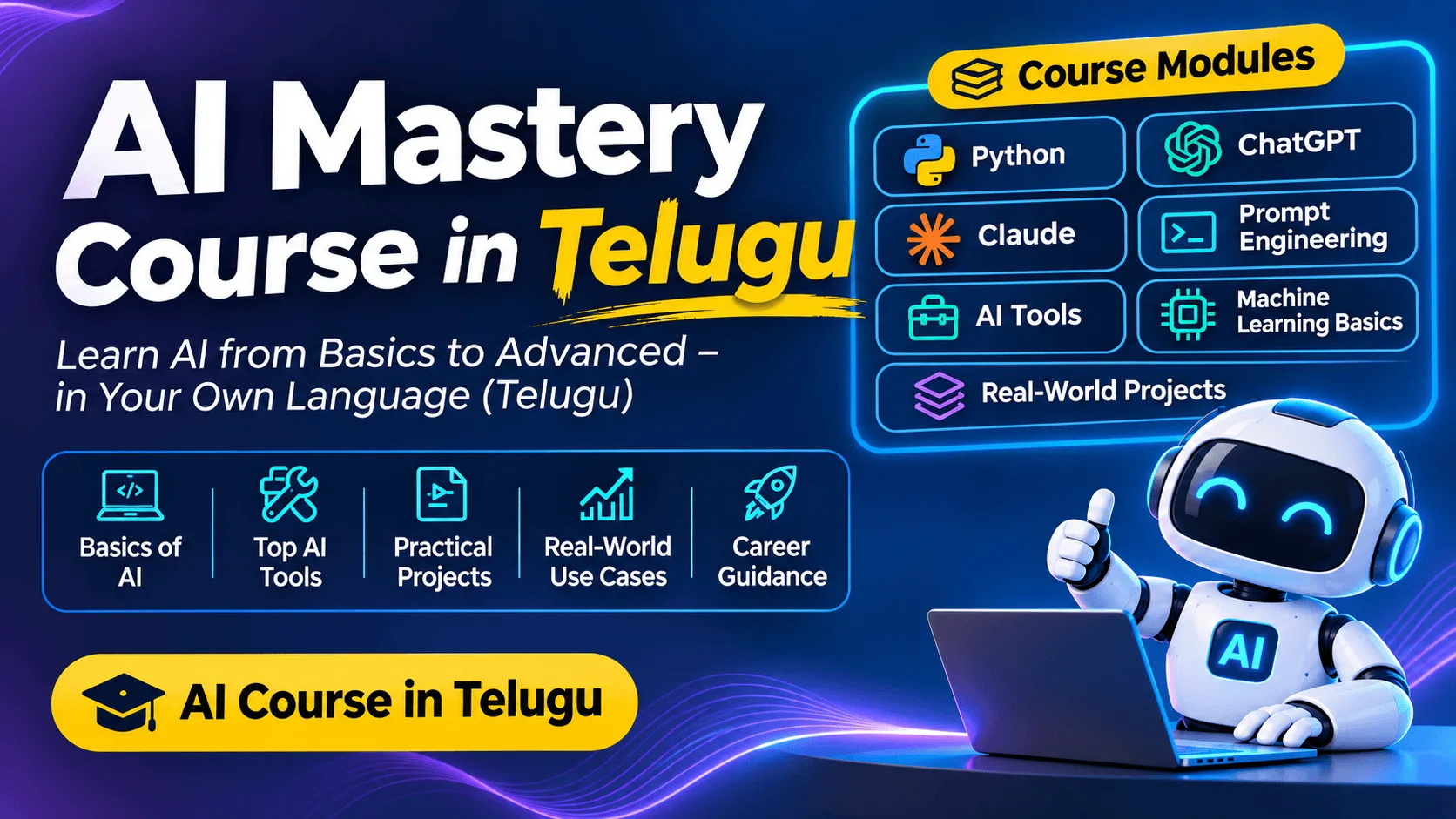
Many people assume that learning AI requires programming knowledge or a technical background. However, several AI applications are designed for everyday users. An AI Mastery Course in Telugu can help non-IT professionals understand these technologies and explore practical ways to use them in their respective industries.
Can Non-IT Professionals Learn Artificial Intelligence?
Yes. Non-IT professionals can learn AI without becoming software developers. They can begin with basic concepts and explore user-friendly tools that support writing, research, communication, data organization, and workflow automation.
For example, an HR executive can use AI to prepare interview questions, a teacher can create learning materials, and a marketing professional can generate content ideas.
The most important starting point is understanding how AI tools work and identifying tasks where they can provide useful assistance.
How AI Helps Different Non-IT Professionals
AI has applications across several business functions. Here are some practical examples.
1. AI for Digital Marketing Professionals
Digital marketers can use AI tools to support content planning, campaign research, and creative development.
Common applications include:
- Generating blog and social media ideas.
- Preparing content calendars.
- Drafting email marketing campaigns.
- Creating advertising copy variations.
- Summarizing marketing reports.
- Brainstorming SEO content topics.
AI can speed up content preparation, but marketers should review content for accuracy, originality, search intent, and brand relevance.
2. AI for HR Professionals
Human resource teams manage recruitment, employee communication, onboarding, and training activities. AI tools can assist with several administrative tasks.
Examples include:
- Drafting job descriptions.
- Preparing interview questions.
- Creating onboarding checklists.
- Writing employee communication templates.
- Organizing training materials.
- Summarizing feedback.
HR professionals must use human judgment when evaluating candidates and handling confidential employee information.
3. AI for Finance and Accounting Professionals
Finance teams work with reports, spreadsheets, invoices, and financial information. AI-powered tools can help organize information and explain complex concepts.
Possible applications include:
- Summarizing financial documents.
- Explaining spreadsheet formulas.
- Preparing report outlines.
- Organizing routine data.
- Identifying questions for financial analysis.
AI-generated financial information should be checked carefully. It should not replace professional accounting judgment or regulated financial advice.
4. AI for Teachers and Education Professionals
Teachers and education professionals can use AI to prepare learning materials and support classroom activities.
AI applications include:
- Creating lesson plan drafts.
- Preparing quizzes and practice questions.
- Simplifying difficult topics.
- Generating presentation outlines.
- Developing student learning activities.
- Preparing revision notes.
Educators should review AI-generated materials to ensure they are accurate, appropriate, and suitable for their students.
5. AI for Sales and Business Professionals
Sales and business teams can use AI to improve communication and organize daily work.
For example, AI tools can help draft customer emails, prepare presentation outlines, summarize meeting notes, and generate product descriptions. These applications can reduce repetitive writing tasks and support better planning.
Important AI Tools for Non-IT Professionals
Beginners can explore several user-friendly AI applications.
AI ToolCommon UseChatGPTWriting, research, and brainstormingGoogle GeminiInformation exploration and content assistanceMicrosoft CopilotWorkplace productivity and document assistanceCanva AIDesign and creative contentPerplexityResearch and information discoveryNotion AINotes, summaries, and workspace productivityThe availability of features depends on the tool, subscription, and account settings.
How to Start Learning AI Without a Technical Background
Non-IT professionals can follow a simple learning roadmap:
- Understand AI fundamentals: Learn what AI, Machine Learning, and Generative AI mean.
- Explore AI tools: Practice using ChatGPT, Gemini, and other productivity applications.
- Learn prompt engineering: Write clear instructions to generate useful responses.
- Apply AI to your profession: Identify repetitive tasks that AI can support.
- Complete practical projects: Create a report, content calendar, presentation, or workflow using AI assistance.
- Verify AI outputs: Check facts, calculations, and recommendations before using them professionally.
An AI Mastery Course in Telugu can help non-IT learners follow these steps through accessible explanations and practical exercises.
Career Benefits of AI Skills for Non-IT Professionals
AI knowledge can strengthen existing professional skills and help employees adapt to changing workplace requirements. Professionals may become more efficient in content creation, communication, research, reporting, and business operations.
However, AI skills should complement domain knowledge rather than replace it. Communication, critical thinking, decision-making, and subject expertise remain essential for professional growth.
Frequently Asked Questions
1. Can non-IT students learn AI?
Yes. Non-IT students can begin with AI fundamentals and practical tools without needing a programming background.
2. Is coding compulsory for using AI tools?
No. Many AI applications support everyday tasks through simple text instructions and user-friendly interfaces.
3. Which AI tools are useful for office employees?
ChatGPT, Microsoft Copilot, Google Gemini, and other productivity tools can assist with writing, research, summaries, and routine office activities.
4. Can AI skills improve career opportunities?
AI skills can strengthen professional capabilities and help employees adapt to technology-driven workplaces. Career opportunities also depend on experience, domain knowledge, and practical skills.
Conclusion
Artificial Intelligence offers practical benefits to professionals across technical and non-technical industries. From digital marketing and HR to finance, education, and sales, AI tools can support everyday activities and improve productivity. An AI Mastery Course in Telugu can help non-IT professionals understand AI fundamentals, practice useful tools, and apply their learning to real workplace situations.