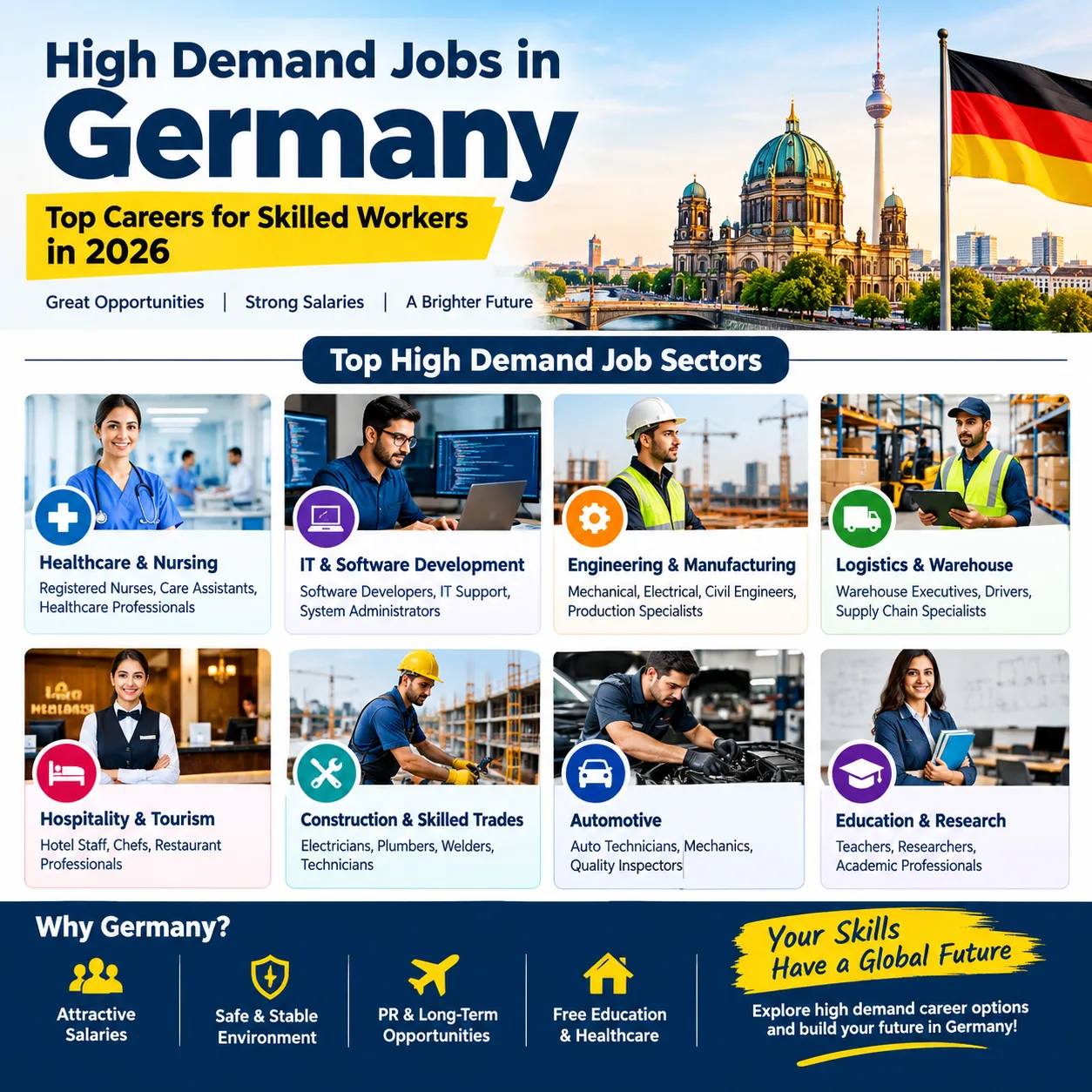
Germany is one of Europe's largest economies and continues to offer career opportunities for qualified professionals and skilled workers from around the world. With demand for workers across healthcare, IT, engineering, construction, logistics, and other sectors, Germany has become an attractive destination for international job seekers.
For professionals planning to work abroad, understanding the high demand jobs in Germany can help identify suitable career opportunities and understand which skills are currently valuable in the German labour market.
In this guide, we explore some of the most in-demand jobs in Germany, the sectors facing worker shortages, salary considerations, qualifications, and important information for foreigners planning to work in Germany.
What Are High Demand Jobs in Germany?
High demand jobs are occupations where employers regularly need qualified workers and may face difficulty finding enough candidates locally.
Germany's ageing population, technological development, industrial strength, and need for skilled workers have contributed to demand across several sectors.
Some of the major areas with employment opportunities include:
- Healthcare and nursing
- Information technology
- Engineering
- Construction
- Skilled trades
- Logistics and transportation
- Manufacturing
- Electrical and technical occupations
- Hospitality
- Education and childcare
The exact demand can vary depending on the region, qualification, experience, German language ability, and changes in the labour market.
Top High Demand Jobs in Germany
1. Nurses and Healthcare Professionals
Healthcare is one of the major sectors where Germany needs qualified workers. Hospitals, care facilities, nursing homes, and other healthcare organisations require trained professionals.
Popular healthcare occupations include:
- Registered Nurses
- Staff Nurses
- Nursing Specialists
- Elderly Care Workers
- Healthcare Assistants
- Medical Technicians
- Physiotherapists
- Doctors and other healthcare professionals
International healthcare professionals generally need to meet Germany's professional recognition and licensing requirements before working in regulated healthcare occupations.
German language skills can also be particularly important because healthcare professionals communicate directly with patients and medical teams.
2. IT and Software Professionals
Germany has a strong technology sector and continues to require professionals with digital and technical skills.
Some in-demand IT roles include:
- Software Developers
- Web Developers
- Full-Stack Developers
- Cloud Engineers
- Data Analysts
- Data Scientists
- IT Consultants
- Cybersecurity Specialists
- DevOps Engineers
- IT Project Managers
Professionals with experience in cloud computing, artificial intelligence, cybersecurity, software development, and data-related technologies may find opportunities across different industries.
3. Engineers
Germany is globally known for its automotive, manufacturing, engineering, and industrial sectors. This creates demand for engineers with relevant technical qualifications and experience.
Potential engineering careers include:
- Mechanical Engineers
- Electrical Engineers
- Civil Engineers
- Automotive Engineers
- Industrial Engineers
- Electronics Engineers
- Mechatronics Engineers
- Automation Engineers
Engineering professionals may work in manufacturing companies, automotive businesses, construction firms, energy companies, and technology organisations.
4. Skilled Construction Workers
Germany's construction and infrastructure sectors require workers with practical technical skills.
Depending on qualifications and experience, opportunities may be available for:
- Electricians
- Plumbers
- Welders
- HVAC Technicians
- Bricklayers
- Carpenters
- Construction Workers
- Construction Technicians
- Heavy Equipment Operators
For many skilled trade occupations, formal vocational training, professional experience, and recognition of qualifications can be important.
5. Electricians and Electrical Technicians
Electricians and electrical specialists play an important role in residential construction, commercial buildings, industrial facilities, manufacturing, and infrastructure.
Professionals with experience in electrical installation, industrial electrical systems, automation, maintenance, and related technical areas may find opportunities in Germany.
Because some electrical occupations are regulated, applicants should check the specific qualification and recognition requirements before applying.
6. Logistics and Warehouse Professionals
Germany is an important European logistics and manufacturing hub. Its large network of warehouses, distribution centres, transport companies, and industrial businesses creates employment opportunities in logistics.
Common roles include:
- Warehouse Workers
- Warehouse Supervisors
- Logistics Coordinators
- Inventory Controllers
- Supply Chain Specialists
- Forklift Operators
- Delivery Drivers
- Truck Drivers
- Logistics Managers
Experience with warehouse management systems, inventory management, transportation, and supply-chain operations can be valuable.
7. Automotive Professionals
Germany has a globally recognised automotive industry and a large network of manufacturers and suppliers.
Job opportunities may exist for professionals such as:
- Automotive Engineers
- Vehicle Technicians
- Automotive Mechanics
- Mechatronics Technicians
- Production Specialists
- Quality Control Specialists
- Automotive Software Developers
The industry is also changing rapidly due to electric vehicles, automation, conn