The healthcare industry is constantly evolving, and technology is playing a major role in improving how patients connect with medical services. One of the most important innovations changing healthcare communication is Healthcare Calling AI. This advanced technology uses artificial intelligence to manage phone-based interactions, support patients, and help healthcare providers deliver faster and more efficient services.
Traditional healthcare communication often depends on call centers and manual support teams. While these systems are helpful, they can sometimes lead to long waiting times, missed calls, and delays in patient assistance. Healthcare Calling AI provides a smarter solution by using AI-powered voice assistants that can understand patient needs and provide instant support.
From appointment scheduling to patient reminders, Healthcare Calling AI is becoming an essential tool for modern healthcare organizations.
What Is Healthcare Calling AI?
Healthcare Calling AI is an artificial intelligence-based communication system designed to handle healthcare-related phone conversations. It allows patients to interact with AI assistants through voice calls and receive quick responses without always needing human assistance.
These AI-powered systems use technologies like natural language processing, speech recognition, and machine learning to understand conversations. Instead of following only pre-recorded instructions, modern AI calling assistants can respond naturally and guide patients based on their requests.
For example, a patient can call a healthcare provider and ask about appointment availability. The AI assistant can understand the request, check available schedules, and help complete the booking process.
This creates a smoother experience for patients while reducing pressure on healthcare staff.
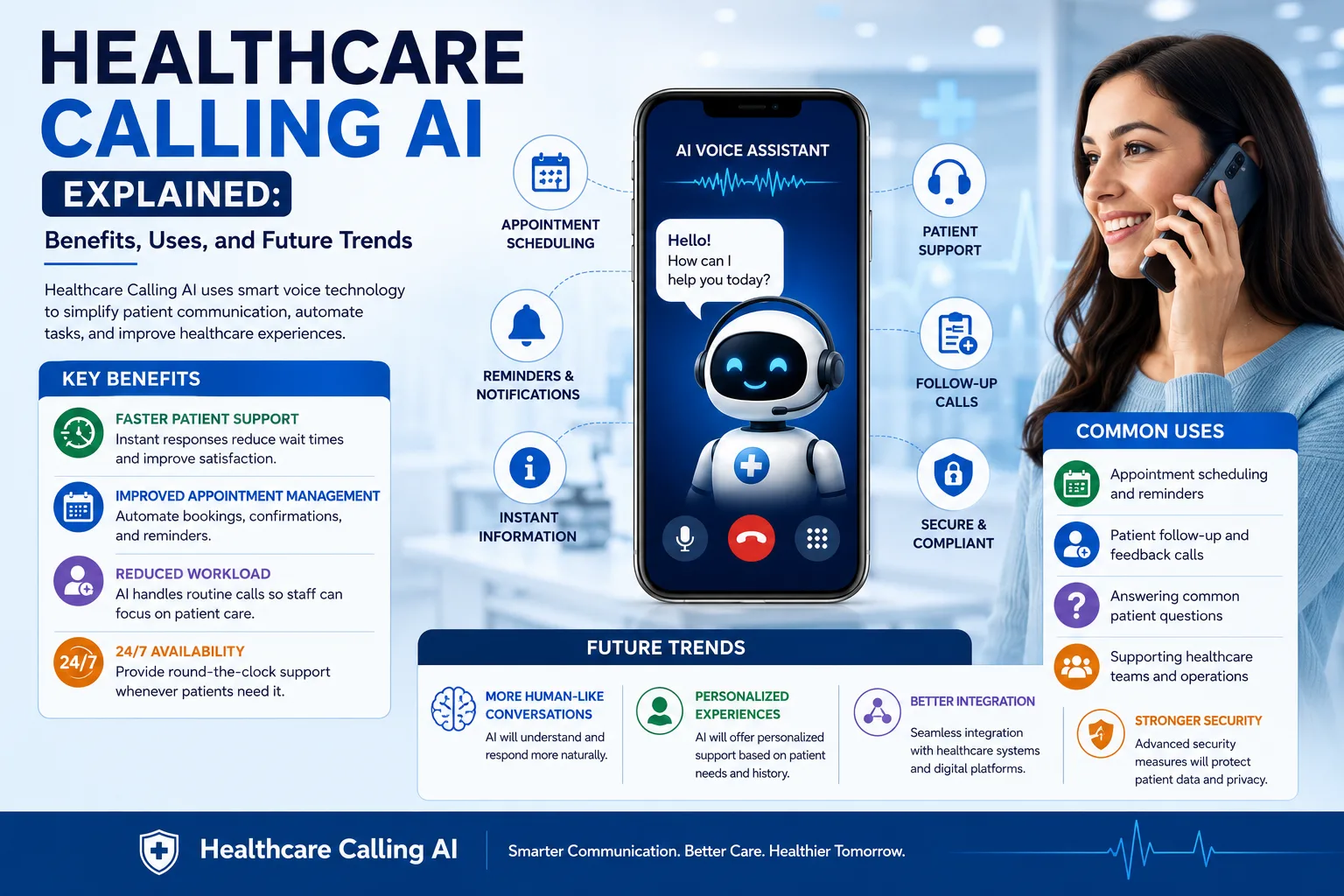
Key Benefits of Healthcare Calling AI
1. Faster Patient Support
One of the biggest benefits of Healthcare Calling AI is faster communication. Patients no longer need to wait for long periods to speak with a representative for simple questions.
AI calling assistants can provide instant responses for common needs such as:
- Appointment details
- Clinic information
- Healthcare service questions
- Follow-up reminders
- General guidance
This improves patient satisfaction and helps healthcare providers offer better support.
2. Improved Appointment Management
Managing appointments can be challenging for clinics and hospitals. Missed appointments, scheduling conflicts, and constant phone calls can affect productivity.
Healthcare Calling AI helps simplify appointment management by:
- Booking appointments automatically
- Confirming patient visits
- Sending reminders
- Helping patients reschedule
By automating these tasks, healthcare teams can spend more time focusing on patient care.
3. Reducing Administrative Workload
Healthcare employees often handle hundreds of repetitive calls every day. These routine tasks take valuable time away from more important responsibilities.
With Healthcare Calling AI, many repetitive conversations can be managed automatically. AI assistants can answer common questions and collect basic information before connecting patients with healthcare professionals when needed.
This improves workflow and allows staff to work more efficiently.
4. 24/7 Healthcare Communication
Patients may need information outside regular working hours. Traditional support systems often have limited availability, but AI calling solutions can provide assistance anytime.
Healthcare Calling AI enables 24/7 communication by helping patients access basic healthcare support whenever they need it.
This is especially useful for:
- Appointment inquiries
- Service information
- Reminder notifications
- Basic patient support
Common Uses of Healthcare Calling AI
Appointment Scheduling and Reminders
One of the most common uses of Healthcare Calling AI is appointment automation. AI assistants can contact patients, confirm visits, and help manage schedules.
This reduces missed appointments and improves healthcare organization.
Patient Follow-Up Calls
After a medical visit, follow-up communication is important. Healthcare Calling AI can help healthcare providers stay connected with patients by making automated follow-up calls.
These calls may include:
- Checking patient satisfaction
- Providing reminders
- Collecting feedback
- Sharing important instructions
Answering Patient Questions
Many healthcare calls involve simple questions that do not require direct interaction with medical staff.
AI calling assistants can help answer questions related to:
- Healthcare services
- Office timings
- Appointment processes
- General information
This allows medical teams to focus on more complex patient needs.
Supporting Healthcare Teams
Healthcare Calling AI is not designed to replace healthcare workers. Instead, it works as a support tool that helps doctors, nurses, and administrative teams manage communication more effectively.
AI can handle routine tasks while professionals focus on providing quality care.
Future Trends of Healthcare Calling AI
The future of Healthcare Calling AI looks promising as artificial intelligence continues to improve. Future systems are expected to become more intelligent, accurate, and personalized.
Some upcoming trends include:
More Human-Like Conversations
AI technology is improving rapidly, allowing voice assistants to understand conversations better. Future Healthcare Calling AI systems may provide more natural and comfortable interactions.
Personalized Patient Experiences
AI will continue learning from patient interactions to provide more personalized support. Future AI calling solutions may recognize patient preferences and offer customized communication.
Better Integration With Healthcare Systems
Future Healthcare Calling AI platforms may connect more deeply with healthcare software, electronic records, and digital health tools.
This can help create smoother communication between patients, healthcare providers, and technology systems.
Increased Focus on Security
Since healthcare involves sensitive information, future AI calling systems will continue improving privacy and security features.
Protecting patient information will remain a major priority as healthcare organizations adopt AI solutions.
Challenges of Healthcare Calling AI
Although Healthcare Calling AI offers many benefits, there are still challenges to consider.
Privacy and data protection are important because healthcare conversations may include sensitive information. AI systems must be designed carefully to maintain patient trust.
Another challenge is ensuring that AI provides accurate information. For complex medical concerns, human healthcare professionals remain necessary.
The best approach is combining AI efficiency with human expertise.
Conclusion
Healthcare Calling AI is transforming the way patients and healthcare providers communicate. By offering faster support, improving appointment management, reducing workload, and enabling 24/7 assistance, AI-powered calling solutions are making healthcare services more accessible and efficient.
As technology continues to advance, Healthcare Calling AI will become an even more valuable part of the healthcare industry. It represents a future where communication becomes smarter, patient experiences improve, and healthcare teams can focus more on delivering quality care.