
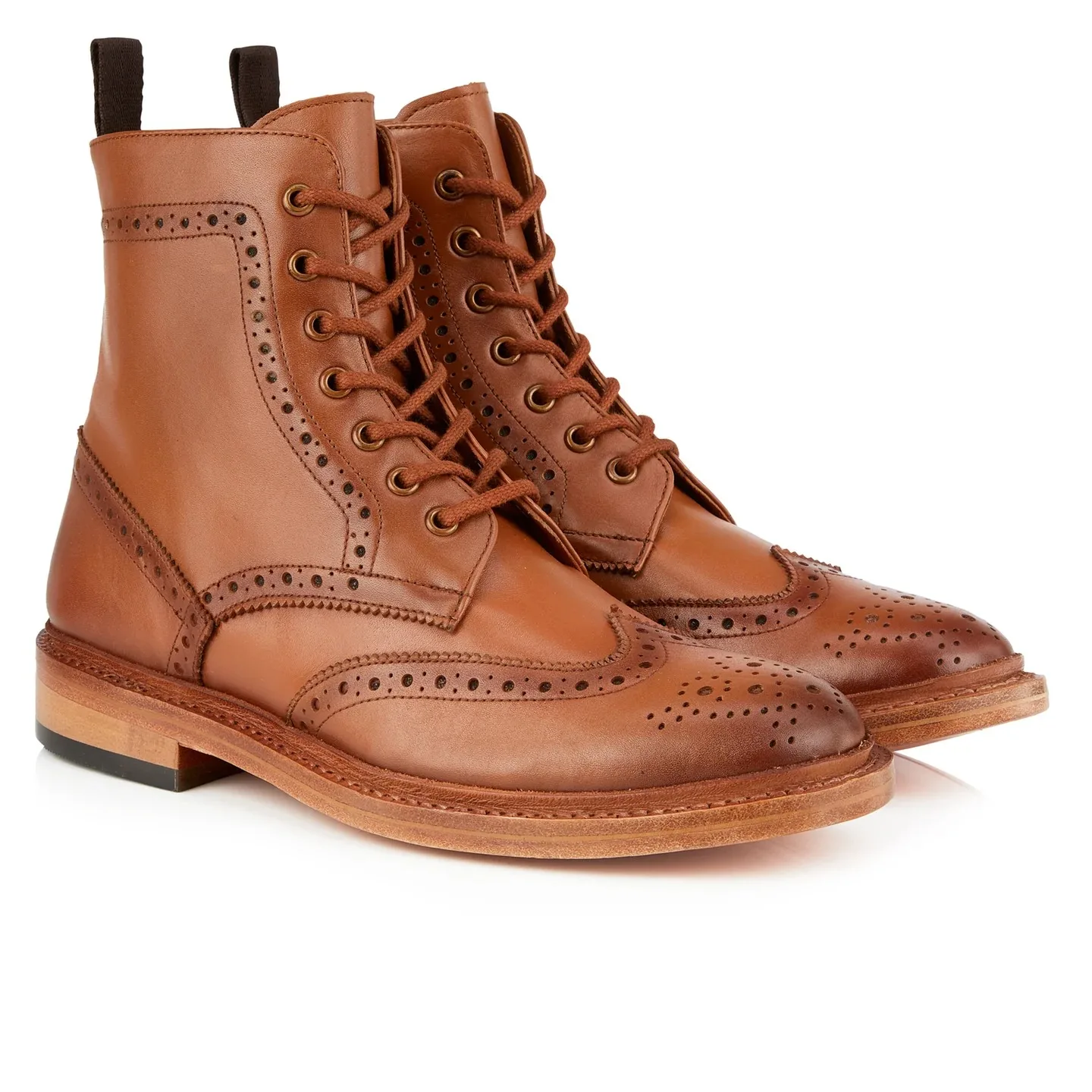
There is something satisfying about a well-made pair of boots.
They feel substantial without being cumbersome, develop character with wear and, with the right construction, can often be repaired rather than simply thrown away when the sole eventually wears down.
That is a big part of the continuing appeal of Goodyear welt boots.
The Goodyear welt is a traditional method of attaching a shoe's upper, insole and outsole using a separate strip of material known as the welt. It has been used for generations and remains particularly valued by people who prioritise durability, repairability and classic footwear construction.
But the appeal isn't purely technical. A well-made welted boot also has a particular visual character. The stitching around the sole creates a sense of craftsmanship, while quality leather tends to become more interesting as it ages.
For anyone considering this type of footwear, understanding the construction is useful before getting distracted by branding or style.
What Is Goodyear Welt Construction?
In simple terms, the welt is a strip that runs around the edge of the shoe.
The upper, insole and welt are joined together, and the outsole is then attached to the welt. This creates a construction that is both durable and relatively straightforward to repair compared with many glued alternatives.
One of the biggest practical advantages is resoling.
When the outsole eventually wears down, a properly constructed welted shoe can often be taken to a skilled cobbler and given a new sole. The rest of the shoe can remain in use, assuming the upper and other components are still in good condition.
That doesn't mean every Goodyear welted shoe will last for decades. Leather quality, workmanship, how frequently the footwear is worn and how it is maintained all matter.
Construction is only one part of the equation.
Goodyear Welt Boots: Why Construction Matters
Goodyear Welt Boots are particularly appealing when you want footwear capable of handling regular wear while retaining a traditional appearance.
The welt itself adds structure around the edge of the boot, while the stitched construction provides a distinctive visual detail.
For everyday wear, several things are worth considering.
A robust rubber sole may be useful for wet pavements and colder weather. A leather sole can create a more refined appearance and may suit formal environments better.
The upper leather also matters enormously.
A well-finished leather upper can soften and develop a patina over time, while poor-quality material may crack or deteriorate regardless of how good the construction method is.
This is why experienced buyers tend to assess the whole boot rather than treating "Goodyear welted" as a guarantee of excellence.
Why Durability Is Only Part of the Appeal
Longevity is often the first thing mentioned when discussing welted footwear, but there is more to it than simply making shoes last longer.
A well-constructed boot can become noticeably more comfortable with wear. The leather gradually adapts, the footbed can develop a more individual feel, and small variations in colour and texture give the footwear a sense of history.
That ageing process is one reason quality leather boots often become favourites.
They're not disposable.
A pair can accompany someone through years of work, travel, weekends and changing wardrobes, picking up subtle signs of use along the way.
There is also something appealing about repairing rather than replacing. A worn sole doesn't necessarily mean the end of the boot.
Choosing Men's Leather Brogue Boots
For a smarter, more traditional look, men's leather brogue boots offer an interesting middle ground.
Brogue detailing originated from practical decorative perforations but has long since become a recognised feature of classic footwear.
On a boot, the additional detailing adds visual interest without necessarily making the shoe feel overly formal.
Brown brogue boots work particularly well with:
- Dark denim
- Chinos
- Corduroy trousers
- Tweed jackets
- Wool tailoring
Black versions tend to look sharper, while darker brown and burgundy shades create a softer, more distinctive appearance.
The key is not to overcomplicate the rest of the outfit. Brogue boots already provide texture and detail, so simple clothing often lets them do their work.
The Character of Oxblood Men's Shoes
Some colours are chosen because they're safe. Others are chosen because they have personality.
Oxblood men's shoes fall into the second category.
Oxblood sits somewhere between deep red, burgundy and dark brown, depending on the leather and finish. It can be surprisingly versatile while offering more character than conventional black or brown.
Oxblood footwear works particularly well with navy, charcoal, grey and earthy tones.
It can also look excellent when paired with similarly rich accessories, although exact colour matching isn't necessary.
One of the attractions of quality leather in a shade like oxblood is that polishing and regular wear can bring out subtle variations in the finish. The result is often more interesting than a completely uniform colour.
What to Look for During a Goodyear Welted Shoe Sale
A Goodyear welted shoe sale can be a good opportunity to invest in traditionally constructed footwear at a lower price, but the same buying principles still apply.
Don't let the discount become the main reason for buying.
Start by checking the construction. Look at the welt stitching and inspect how evenly it runs around the sole. Check the leather for major flaws and examine the finishing around the heel and toe.
Fit is just as important.
A heavily discounted boot that rubs your heel or creates pressure across your toes is still a poor purchase.
Think about the style as well. A timeless pair of brown or black welted boots is likely to remain useful for years, whereas a highly fashionable design may have a shorter life in your wardrobe.
The best sale purchase is usually the pair you would have considered buying at full price.
Breaking In and Caring for Welted Footwear
Goodyear welted boots can feel more structured when new than softer casual footwear.
Don't expect them to feel like trainers straight from the box.
Breaking them in gradually is usually more sensible than wearing them for a full day immediately. Start with shorter periods and allow the leather to adapt.
Care is equally important.
Brush away dirt after outdoor use, use appropriate leather conditioner when required and allow wet footwear to dry naturally. Direct heat can damage leather and adhesives.
Shoe trees can help maintain shape and reduce moisture between wears.
Rotating footwear is useful too. A pair worn every single day gets little opportunity to dry and recover.
Good maintenance doesn't make a boot indestructible, but it can significantly extend its useful life.
Are Goodyear Welted Shoes Right for Everyone?
Despite their advantages, welted shoes aren't automatically the right choice for every wardrobe.
They can be heavier than lightweight cemented footwear, and the structured construction may take some time to feel comfortable.
They're also not ideal when flexibility and low weight are the main priorities. Someone looking for a shoe for long-distance city walking may prefer a lighter construction.
Think about your daily routine.
If durability, traditional craftsmanship and repairability matter to you, Goodyear welting makes a great deal of sense. If you prioritise lightweight comfort above everything else, another construction may be more appropriate.
There is no single best shoe construction for every person.
The appeal of Goodyear welt boots lies in more than tradition. They combine a distinctive construction method with durability, repairability and a style that tends to become more characterful over time.
When considering a Goodyear welted shoe sale, look beyond the discount and assess the leather, construction, fit and long-term usefulness. For a more decorative option, men's leather brogue boots can add traditional detail to both casual and smart outfits, while oxblood men's shoes offer a richer alternative to standard black or brown.
Quality footwear is rarely about chasing what's newest. Often, the better choice is the pair that still looks good, feels comfortable and can be repaired several years from now.
Frequently Asked Questions
What is a Goodyear welt?
A Goodyear welt is a strip of material attached around the edge of a shoe, joining the upper and insole while providing a foundation for attaching the outsole. It is valued for durability and repairability.
Are Goodyear welt boots worth the money?
They can be, particularly for people who wear boots regularly and value repairability and long-term use. The quality of the leather and workmanship still matters.
Are Goodyear welted boots waterproof?
The construction itself does not make a boot waterproof. Water resistance depends on the materials, sole, seams, treatment and overall construction.
Are men's leather brogue boots suitable for formal wear?
They can work with smart-casual and some formal outfits, depending on their colour, detailing and sole. Highly ornate or chunky brogue boots tend to be more casual.
What colour trousers work with oxblood men's shoes?
Oxblood works particularly well with navy, charcoal, grey, brown and other muted colours. Dark denim can also pair effectively with oxblood footwear.
How long can Goodyear welted boots last?
There is no fixed lifespan. With quality materials, appropriate care and periodic repairs or resoling, well-made welted footwear can remain wearable for many years.