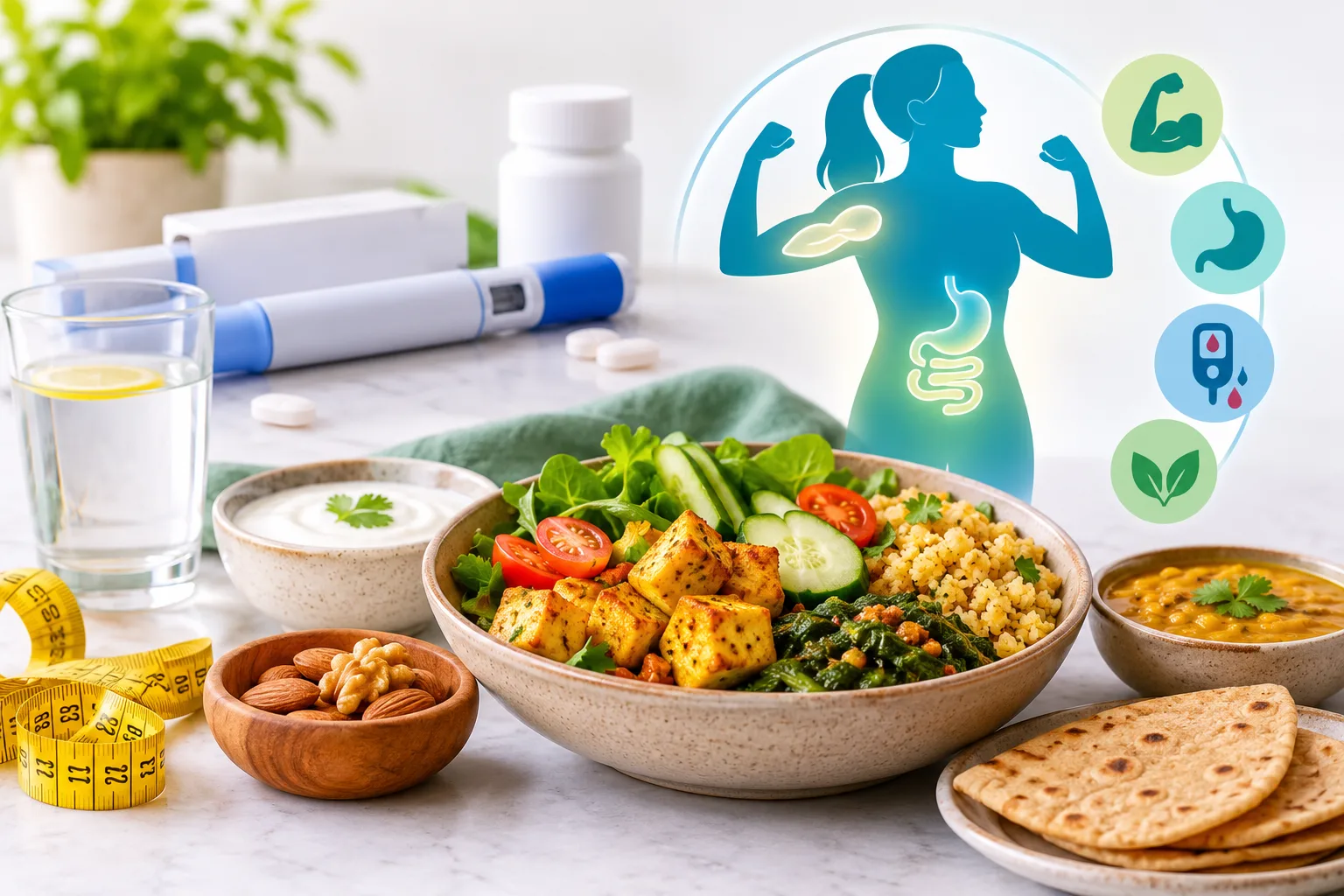
GLP-1 medications can make weight loss feel more achievable by reducing appetite and slowing digestion—but they can also make it surprisingly easy to under-eat, lose muscle, or feel unwell. A GLP-1 support plan is a personalised nutrition approach designed to help you meet your protein, fibre, hydration, and micronutrient needs while your appetite changes.
At Keto For India, the focus is practical, Indian-food-friendly nutrition support for people using GLP-1 medicines such as Ozempic, Wegovy, Mounjaro, or Rybelsus.
Why Nutrition Still Matters ?
GLP-1 receptor agonists help regulate appetite and can support meaningful weight loss, but medication is only one part of the journey. Structured GLP-1 programmes commonly combine medication with nutrition guidance, physical activity, behaviour coaching, progress tracking, and support for side effects.
When appetite drops, many people unintentionally eat too little protein or skip meals altogether. Over time, this may contribute to fatigue, constipation, nutrient gaps, and loss of lean muscle—especially if strength training and protein intake are not prioritised.
What a GLP-1 Support Plan Includes ?
A good support plan is not a one-size-fits-all diet. It should adapt to your medication, symptoms, food preferences, medical history, activity level, and weight-loss goal.
Key priorities usually include:
- Adequate protein: Helps preserve muscle while calories are lower.
- Fibre-rich foods: Supports digestion and helps manage constipation, a common concern with GLP-1 medicines.
- Hydration: Becomes more important as appetite and food intake decrease.
- Smaller, nutrient-dense meals: Makes it easier to eat enough when portion sizes feel overwhelming.
- Indian food flexibility: Meals can be built around familiar foods rather than forcing an unfamiliar Western diet.
- Side-effect management: Adjusting meal timing, texture, fat intake, and food choices during nausea, reflux, or reduced tolerance.
- Strength and movement: Resistance training and regular activity support muscle maintenance and long-term results.
The Indian-Food Advantage
You do not need to give up Indian food to follow a GLP-1-friendly plan. The goal is to make familiar meals more balanced: include a protein source, add vegetables or salad, choose appropriate portions, and avoid relying only on refined carbohydrates.
Examples of useful additions include:
- Paneer, eggs, curd, dal, sprouts, chicken, fish, or tofu for protein
- Vegetables, salads, and cooked greens for fibre
- Buttermilk, soup, broth, and water for hydration
- Smaller portions of rice, roti, or other carbohydrates if they suit your plan
- Simple home-cooked meals rather than highly processed “diet” products
The right approach depends on your health condition, medication, preferences, and whether you follow a vegetarian, non-vegetarian, keto, or conventional eating pattern.
Common Challenges on GLP-1
ChallengePractical support strategyLow appetiteFocus on protein- and nutrient-dense meals; do not fill up on low-nutrition snacksNausea or fullnessEat slowly, choose smaller portions, and avoid overly greasy or heavy mealsConstipationIncrease fluids gradually, include fibre, and discuss persistent symptoms with your clinicianMuscle loss concernsPrioritise protein and include strength-based activity where medically appropriateWeight regain worriesBuild sustainable habits rather than relying on extreme restrictionFatigueReview overall calorie, protein, hydration, and nutrient intake with a qualified professionalWho Should Be Involved ?
GLP-1 medicines should always be prescribed and monitored by a qualified healthcare professional. Nutrition coaching can complement medical care, but it should not replace advice from your prescribing doctor—particularly if you have diabetes, kidney disease, a history of eating disorders, are pregnant, or take other medicines.
A personalised plan is most useful when it works alongside your clinician’s guidance and evolves as your dose, appetite, activity, and goals change.
The Goal: Results You Can Sustain
The aim of a GLP-1 support plan is not simply to eat as little as possible. It is to help you feel nourished, protect muscle, manage side effects, maintain energy, and build habits that remain useful after the medication phase.
With the right food strategy, Indian meals can fit comfortably into a GLP-1 journey—without making every meal feel like a restriction.
This blog is for general education and does not replace personalised medical advice. Always consult your doctor or registered dietitian before changing your diet, exercise routine, or medication plan.
FAQ' s
What is a GLP-1 support plan?
A GLP-1 support plan is a personalised nutrition and lifestyle programme for people taking GLP-1 medicines such as Ozempic, Wegovy, Mounjaro, or Rybelsus. It helps you meet your protein, fibre, hydration, and nutrient needs while your appetite and portion sizes change.
Do I still need to follow a diet while taking GLP-1 medication?
Yes. GLP-1 medication can reduce appetite, but it does not replace good nutrition. Eating enough protein, fibre-rich foods, and fluids helps support energy, digestion, muscle maintenance, and long-term results.
Can I eat Indian food on a GLP-1 support plan?
Absolutely. A GLP-1-friendly plan can be built around familiar Indian foods such as dal, paneer, curd, eggs, chicken, fish, vegetables, salads, and appropriate portions of roti or rice. The goal is balance, not giving up your regular cuisine.
How much protein should I eat on GLP-1 medication?
Protein needs vary based on your body weight, health status, activity level, and medical advice. Because appetite may be lower, prioritising a protein source at each meal can help you meet your needs and support muscle preservation.
What should I eat if I feel nauseous or full quickly?
Choose smaller, simpler meals and eat slowly. Avoid very greasy, spicy, or overly rich foods if they worsen symptoms. Soups, curd, soft-cooked vegetables, eggs, paneer, dal, and hydration-friendly options may be easier to tolerate—but adjust based on your own response.
Can GLP-1 medication cause constipation?
Yes, constipation can occur for some people, especially when food and fluid intake decrease. Gradually increasing fluids and fibre-rich foods may help. If constipation is persistent, severe, or accompanied by other symptoms, contact your prescribing clinician.
Will I lose muscle while taking GLP-1 medication?
Some loss of lean mass can occur with rapid weight loss, particularly if protein intake and resistance training are inadequate. A support plan focuses on adequate protein, strength-based activity where appropriate, and avoiding extreme calorie restriction.
Should I skip meals if I am not hungry?
Do not routinely skip meals without professional guidance. When appetite is low, it may be more practical to have smaller, nutrient-dense meals or snacks rather than large portions. Your plan should help you meet your nutritional needs consistently.
Can a GLP-1 support plan help with weight regain after stopping medication?
It can help you build sustainable eating, activity, and monitoring habits. However, weight maintenance after stopping GLP-1 medication should be discussed with your healthcare provider, as appetite and weight can change once treatment is discontinued.
Do I need to follow keto while taking GLP-1 medication?
No. Keto is one possible dietary approach, but it is not required for everyone using GLP-1 medication. The best plan depends on your preferences, medical history, blood sugar goals, lifestyle, and advice from your healthcare team.
Is a GLP-1 support plan suitable for vegetarians?
Yes. Vegetarian protein options can include paneer, curd, dal, sprouts, tofu, soy products, eggs if you eat them, and other protein-rich foods. A personalised plan can be adapted to vegetarian or vegan preferences.
Who should I consult before starting a GLP-1 support plan?
Speak with the clinician who prescribed your GLP-1 medication, especially if you have diabetes, kidney disease, liver disease, a history of eating disorders, are pregnant or breastfeeding, or take other medicines. A qualified nutrition professional can help tailor the food plan to your needs.
Can I exercise while taking GLP-1 medication?
In most cases, yes—but start gradually and follow your clinician’s advice. Strength training, walking, and regular movement can support muscle maintenance, fitness, and long-term weight management.
Is a GLP-1 support plan a replacement for medical care?
No. Nutrition support complements medical care; it does not replace it. Always follow your prescribing doctor’s instructions regarding medication, dose changes, side effects, and monitoring.