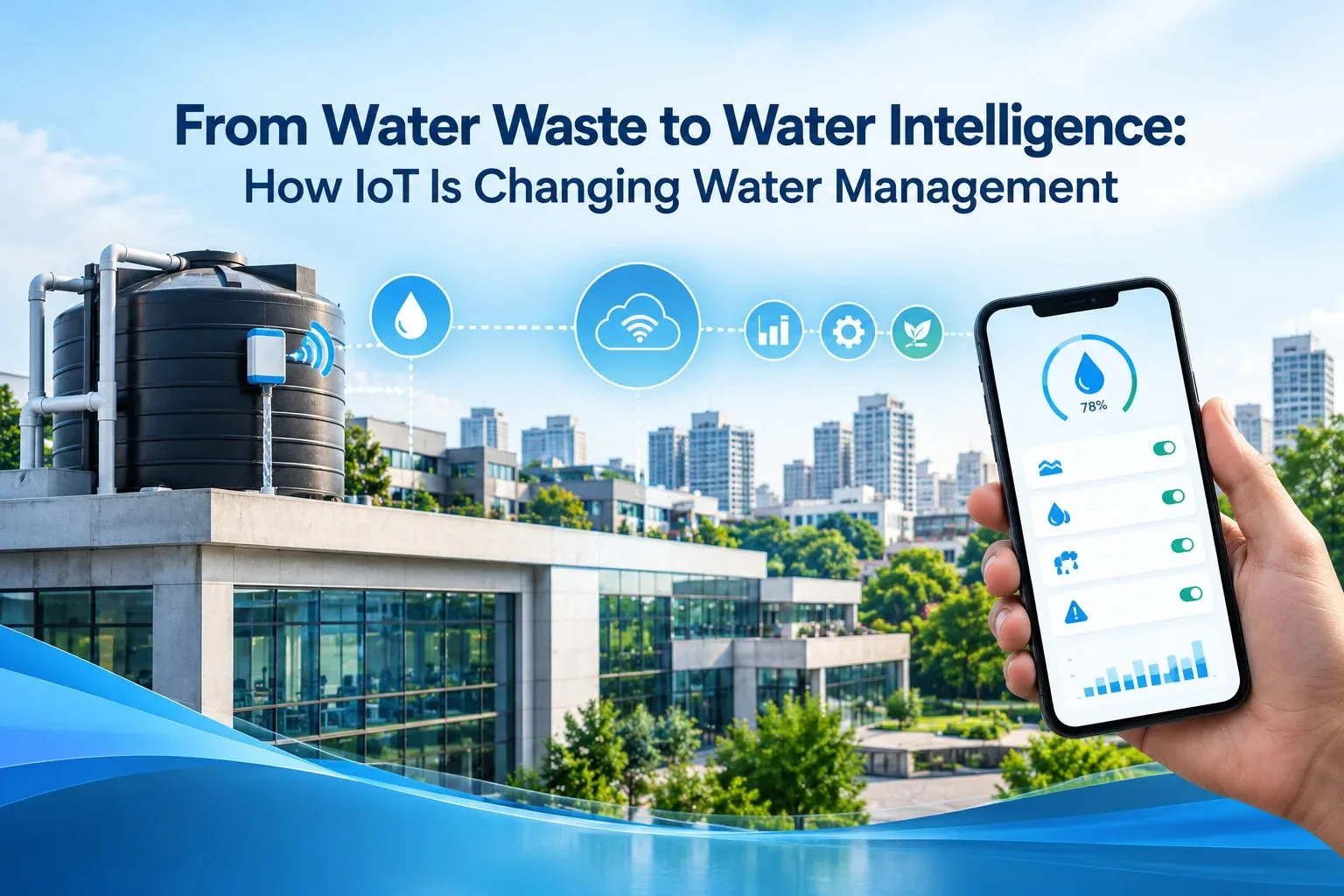
The global water crisis is known to everyone, and it’s a reality with an expanding population, ageing infrastructure and unpredictable weather conditions. We need to keep our natural resources protected. Water management has become a necessity for homes, businesses and all industries and other areas. This is where the Water Management App provides a breath of fresh air. Now, you don’t need to rely on manual monitoring, which is a waste of time. It also leads to water wastage sometimes.
Easily save yourself from time-consuming tasks like identifying leaks, unusual consumption, overflowing tanks, or equipment failures quickly. IoT transforms the entire way water is monitored and managed. IoT connects with physical devices, software, residential water level sensors and other networks. The technology collects data in real time and provides useful insights.
IoT-based water management system!
IoT-based water management uses connected sensors and devices. It helps in monitoring water-related activities. The sensor is used to measure various parameters like water level, flow, pressure, temperature, and consumption. One can use the mobile application to get any information. Users can easily view the data and identify patterns. Now, there will be no wastage of water. Property owners will receive alerts ahead of time so they can take action sooner.
Why was traditional water management not enough?
All the issues that occur during traditional water management can be resolved with ease by a water management app. Manual water monitoring has lots of limitations.
An individual can check a water tank only once or twice a day. A small leak can continue for hours, resulting in loads of water wastage. Since water is an invaluable resource, one should not take any risk.
Similarly, an overflowing tank may waste hundreds or thousands of gallons of water. In commercial facilities, the problem can become even more complicated. They have multiple tanks, big pipes, pipelines and so on, which means only a few minutes of delay in switching off the water results in lots of water wastage. Not only is water wasted, but it also causes other damage to the surrounding areas. This is when a water management app is a big solution for all.
How IOT is changing the world of water conservation and distribution!
Real-time leak detection
Residential Water Level Sensor are the most useful application of IoT. Smart water level sensors measure the amount of water. The sensor helps in sending the information to the system. Users can view the current water level. This leads to sending alerts and notifications. IoT constantly listen for different sounds and vibrations of escaping water or tracks sudden drops. The proactive approach saves millions of gallons of water while preventing costly infrastructure damage.
Redefining the smart city
For decades, water billing relied on manual monthly readings. The system left consumers blind to actual usage patterns until a big bill appeared.
IoT powers advanced metering infrastructure. The device transmits consumption data to consumers in real time. The property owner receives instant smartphone alerts. IT shows a running toilet, a broken irrigation line and a burst pipe. It allows them to optimise water pressure across various city zones.
Benefits for commercial buildings
Commercial buildings benefit from connected water management. Commercial places like hotels, hospitals, malls and office buildings have complex water systems. A centralized IoT platform provides visibility across various locations. Now property owners can monitor everything from tanks to pumps, meters and other consumption patterns in one place. This simplifies maintenance and helps teams respond to problems quickly.
Conclusion: Turning data into intelligence
IoT water management app not only collects data but turns it into actionable information. Like a repeated drop sound or an unusual water usage pattern, it indicates an underlying issue that can be resolved at the initial stage before it turns out to be severe.