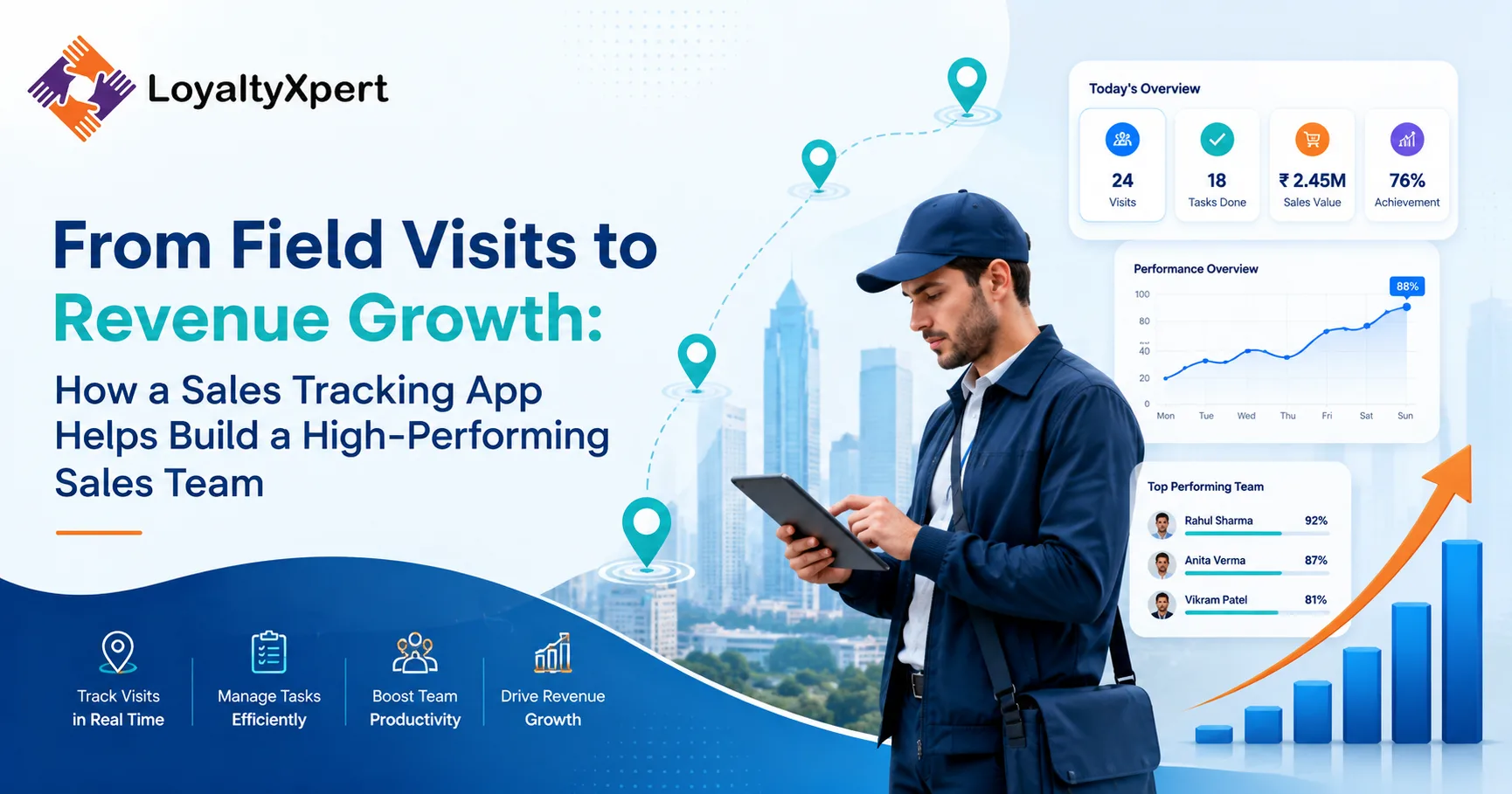
Managing a field sales team used to mean assigning teams to different regions and areas for field work and then waiting until month-end for them to respond and update and find out what actually happened . That will not be the only option anymore. Businesses today want to know the data in real time, about what their sales activities look like, how customer visits are going, whether the team is being productive, how tasks are performed and what is the result and where performance is going. Without the right technology and software in one place, sales managers end up stuck with late reports, updates that don't quite match reality, and very little real control over what's happening out in the field.
This is exactly the gap a sales tracking app is built to close. It gives businesses proper visibility into every stage of their field sales operations from knowing where reps are and what they're doing, to keeping an eye on customer visits, to actually understanding performance trends instead of guessing at them. The end result is faster, better-informed decision-making.
If you're just getting familiar with sales tracking as a concept, it's worth starting with our guide, What Is a Sales Tracking App? An Overview, which walks through the basics and the core features.
For this post, though, we want to dig into something more specific: how sales tracking software actually helps build a sales team that's more productive, more accountable, and, ultimately, more focused on driving revenue.
Why Traditional Sales Management Falls Short
A lot of businesses are still running their field sales operations on spreadsheets, phone calls, WhatsApp check-ins, or whatever manual reporting process someone set up years ago. That can work fine when the team is small. But as the business grows, these methods start to buckle under their own weight.
Some of the more common pain points look like this:
- Reports that arrive late, if at all
- Almost no visibility into what's actually happening in the field
- No reliable way to measure how the team is performing
- Route planning that's more guesswork than strategy
- Customer follow-ups that quietly slip through the cracks
- Reporting that looks completely different from one territory to the next
Over time, these gaps chip away at productivity, cloud decision-making, and quietly cost the business revenue it didn't even realise it was losing.
How a Sales Tracking App Improves Sales Team Performance
1. Real-Time Visibility into Field Activities
Managers shouldn't have to wait for an end-of-day call to find out what happened. With a sales tracking app, that information is just... there, updating live:
- Customer visits
- Sales meetings
- Daily tasks
- Territory coverage
- Where reps actually are
Because managers can see this as it happens rather than after the fact, they're able to respond faster, sort out problems before they snowball, and keep the field team on track throughout the day.
2. Better Accountability Across the Sales Team
Sales tracking software also does a lot for accountability, which is often one of the harder things to manage in a distributed team.
Each rep's activity gets logged automatically, so it's easy to see things like:
- How many customer visits they made
- How much time they actually spent in the field
- What tasks got completed
- What sales resulted
- What follow-ups are still pending
Instead of managers having to guess or take someone's word for it, they're working from real data which makes performance conversations a lot more objective and a lot less awkward.
3. Smarter Territory Management
Poorly planned territories tend to create the same handful of problems again and again:
- Two reps unknowingly visiting the same customer
- Opportunities that never get followed up on
- Travel costs that creep higher than they need to
- Some reps overloaded while others are underused
Sales tracking software gives businesses the data to divide territories more sensibly, so each rep is actually spending time with the customers that make sense for them. That translates into better market coverage and a more productive team overall.
4. Data-Driven Performance Reviews
Performance reviews get a lot more useful once they're backed by real data instead of just a monthly sales number.
Managers can look at things like:
- Conversion rates
- How often visits are happening
- Customer engagement
- Where deals are stalling or progressing
- How consistently tasks are being completed
- Broader sales trends
That kind of detail makes it much easier to spot who's genuinely excelling and who might just need a bit more coaching or support to get there.
5. Faster Decision-Making
When accurate information is available on demand, decisions simply happen faster.
A good sales tracking dashboard can help answer questions like:
- Which territory is falling behind?
- Which rep needs some extra support right now?
- What products are moving faster than expected?
- Where are customer visits starting to drop off?
- Which regions need more attention this quarter?
With real-time analytics doing the heavy lifting, there's a lot less guesswork involved in planning strategy.
How Sales Tracking Supports Revenue Growth
It's worth remembering that sales tracking isn't really about watching over employees — it's about making the whole sales process run better.
Once a business has real visibility into every customer interaction, a few things tend to follow:
- Follow-ups happen more consistently
- Fewer opportunities slip away unnoticed
- Conversions go up
- Sales cycles get shorter
- Resources get allocated more sensibly
Put together, that adds up to stronger customer engagement and steadier revenue growth over time.
The Connection Between Sales Tracking and Customer Loyalty
It's easy to think of sales management and customer loyalty as two separate projects running in parallel. In practice, they're much more tangled together than that.
When reps respond quickly, stay on top of follow-ups, and generally give customers a better experience, those customers tend to stick around and stay engaged with the brand.
That's why businesses focused on long-term customer relationships often look beyond sales tracking alone and invest in loyalty program software for businesses, which helps reward customers, channel partners, and influencers while boosting retention and repeat business.
Used together, sales tracking and loyalty management build a much sturdier foundation for growth than either one does on its own.
Key Features to Look for in a Sales Tracking App
If you're evaluating options, here's what's generally worth prioritising:
- Real-time tracking of sales reps
- Territory management tools
- KPI dashboards
- Automated reporting
- CRM integration
- Task automation
- Sales analytics
- Performance reports
- Goal management
- Gamification features
These are the features that actually move the needle on field operations, team productivity, and accountability.
Why Businesses Are Adopting Sales Tracking Software
Across manufacturing, FMCG, building materials, automotive, and distribution, more and more companies are turning to sales tracking solutions to modernise how they manage field sales.
A solid platform tends to deliver on a few fronts at once:
- Better operational visibility
- Real-time monitoring of sales activity
- Higher team productivity
- Less manual reporting
- Sharper decision-making
- More consistent sales growth
As businesses spread across more regions and build out larger sales networks, this kind of technology stops being a nice-to-have and starts being the thing that keeps everything running efficiently.
Why Choose LoyaltyXpert's Sales Tracking App?
If you're after a solution that covers the full picture of field sales management, LoyaltyXpert's Sales Tracking App is built to give businesses better visibility, automated reporting, and stronger sales performance overall.
It comes with:
- Real-time sales tracking
- Territory management
- KPI monitoring
- CRM integration
- Task automation
- Performance analytics
- Gamification
- Custom dashboards
With these in place, organisations can run their field sales teams far more effectively while also strengthening customer engagement and driving business growth.
Final Thoughts
Trying to manage a growing field sales team without real visibility is a good way to slow down growth and quietly lose productivity. A solid sales tracking app gives organisations the insight they need to monitor activity, build accountability, sharpen sales processes, and make decisions based on data rather than guesswork.
As more businesses nowadays are going towards digital transformation, choosing the right sales tracking software is now no longer optional and it's become a genuine strategic advantage. Pair it with the right customer engagement, and loyalty initiatives, and you've got a complete system for driving long-term revenue growth, tightening operational efficiency, and building stronger relationships across the business.
Original Source: https://www.loyaltyxpert.com/blog/sales-tracking-app-an-ove