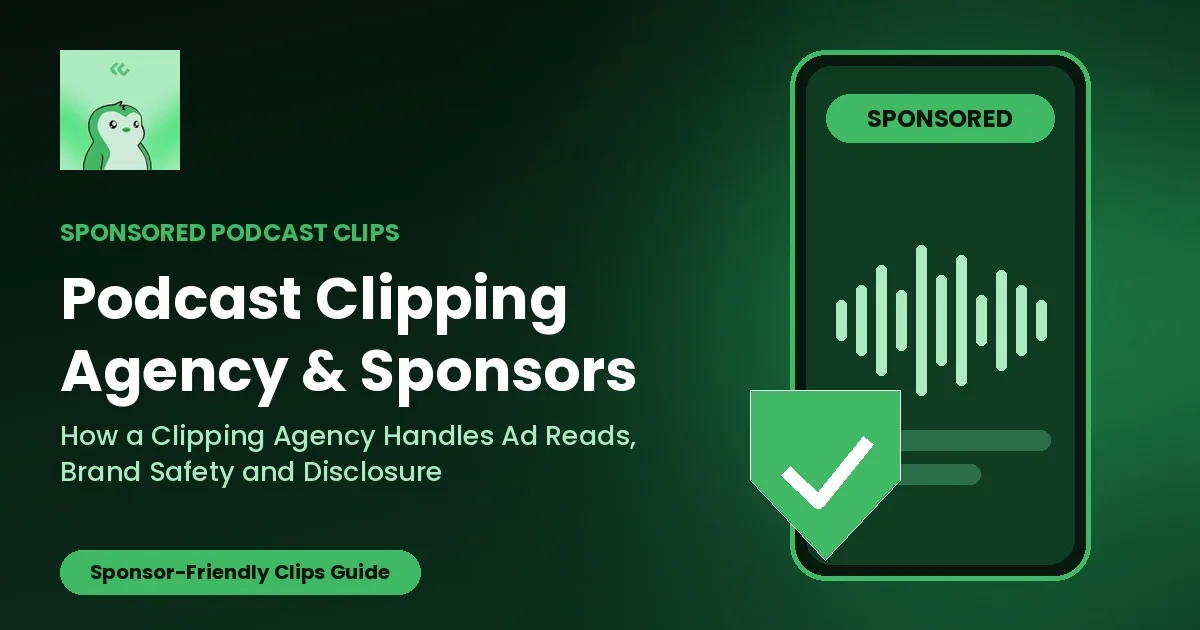
A podcast clipping agency turns long episodes into short vertical clips for social feeds. That work sounds simple until a sponsor enters the picture. Suddenly, every clip carries questions about ad reads, brand safety, and disclosure. A wrong cut can annoy a sponsor, confuse a viewer, or even break advertising rules.
I have spent more than twenty years in content and media. I have watched sponsorship deals grow from a single mention into complex, multi-platform agreements. This guide explains how a clipping agency handles those details, so podcasters and brands know what good practice looks like.
Why Sponsors Care About Podcast Clips
Sponsors pay for attention. For years, that attention came from the audio feed alone. Now short-form clipping pushes the same conversations onto TikTok, Instagram Reels, and YouTube Shorts. Consequently, sponsors want to know how their message travels with those clips.
Three questions come up again and again:
- Will my ad read appear in a clip, and did I approve it?
- Will my brand sit next to content that could hurt its image?
- Are paid messages labeled the way the law expects?
A careful clipping agency answers all three before the first clip goes live.
What Makes Ad Reads Tricky to Clip
An ad read is a sponsor message delivered inside the show. Hosts often record it themselves, which makes it feel personal and trustworthy. However, that same personal tone creates risk when the segment leaves its original context.
Podcast ads usually come in two forms. A host-read ad is baked into the recording. A dynamically inserted ad is added later by the hosting platform, so it never appears in the source file. Therefore, a clipping team must know which type it is handling.
Baked-in reads raise the real questions. A short clip of a host praising a product can look like a genuine recommendation. Without a clear label, viewers may not realize it is paid.
Three Choices a Clipping Agency Makes About Ad Reads
Every team handling sponsored shows faces the same decision. It can keep the ad read, cut it out, or repurpose it on purpose.
Cut it out. Most clips skip the ad entirely. The editor trims the segment so the clip focuses on the conversation. This is the safest default.
Keep it, with approval. Sometimes a sponsor wants the read included. In that case, the agency needs written permission and agreed wording. It also needs a clear disclosure.
Repurpose it. A few brands commission clips built around the sponsor message. These work like short ads, so they follow advertising rules from the start.
Whichever path applies, one rule holds. Never let a sponsor's words appear in a clip by accident.
How a Podcast Clipping Agency Protects Brand Safety
Brand safety means keeping a sponsor's name away from harmful or off-message content. In short-form video, that job is harder than it sounds. A clip lasts thirty seconds, yet it can carry a full sentiment on its own.
A strong podcast clipping agency screens content in several layers:
- Topic review. Editors flag sensitive subjects such as violence, health claims, or politics.
- Language checks. Profanity and slurs are removed or flagged for approval.
- Guest screening. Controversial guests receive extra scrutiny.
- Context checks. Editors confirm that a quote still makes sense without the surrounding discussion.
- Category conflicts. A clip that promotes one sponsor should not feature a competitor.
Context deserves special attention. A joke that works in a two-hour conversation can sound harsh in ten seconds. Therefore, editors keep enough lead-in so the meaning stays intact.
Disclosure: Keeping Sponsored Clips Honest
Disclosure is the part most teams underestimate. In many countries, anyone paid to promote a product must reveal that relationship. In the United States, the Federal Trade Commission expects clear and conspicuous disclosure of any material connection between an endorser and a brand.
In plain terms, a viewer should not have to hunt for the label. Good practice includes the following:
- Place the disclosure where people see it right away, not buried in a long caption.
- Avoid hiding it in a pile of hashtags or behind a "more" button.
- Use plain words such as "ad" or "sponsored" instead of vague terms.
- Add a spoken or on-screen label inside the video when possible.
- Repeat the disclosure on every platform where the clip appears.
Platform tools help, but they do not solve everything. Regulators have noted that built-in labels can be too subtle on their own. For that reason, many teams add a second, visible disclosure inside the clip.
Rules differ by country, so legal review matters. A local advisor can confirm what applies to your audience.
A Practical Workflow for Sponsor-Friendly Clips
Good outcomes come from a repeatable process. A reliable clipping agency follows a workflow like the one below, and sponsored shows benefit most.
Step 1: Collect sponsor terms. First, gather every contract detail that affects clips. Include approved wording, banned topics, and exclusivity limits.
Step 2: Mark the ad reads. Next, tag each sponsor segment in the transcript. That way, editors never trim or include one by mistake.
Step 3: Edit with context. Then cut the clip around the strongest moment. Keep enough setup to protect the meaning.
Step 4: Review before posting. After that, a second person checks the clip against the brief. This step catches most problems.
Step 5: Add disclosure. Label every sponsored clip clearly, both in the video and in the caption.
Step 6: Report results. Finally, share verified views and engagement so sponsors can see what their support achieved.
Why Clipping Distribution Raises the Stakes
Distribution changes the risk profile. When a team posts from one account, it controls every caption. When many creators post the same clip, each one writes a caption, and each one needs a disclosure.
Therefore, clipping distribution works best with a clear brief. The brief should state the required label, the approved wording, and the topics to avoid. Moreover, reviewers should check posts after they go live, not only before. Clipping services that skip this step leave sponsors exposed.
Common Mistakes That Put Sponsors at Risk
Most problems come from small oversights. Watch for these:
- Including an ad read without sponsor approval
- Posting a clip with no visible label
- Cutting a quote so short that it changes the meaning
- Pairing a sponsor's clip with a competitor's name
- Ignoring platform rules on branded content
Each mistake is easy to prevent. A short checklist and a second reviewer solve most of them, and any experienced clipping agency builds both into its routine.
What Podcasters Can Learn From Other Industries
Other sectors have built strict review habits that podcasts can borrow.
A casino clipping agency works under tight advertising limits, so it reviews every clip against local rules. A crypto clipping agency faces similar scrutiny, especially around financial claims. Meanwhile, a political clipping agency must label paid messages and control how quotes appear.
A SaaS clipping agency keeps clips tied to one clear product message, which helps sponsors measure impact. A music clipping agency, in contrast, plans around release windows and rights approvals.
A TikTok clipping agency adds platform know-how, such as native formats and branded-content tools. Across all of them, short-form clipping depends on the same habit: check the clip before it ships.
How to Choose the Best Clipping Agency for Sponsored Shows
Buyers often search for the best clipping agency, the best clipping company, or the best clipping providers. Price usually comes first. However, sponsored shows need more than a low rate. Ask these questions before you commit:
- How do you handle ad reads? Look for a clear policy to keep, cut, or repurpose them.
- Who reviews each clip? A real review step protects both host and sponsor.
- How is disclosure handled? The answer should cover captions, on-screen labels, and platform tools.
- How do you count views? Reports should filter bot traffic.
- Can you share sample reports? Transparent data builds trust.
The best clipping services combine editing with careful review. The best clipping marketing links every clip to a goal the sponsor cares about. Likewise, the best clipping distribution relies on real accounts that follow disclosure rules, not shortcuts.
Clipping providers differ widely on these points, so compare them side by side. Also, be cautious about any clipping company that promises guaranteed virality. Nobody controls a feed. An honest clipping agency offers process, transparency, and reporting instead.
Final Thoughts
Sponsored podcasts can thrive on short-form video, but only with careful handling. Ad reads need clear rules. Brand safety needs real review. Disclosure needs plain language and visible placement. Does podcast clipping work for sponsors? Yes, when a clipping agency covers all three, sponsors feel safe and audiences stay informed.
Lumina Clippers is a clipping agency that runs podcast campaigns across TikTok, Instagram Reels, YouTube Shorts, and X, with every clip reviewed against a brief and paid partnerships disclosed. Podcasters who want to explore this approach can begin with a small test batch and review verified results before expanding.
Frequently Asked Questions
Can a clipping agency clip sponsor ad reads?
Yes, but only with permission. Many teams remove ad reads by default. When a sponsor wants one included, the agency needs written approval, agreed wording, and a clear disclosure so viewers know the message is paid.
Do sponsored podcast clips need to be labeled as ads?
In many countries, yes. Paid promotions usually require a clear disclosure of the relationship. The label should be easy to see, written in plain words, and placed where viewers notice it. Check local rules with a legal advisor.
What is brand safety in podcast clipping?
Brand safety means keeping a sponsor's name away from harmful or off-message content. A clipping agency screens topics, language, guests, and context before posting. It also removes clips that could be misread when taken out of the full conversation.
What is the difference between host-read and dynamically inserted ads?
A host-read ad is recorded inside the episode, so it exists in the source file. A dynamically inserted ad is added by the hosting platform at playback and is not in the file. Only host-read ads can end up in clips.
Will clipping hurt my podcast sponsorship value?
Usually the opposite, when done carefully. Clips can bring new viewers and listeners to the show, which supports sponsor reach. Problems appear only when ad reads, brand safety, or disclosure are ignored, so set clear rules first.
Who approves podcast clips before they go live?
It depends on the agreement. At minimum, a reviewer at the agency checks each clip against the brief. Many shows also let the host or sponsor approve clips that mention a brand, which adds a useful second check.