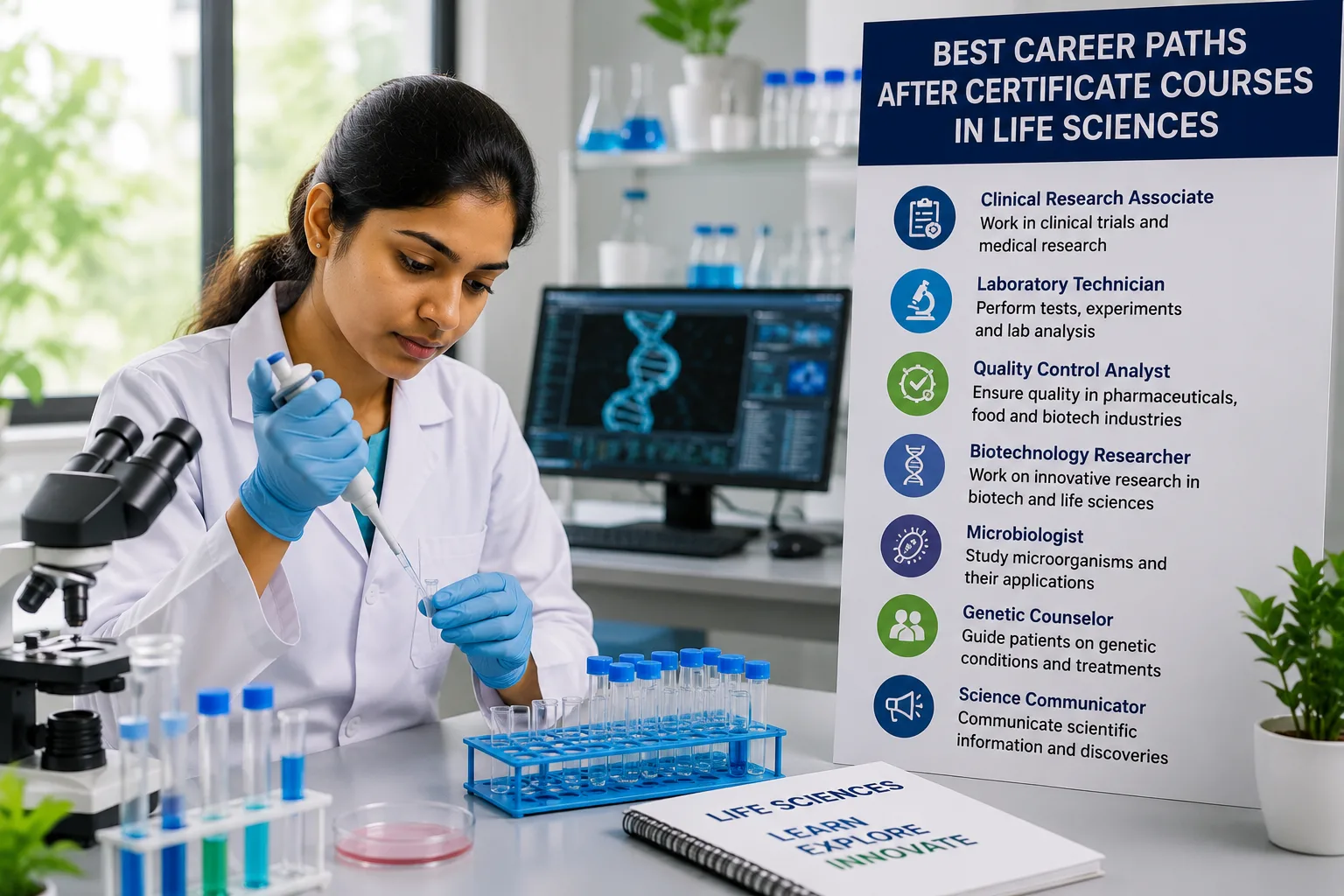
If you are a life science student in Kerala, you have probably noticed something. The gap between what you learn in lectures and what employers actually want is wider than anyone admits. You can name every step of PCR on an exam, but have you ever pipetted a sample yourself? That difference is exactly why practical training has become so important.
The New Curriculum Demands Real Experience
With the Four Year Undergraduate Programme rolling out across the state, students now have structured space in their degree for skill-building. A well-planned FYUGP internship in Kerala is no longer just a box to tick. It is a chance to step into a working laboratory, handle real equipment, and understand how science happens outside a textbook.
The students who use this time wisely come out ahead. They build confidence, they collect stories for interviews, and they figure out what kind of work actually excites them.
Why Lab Experience Matters More Than Marks
Recruiters in biotech, diagnostics, and research increasingly look past grade sheets. They want to know one thing: can you do the work? This is where good internships for life science students make all the difference.
When you spend weeks running assays, preparing reagents, and recording results, you stop being nervous around instruments. You learn lab discipline, documentation habits, and the patience that real science requires. These are the qualities that turn a fresh graduate into a hireable candidate.
Thrissur Is Quietly Becoming a Training Hub
You do not have to travel to a metro city to get quality exposure anymore. A modern molecular lab in Thrissur can offer the same advanced techniques that students once chased in faraway institutes.
Working in such a facility means getting your hands on DNA extraction, amplification, gel electrophoresis, and genomic analysis. For students from Kerala, having this kind of resource close to home is a real advantage. It means lower costs, less relocation stress, and easier access to mentors who genuinely guide you through each technique.
Certificate Courses That Add Real Weight
Beyond internships, short, focused programs are reshaping how students build their profiles. Certificate courses in life sciences let you specialise in a specific skill, whether that is molecular biology, microbiology, or animal diagnostics.
These courses are practical by design. Instead of broad theory, they zoom in on one capability and train you until you are comfortable doing it independently. A certificate backed by genuine lab work signals to employers that you bring something concrete to the table. It is a small line on your resume that says a lot.
How to Choose the Right Program
Not all training is equal, so choose carefully. Look for a place with working laboratories, not just classrooms. Ask whether you will actually operate the equipment or only watch demonstrations.
Check if mentors are active researchers or diagnostic professionals. Find out whether the program ends with a certificate that holds value. And pay attention to the range of techniques covered, because variety means a stronger, more flexible skill set.
Take the First Step
Your degree opens the door, but practical experience is what carries you through it. Whether you are completing a required internship, exploring a new field, or simply trying to stand out in a crowded job market, hands-on lab training is one of the smartest investments you can make right now.
Kerala has the institutions, the labs, and the mentors ready to help. The only thing left is your decision to begin. Reach out to a research and learning centre near you, ask about their programs, and start building the career you actually want, one experiment at a time.
At Veta Genomics, students can access industry-focused training, research exposure, and internship opportunities designed to bridge the gap between academic learning and professional success. Take the first step toward a rewarding career in life sciences with practical experience that makes a real difference.