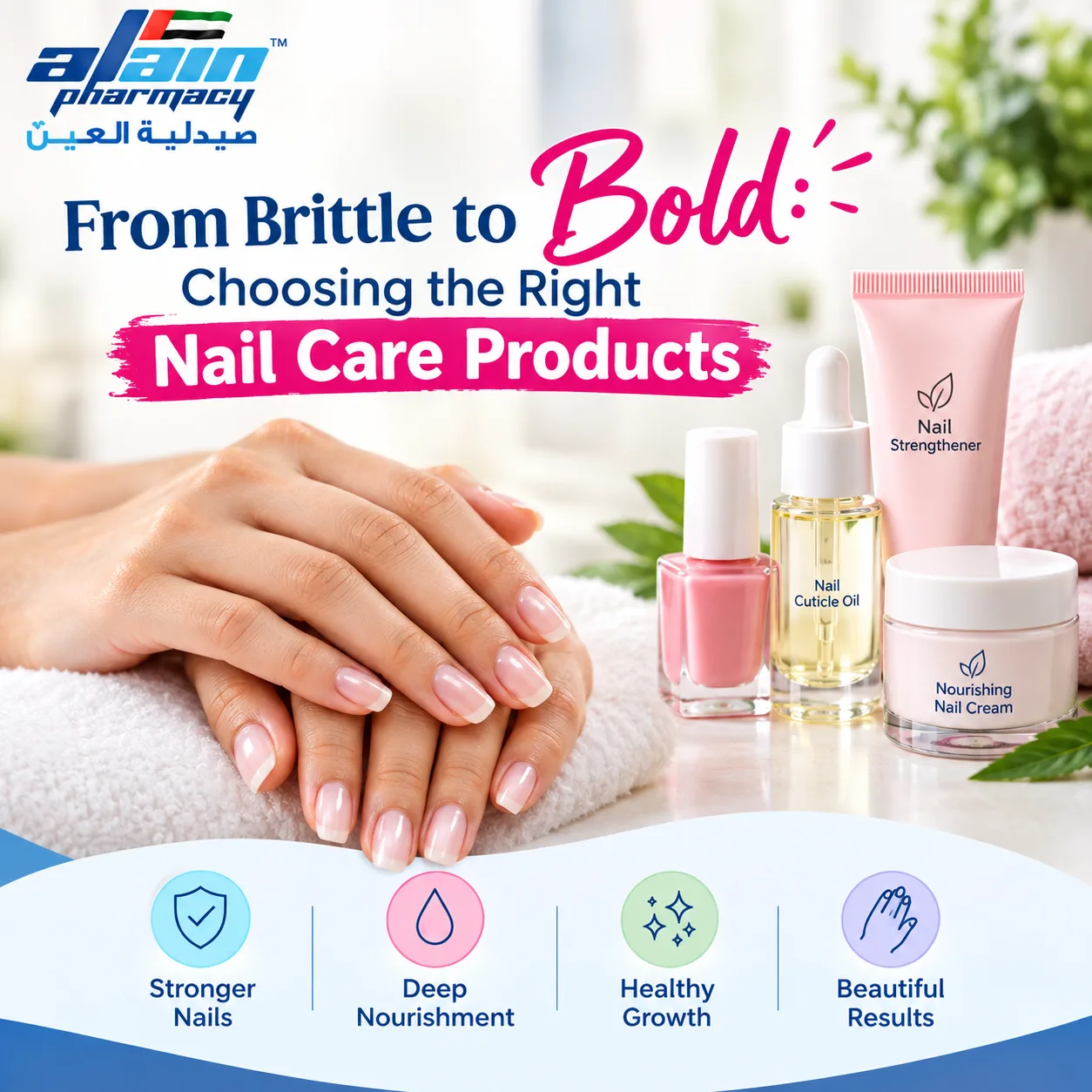
Our nails often go unnoticed until something goes wrong—a sudden crack, a stubborn peel, or a yellowish tinge that makes us self-conscious. Yet nails are more than a cosmetic afterthought. They are a reflection of our overall health, a shield for sensitive fingertips, and for many people, a small canvas for self-expression. When nails are brittle, weak, or damaged, it affects not just appearance but confidence too. The good news is that with the right knowledge and the right products, anyone can transform brittle, tired nails into strong, bold, healthy ones. At Al Ain Pharmacy, we believe nail care deserves the same attention as skincare or haircare, and this guide will walk you through everything you need to know to choose the right products for your nails.
Understanding Why Nails Become Brittle
Before diving into products, it helps to understand what causes brittle nails in the first place. Nails are made primarily of keratin, a protein that also forms hair and the outer layer of skin. When nails don't get the moisture, nutrients, or protection they need, they become dry, thin, and prone to splitting or peeling.
Several factors commonly contribute to brittle nails:
- Excessive water exposure: Frequent hand washing, dishwashing, or swimming can strip natural oils from the nail plate.
- Harsh chemicals: Nail polish removers containing acetone, household cleaning agents, and even some soaps can dry out nails over time.
- Nutritional deficiencies: Low levels of biotin, iron, zinc, or vitamin D can weaken nail structure.
- Aging: As we age, nails naturally lose moisture and become more fragile.
- Underlying health conditions: Thyroid imbalances, anemia, and certain skin conditions can manifest as nail changes.
- Improper nail care habits: Aggressive filing, cutting cuticles too short, or using low-quality nail tools can damage the nail bed.
Recognizing the root cause of your nail troubles is the first step toward choosing products that actually help rather than mask the problem temporarily.
The Building Blocks of a Solid Nail Care Routine
A good nail care routine isn't about buying every product on the shelf—it's about understanding what each product does and how it fits into your specific needs. At Al Ain Pharmacy, our pharmacists often guide customers through a simple framework: cleanse, strengthen, moisturize, and protect. Let's break down each stage and the products that support it.
1. Cleansing Without StrippingCleansing is the first step, but it's often done incorrectly. Many people use strong soaps or excessive amounts of hand sanitizer, which can dry out the nail plate and surrounding skin. Instead, look for gentle, pH-balanced hand washes that clean effectively without stripping natural oils.
If you use nail polish regularly, choose an acetone-free nail polish remover. Acetone is highly effective at dissolving polish, but it also dehydrates the nail and surrounding cuticle, making nails more prone to brittleness over time. Acetone-free formulas, often enriched with glycerin or vitamin E, remove polish more gently while conditioning the nail simultaneously.
2. Strengthening Weak, Brittle NailsThis is often the category people are most interested in when their nails are breaking or peeling. Nail strengtheners and hardeners are formulated to reinforce the nail structure, and they come in different types depending on your needs:
- Protein-based strengtheners: These contain hydrolyzed proteins that bond to the nail surface, filling in microscopic gaps and reducing peeling.
- Calcium and keratin-infused formulas: These aim to rebuild the nail from within, particularly useful for nails weakened by frequent gel or acrylic application.
- Growth-supporting treatments: Often containing biotin or panthenol, these support the nail matrix (the area beneath the cuticle where new nail cells form) to encourage healthier growth over time.
It's worth noting that strengtheners work gradually. Consistency matters more than intensity—applying a quality strengthener a few times a week for several weeks tends to show better results than sporadic, heavy use.
3. Moisturizing the Nail and CuticleNails need hydration just as much as skin does, yet this step is frequently overlooked. Cuticle oils are one of the most underrated products in nail care. A good cuticle oil, often formulated with jojoba oil, almond oil, or vitamin E, penetrates the nail plate and surrounding skin to restore flexibility and reduce the risk of cracking.
Applying cuticle oil nightly, even for those without polish, can make a noticeable difference within a few weeks. Beyond oils, richly formulated hand creams that specifically mention nail nourishment can double up as part of your moisturizing routine, especially for those whose hands are frequently exposed to water or sanitizers throughout the day.
4. Protecting Nails From Daily DamageOnce nails are cleansed, strengthened, and moisturized, protection becomes key to maintaining progress. This includes:
- Base coats: A ridge-filling or strengthening base coat not only smooths the nail surface for polish application but also acts as a barrier between the nail and pigmented polishes, some of which can cause staining or dryness.
- Top coats: A durable top coat seals in moisture and prevents chipping, reducing the frequency of removal and reapplication, which is itself a source of nail stress.
- Gloves for chores: While not a "product" in the traditional sense, wearing gloves during cleaning or dishwashing is one of the simplest ways to protect nails from prolonged water and chemical exposure.
Choosing Products Based on Your Nail Type
Not all nails are the same, and understanding your nail type helps narrow down the right products.
Dry, brittle nails benefit most from deeply moisturizing cuticle oils and protein-based strengtheners. Avoid formaldehyde-based hardeners, which can sometimes make dryness worse despite their strengthening claims.
Peeling or splitting nails often respond well to keratin-based treatments and ridge-filling base coats that add a protective layer over weakened areas.
Soft, bendy nails may need calcium-enriched hardeners that add rigidity, paired with a protein treatment to build structural strength over time.
Yellowed or discolored nails, often a result of frequent dark polish use, can benefit from whitening nail treatments or a "nail detox" break, allowing nails to breathe without polish for a period while using restorative oils.
Nails damaged by gel or acrylic removal require extra care, focusing on intensive moisturizing and gentle strengthening, since the removal process can leave nails significantly thinned.
Ingredients Worth Looking For
When comparing nail care products, checking the ingredient list can save time and money. Some beneficial ingredients to look for include:
- Biotin: Supports keratin production for stronger nail growth.
- Vitamin E: An antioxidant that helps moisturize and protect the nail bed.
- Hydrolyzed keratin: Helps rebuild the nail's protein structure.
- Jojoba oil: Closely resembles natural nail oils, making it easily absorbed.
- Panthenol (Pro-Vitamin B5): Improves flexibility and reduces brittleness.
- Calcium: Adds hardness and structural support.
On the flip side, it's wise to be cautious of products with high concentrations of formaldehyde, toluene, or dibutyl phthalate (DBP), often referred to as the "toxic trio" in nail care. Many modern formulations are now free from these ingredients, so checking labels for "3-free" or "5-free" claims can help you choose safer options.
Building a Routine That Fits Your Lifestyle
Nail care doesn't need to be complicated or time-consuming. A simple, realistic routine might look like this:
- Apply cuticle oil each night before bed.
- Use a gentle, acetone-free remover when changing polish.
- Apply a strengthening base coat before any color.
- Moisturize hands (and nails) after washing them throughout the day.
- Take occasional breaks from polish to let nails recover naturally.
Consistency is far more valuable than complexity. Even a two-step routine, done regularly, will outperform an elaborate one used only occasionally.
Why Professional Guidance Matters
While over-the-counter nail products can address most common concerns, persistent nail problems—such as ongoing discoloration, pain, swelling, or unusual thickening—may indicate an underlying issue that goes beyond cosmetic care. In such cases, consulting with a pharmacist or healthcare provider can help identify whether a nutritional deficiency, fungal infection, or other condition is at play.
At Al Ain Pharmacy, our team is available to help customers navigate the wide range of nail care products on the market, offering guidance based on individual nail concerns, skin sensitivities, and lifestyle habits. Whether you're looking for a simple strengthening treatment or a full nail recovery regimen, having knowledgeable support can make the process far less overwhelming.
Final Thoughts
Going from brittle to bold isn't about finding one miracle product—it's about building a thoughtful routine that addresses cleansing, strengthening, moisturizing, and protection. Nails, much like skin and hair, respond to consistent, intentional care over time. By understanding your nail type, reading ingredient labels carefully, and choosing quality products suited to your specific needs, you can steadily transform weak, brittle nails into strong, healthy ones you feel confident showing off.
Al Ain Pharmacy remains committed to helping customers make informed choices when it comes to nail care, offering a curated selection of trusted products alongside professional advice. Strong, healthy nails are within reach—it simply starts with choosing the right products and staying consistent with your care.