Artificial Intelligence (AI) is rapidly transforming business operations, making responsible AI management more important than ever. ISO 42001 certification helps organizations establish a structured AI Management System (AIMS) to manage risks, ensure compliance, and improve governance. Before applying, businesses should understand the standard and prepare the required ISO 42001 documents for successful implementation.
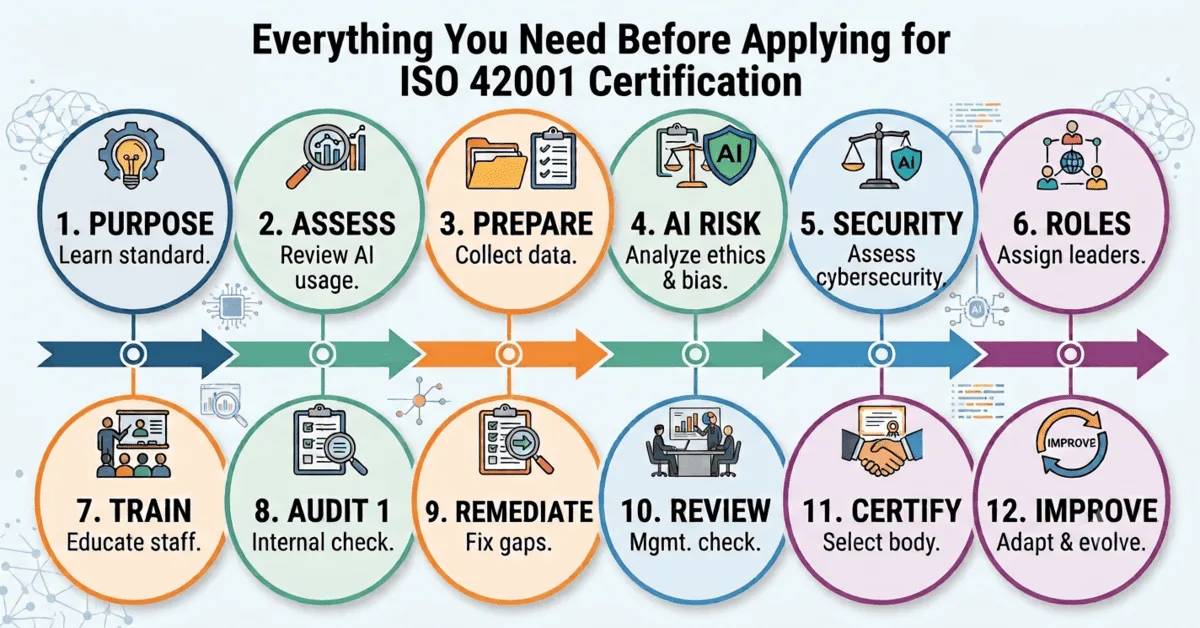
Understand the Purpose of ISO 42001
ISO 42001 provides a framework for responsible AI governance through transparency, accountability, risk management, and continual improvement. It helps organizations build trust while ensuring AI systems are managed consistently.
Evaluate Your Current AI Processes
Before applying for certification, review how AI is currently used across your organization. Identify:
- AI applications and systems in use
- AI-related risks and opportunities
- Legal and regulatory obligations
- Existing policies and procedures
- Roles and responsibilities for AI governance
This assessment highlights gaps that should be addressed before certification.
Prepare Complete ISO/IEC 42001 Documents
Proper documentation ensures consistent implementation and provides evidence during certification audits.
A comprehensive set of ISO/IEC 42001 documents generally includes:
- AI Management System Manual
- AI Policy
- Mandatory procedures
- Standard Operating Procedures (SOPs)
- Risk assessment methodology
- AI objectives
- Documented responsibilities
- Internal audit procedure
- Corrective action process
- Required records and forms
Well-structured documentation simplifies implementation and supports compliance with ISO 42001 requirements.
Conduct an AI Risk Assessment
Organizations should identify AI-related risks such as data privacy, bias, cybersecurity, transparency, and ethical concerns. Appropriate controls should be implemented and reviewed regularly to keep risks under control.
Define Roles and Responsibilities
Clear accountability ensures effective implementation of the AI management system.
Management should assign competent personnel responsible for:
- AI governance
- Compliance monitoring
- Risk management
- Internal auditing
- Documentation control
- Performance evaluation
Defined responsibilities support consistent implementation and oversight.
Train Employees
Employees play a critical role in maintaining compliance. Organizations should provide training on:
- ISO 42001 requirements
- AI governance principles
- Responsible AI practices
- Organizational AI policies
- Risk management procedures
Regular training helps employees follow procedures and maintain compliance.
Perform Internal Audits
Before applying for certification, conduct a comprehensive internal audit to verify that your AI management system complies with ISO 42001 requirements.
Internal audits identify documentation gaps, process weaknesses, nonconformities, and improvement opportunities. Understanding how ISO 42001 documents support certification also strengthens audit readiness.
Addressing identified issues before the certification audit significantly improves the chances of a successful outcome.
Conduct a Management Review
Top management should review the effectiveness of the AI management system before certification.
The management review should evaluate:
- Audit findings
- AI performance objectives
- Risk management effectiveness
- Resource availability
- Compliance status
- Opportunities for improvement
Strong management involvement supports continual improvement and certification readiness.
Select an Accredited Certification Body
Choose a reputable certification body experienced in AI management systems. An accredited certification body will perform:
- Stage 1 Audit (Documentation Review)
- Stage 2 Audit (Implementation Assessment)
If your organization successfully meets all requirements, you will receive ISO 42001 certification.
Continually Improve Your AI Management System
Certification is not the end of the journey. Organizations should continually monitor AI performance, review risks, update documentation, and improve processes to maintain compliance and adapt to changing AI technologies and regulations.
Conclusion
Preparing thoroughly before applying for ISO 42001 certification makes the certification process more efficient and successful. By understanding the standard, implementing an effective AI management system, preparing complete documentation, managing AI risks, training employees, and conducting internal audits, organizations can demonstrate responsible AI governance while improving operational efficiency, regulatory compliance, and long-term business success.