Unveiling the Climate Puzzle: A Scene from the Frontlines of Research
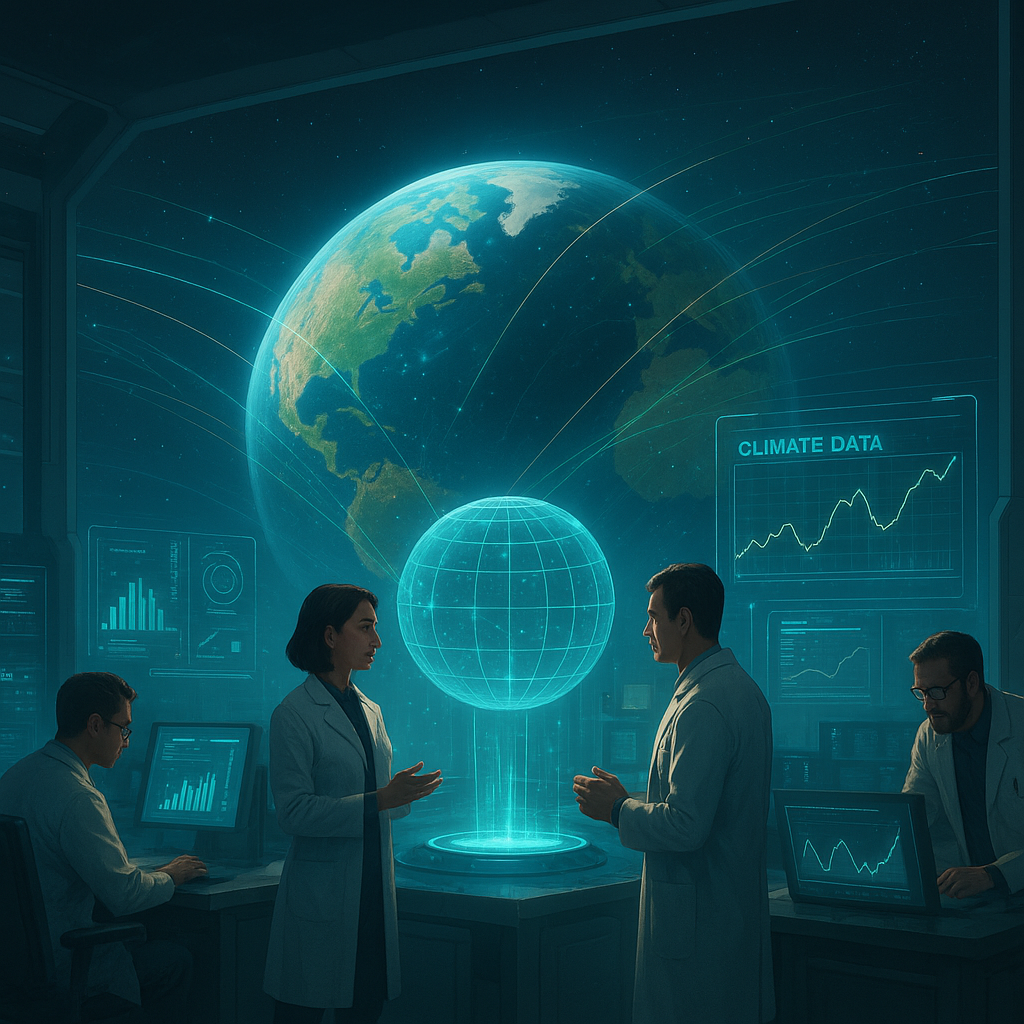
In the summer of 2026, the Arctic experienced yet another record-breaking heatwave, with temperatures soaring to 20°C above average for weeks. Remote sensing satellites captured vast stretches of melting sea ice, while an international team of scientists aboard the icebreaker Polar Dawn collected water samples and atmospheric data to understand the rapid changes unfolding. This scene encapsulates the urgency and complexity of contemporary climate research—where fieldwork, modeling, and technology converge to decode an accelerating global phenomenon.
Climate research today is no longer confined to isolated labs or theoretical models; it spans the entire globe, integrating data from ocean depths to stratospheric layers. The stakes are higher than ever, as societies grapple with the tangible impacts of climate change, from extreme weather events to biodiversity loss. Scientific inquiry in this realm is evolving rapidly, blending traditional methods with AI-driven analytics and unprecedented international collaboration.
“The Arctic heatwave of 2026 is a stark reminder that climate research must move beyond predictions to actionable understanding in real time.” — Dr. Elena Korsakov, Lead Climate Scientist, Arctic Research Consortium
Tracing the Path: How Climate Research Has Evolved Over the Last Century
Climate research has its roots in the 19th century when scientists like John Tyndall identified greenhouse gases’ role in trapping heat. The 20th century brought monumental advances, including the Keeling Curve’s establishment in 1958, which meticulously tracked rising atmospheric CO2 levels. These foundational studies set the stage for the comprehensive climate models developed in the late 20th century, incorporating ocean-atmosphere interactions and feedback loops.
Entering the 21st century, research priorities shifted decisively towards understanding anthropogenic impacts. The Intergovernmental Panel on Climate Change (IPCC), formed in 1988, became a pivotal body synthesizing global climate data to inform policymakers. Alongside, technological leaps in satellite monitoring, remote sensing, and high-performance computing empowered researchers to refine climate projections with unprecedented precision.
However, the journey has not been linear. Early climate models underestimated the pace of ice sheet melt and extreme weather frequency, prompting a reevaluation of assumptions. Increased interdisciplinary approaches emerged, incorporating ecology, economics, and social sciences to grasp climate change's multifaceted effects.
“From isolated gas measurements to integrated Earth system models, climate research’s evolution mirrors our deepening understanding and growing responsibility.” — Prof. Marcus LeBlanc, Climate Historian, University of Cambridge
Data at the Core: Recent Breakthroughs and Analytical Insights
As of 2026, climate research is defined by its ability to harness vast datasets and advanced analytics. The integration of AI and machine learning with traditional climate models has enabled scientists to identify subtle patterns and predict extreme events more accurately. The latest Coupled Model Intercomparison Project (CMIP7) released this year incorporates these technologies, showing improved simulation of monsoon variability and polar amplification.
Key data insights include:
- Ocean Heat Content: The global ocean has absorbed over 90% of excess heat since 1970, with recent studies revealing deep ocean warming below 2,000 meters, previously underestimated.
- Permafrost Carbon Feedback: New measurements from Siberian sites indicate accelerated carbon and methane release, contributing to positive feedback loops.
- Extreme Weather Attribution: Advances in attribution science now allow attribution of specific weather events to climate change with higher confidence, informing disaster preparedness.
- Urban Climate Impact: High-resolution urban climate models highlight how cities exacerbate heatwaves, guiding targeted mitigation strategies.
These breakthroughs are not merely academic. They feed directly into adaptation and mitigation planning, influencing infrastructure design, agricultural policies, and international climate negotiations.
Current Developments in Climate Research: 2026’s Landmark Advances
The year 2026 marks significant strides in climate research methodologies and international coordination. Notably, the deployment of the Sentinel-Climate satellite constellation has provided continuous, high-resolution data on greenhouse gas fluxes and land-use changes worldwide. This advancement, led by the European Space Agency and partners, enhances real-time monitoring capabilities.
On the ground, expanded networks of autonomous sensors—ranging from ocean gliders to soil moisture probes—feed live data into AI-powered platforms, enabling dynamic climate modeling. The US National Oceanic and Atmospheric Administration (NOAA) and China’s National Climate Center have jointly launched a global data-sharing initiative to standardize and democratize climate information.
Moreover, climate research is increasingly incorporating social and economic dimensions. The Climate Impact Consortium’s latest report integrates climate projections with socioeconomic vulnerability indices, highlighting regions at greatest risk and the potential for climate-induced displacement.
Internationally, the 2026 Global Climate Research Summit emphasized the need for open science and inclusivity, fostering partnerships that include Indigenous knowledge systems alongside conventional science. This holistic approach aims to improve resilience and equity in climate responses.
Expert Perspectives: The Intersection of Science, Policy, and Industry
Experts across academia, government, and industry underscore climate research’s pivotal role in shaping sustainable futures. Dr. Amina Patel, Director of the Global Climate Innovation Hub, highlights that “the integration of cutting-edge research with policy frameworks is critical to closing the gap between knowledge and action.” Industry leaders increasingly rely on climate data to inform investment decisions, supply chain resilience, and product innovation.
Energy companies are adopting climate research insights to accelerate the transition to renewables, optimize grid management, and develop carbon capture technologies. Financial institutions use climate risk assessments derived from scientific models to recalibrate portfolios and comply with evolving regulations.
Nevertheless, challenges remain. Data gaps in the Global South and disparities in research funding create uneven knowledge landscapes. Experts call for enhanced capacity building and equitable collaboration to ensure that climate research benefits all regions.
For those beginning their journey in climate science, articles like Embarking on Climate Research: A Practical Guide for Aspiring Scientists offer invaluable pathways, while How Cutting-Edge Climate Research Is Reshaping Our Planet’s Future provides context on the transformative potential of recent discoveries.
Looking Ahead: The Future Trajectory and What to Watch
The trajectory of climate research over the next decade will likely be shaped by several key trends and challenges:
- Enhanced Predictive Capabilities: Continued advances in computing and AI will refine forecast accuracy for regional climate impacts, enabling proactive adaptation.
- Integration of Multidisciplinary Data: Combining ecological, social, and economic data will deepen understanding of climate vulnerabilities and resilience mechanisms.
- Focus on Climate Intervention: As technologies such as solar radiation management and carbon dioxide removal mature, research into risks and governance frameworks will intensify.
- Global Equity in Research: Bridging disparities in data access and scientific capacity will be crucial for inclusive climate solutions.
- Public Engagement and Trust: Transparency and communication strategies will be vital to translate complex research into actionable public policy and behavior change.
Stakeholders must remain vigilant about the ethical implications of emerging climate technologies and the potential unintended consequences of interventions. The delicate balance between mitigation, adaptation, and intervention requires ongoing scientific rigor and societal dialogue.
“Future climate research must embrace complexity and inclusivity to empower effective and just climate action.” — Dr. Sofia Nguyen, Chair, International Climate Science Council
Case Studies: Real-World Impacts and Innovations in Climate Research
Concrete examples illustrate how climate research translates into real-world outcomes. In the Mekong Delta, researchers collaborated with local communities to develop flood-resilient agricultural practices informed by predictive climate models. This initiative has improved crop yields despite increased flooding risks.
In Scandinavia, the integration of climate projections with urban planning has led to the development of green infrastructure that mitigates urban heat islands and manages stormwater, enhancing livability and biodiversity.
Another landmark project is the Blue Carbon Initiative, which quantifies carbon sequestration in coastal ecosystems, guiding conservation policies that simultaneously address climate mitigation and marine biodiversity.
These case studies demonstrate the indispensable role of climate research not just as an academic pursuit but as a foundation for practical, scalable solutions.
For readers seeking deeper insights into the evolving data and breakthroughs driving these outcomes, Rethinking Climate Research: Data, Breakthroughs, and the Road Ahead provides a comprehensive analysis aligned with these themes.