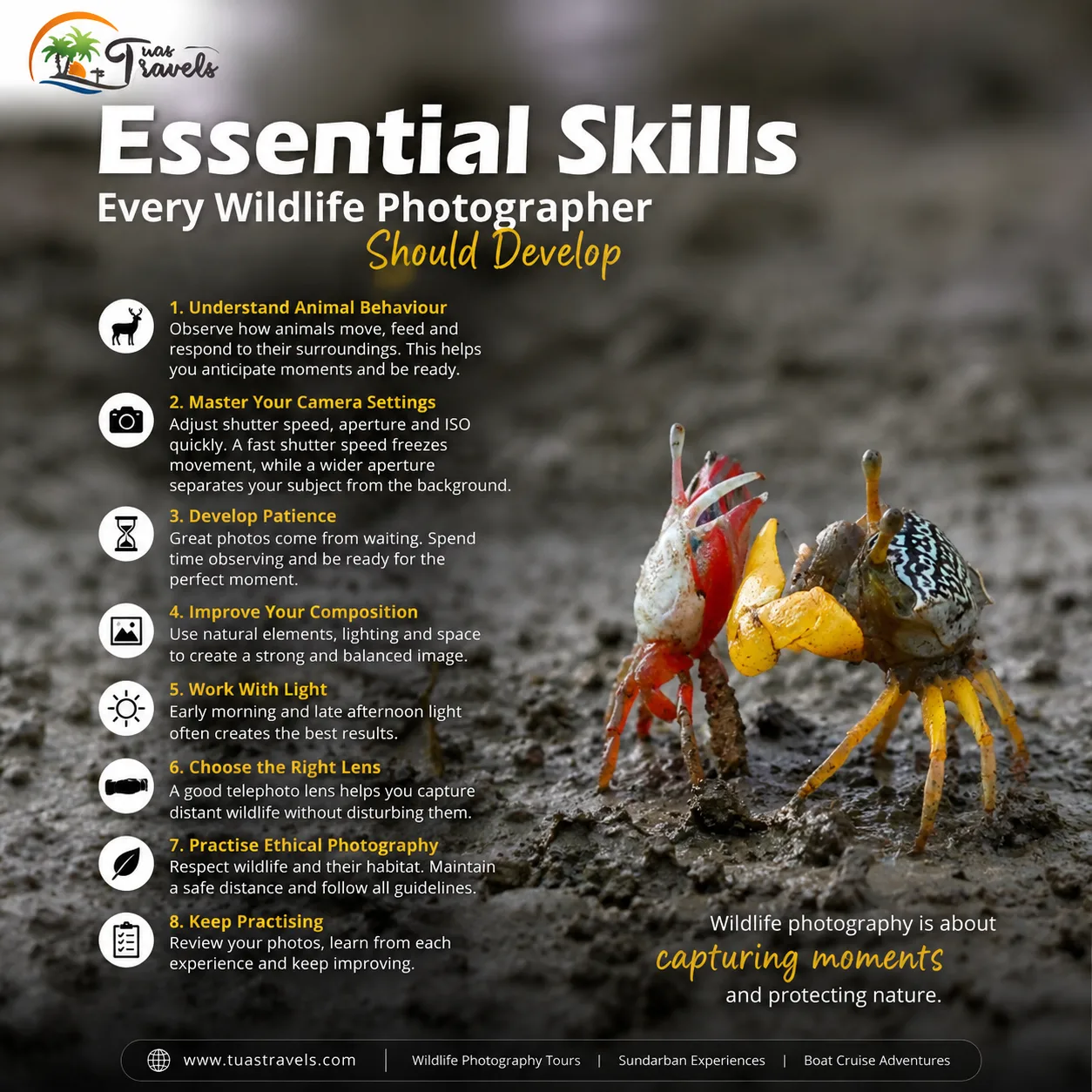
The wildlife photography is not just about pointing, clicking and taking photos at wildlife. You need to be patient, knowledgeable, observant, imaginative, and have knowledge of nature. When you are capturing birds to deer to Royal Bengal Tigers, there are certain skills that can help you take better photos when it comes to nature.
1. Understand Your Camera
It is important for a wildlife photographer to be familiar with manual camera settings. Understand shutter speed, aperture and ISO. The shutter speed is crucial to capture moving animals and aperture adjusts the depth of field. It is knowing what to expect in these areas can help you respond promptly if a "wildlife moment" arises out of nowhere.
2. Master Autofocus
The wildlife does not sit on a wooden fence so accurate focusing is very critical. Understand what continuous autofocus, tracking modes and focus area modes are. The modern mirrorless cameras may also offer animal or eye-detection features as well. If you practice autofocus techniques, you'll have a better chance of obtaining sharp photos.
3. Develop Patience
One of the most crucial characteristics of a good photographer is patience. Animals can hide for extended periods of time before emerging in the open. It is rather than moving around, notice what's happening and wait for an interesting behaviour. There are great photos are usually captured when patience is required.
4. Learn Animal Behaviour
The prediction is the key if you know what will happen next, you have a better chance of understanding wildlife behaviour. You can observe the animals' body language, movement, feeding patterns, alarm calls and interactions. The knowledge that you get can help you get your camera ready before a crucial moment, and take more meaningful photos.
5. Enhance Observation Skills
A good wildlife photographer observes things that other people don't. Search for footprints, animal activity, bird calls, unusual noises, and animal behaviour changes. Observation is an important aspect of wildlife photography, and can help you find animals as well as predict opportunities for photos.
6. Select The Appropriate Lens To Fit Your Camera
It all makes a difference if you use a suitable wildlife photography lens. Photographers prefer the use of a telephoto lens like the 200mm, 400mm and 600mm lens as they enable them to photograph a far away animal without getting too close. Based on the species, habitat, lighting and type of photography, select a lens.
7. Understand Light
The best photographs of wildlife are often created by the interplay of natural light. Understand how early morning, late afternoon, cloudy and strong midday light will impact your subject. The soft golden hour light works well for beautiful colours, shadows, and backgrounds.
8. Practice Composition
Composition adds impact to your wildlife photographs. Apply a variety of techniques including the rule of thirds, leading lines, negative space and clean backgrounds. Be sure to have room in front of an animal on the move to convey direction and movement.
9. Respect Wildlife
The priority of responsible photography must be always before taking the perfect photograph. You should keep a distance from wildlife, do not disturb animals, observe park rules and never feed or lure animals. Respecting nature is protecting animals, and the enjoyment of photography.
10. Keep Practising
Practice makes perfect when it comes to wildlife photography. Try various shutter speeds, focal lengths, compositions and lighting situations. Looking at your photos after can help you see what went wrong and what went right.
Conclusion
The key to being a successful wildlife photographer is patience, observation, creativity, and respect for the animal. The photographers can become more confident in stressful situations and more adept at capturing real moments that convey a story by developing these key skills. Each Sundarban Wildlife Photography Tour can be a learning experience if you practice and experience it.