Organizations planning to achieve SA8000:2026 certification often focus on implementing workplace practices while overlooking one critical element—well-structured SA8000:2026 documents. A complete documentation system provides the framework for implementing social accountability requirements consistently, demonstrating compliance, and supporting continual improvement across the organization.
The revised SA8000:2026 standard places greater emphasis on effective management systems, human rights due diligence, stakeholder engagement, and documented evidence of implementation. Rather than maintaining isolated policies or procedures, organizations should develop an integrated SA8000:2026 documentation system that supports day-to-day operations and certification activities.
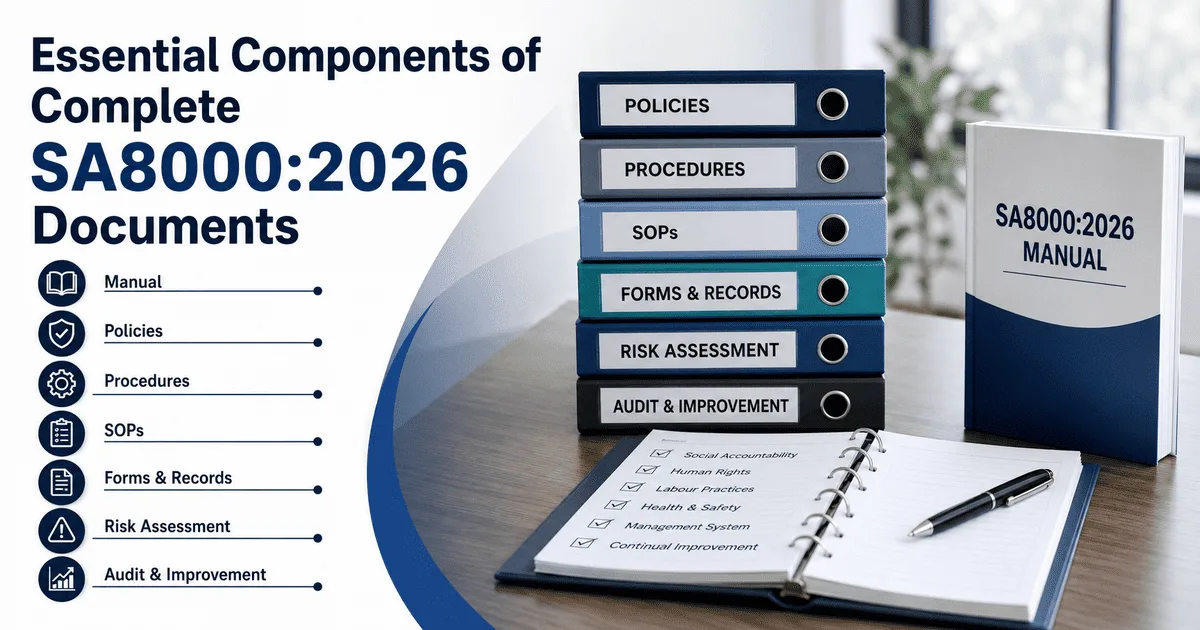
1. SA8000:2026 Manual
The SA8000:2026 manual serves as the foundation of the management system. It defines the scope of the system, outlines organizational commitments, assigns responsibilities, and explains how social accountability requirements are implemented. A well-prepared manual helps employees and auditors understand the organization's overall compliance framework.
2. Policies Supporting Social Accountability
Policies communicate management's commitment to protecting workers' rights and complying with SA8000 requirements.
Typical policies include:
- Human Rights Policy
- Child Labour Policy
- Forced Labour Prevention Policy
- Health and Safety Policy
- Anti-Discrimination Policy
- Freedom of Association Policy
- Grievance Policy
- Ethical Business Conduct Policy
These policies should be approved by top management, communicated throughout the organization, and reviewed regularly.
3. Operational Procedures
Clearly defined SA8000:2026 procedures convert policy commitments into practical actions. They establish consistent methods for recruitment, training, risk assessment, internal audits, corrective actions, complaint handling, emergency preparedness, supplier evaluation, and document control.
Beyond documenting activities, essential SA8000:2026 procedures provide a structured approach for implementing policies, managing risks, and maintaining consistent compliance across departments.
4. Standard Operating Procedures (SOPs)
SOPs provide detailed work instructions for specific operational activities. They help employees perform tasks consistently while reducing errors and improving process control. Organizations commonly develop SOPs for safety practices, incident reporting, worker communication, emergency response, and document management as part of their overall SA8000:2026 documentation system.
5. Forms and Records
Policies and procedures must be supported by records that demonstrate implementation.
Typical records include:
- Training records
- Attendance records
- Internal audit reports
- Corrective action reports
- Risk assessment records
- Worker grievance logs
- Management review minutes
- Health and safety inspection reports
Maintaining complete and accurate records provides objective evidence of compliance and supports effective SA8000:2026 documents during certification assessments.
6. Risk Assessment Documentation
SA8000:2026 places greater emphasis on human rights due diligence and proactive risk management. Organizations should document human rights risks, workplace safety risks, labour practice risks, supplier-related risks, improvement actions, and monitoring activities.
Well-maintained risk assessment documentation enables organizations to identify potential issues early, implement preventive measures, and demonstrate continual improvement.
7. Audit and Continual Improvement Documents
Continual improvement is supported through documentation such as:
- Internal audit checklists
- Corrective action plans
- Management review reports
- Performance monitoring records
- Improvement plans
These documents help organizations evaluate system performance and maintain complete SA8000:2026 documents throughout the certification lifecycle.
Building a Complete Documentation System
Developing documents individually often leads to inconsistencies, duplicated information, and documentation gaps. A structured documentation system ensures that manuals, procedures, policies, SOPs, forms, and records work together as an integrated management framework.
Organizations seeking to simplify implementation can benefit from professionally prepared SA8000:2026 documents, including a comprehensive SA8000:2026 documentation kit with editable manuals, procedures, SOPs, forms, audit checklists, and supporting templates. Such resources can significantly reduce preparation time while allowing customization to meet specific organizational needs.
Conclusion
Complete SA8000:2026 documents are more than an audit requirement—they form the backbone of an effective social accountability management system. By implementing comprehensive manuals, policies, SA8000:2026 procedures, SOPs, forms, records, and risk assessment documents, organizations can strengthen compliance, improve operational consistency, and support continual improvement. Well-designed SA8000:2026 documentation not only facilitates certification but also promotes sustainable social accountability practices across the organization.