
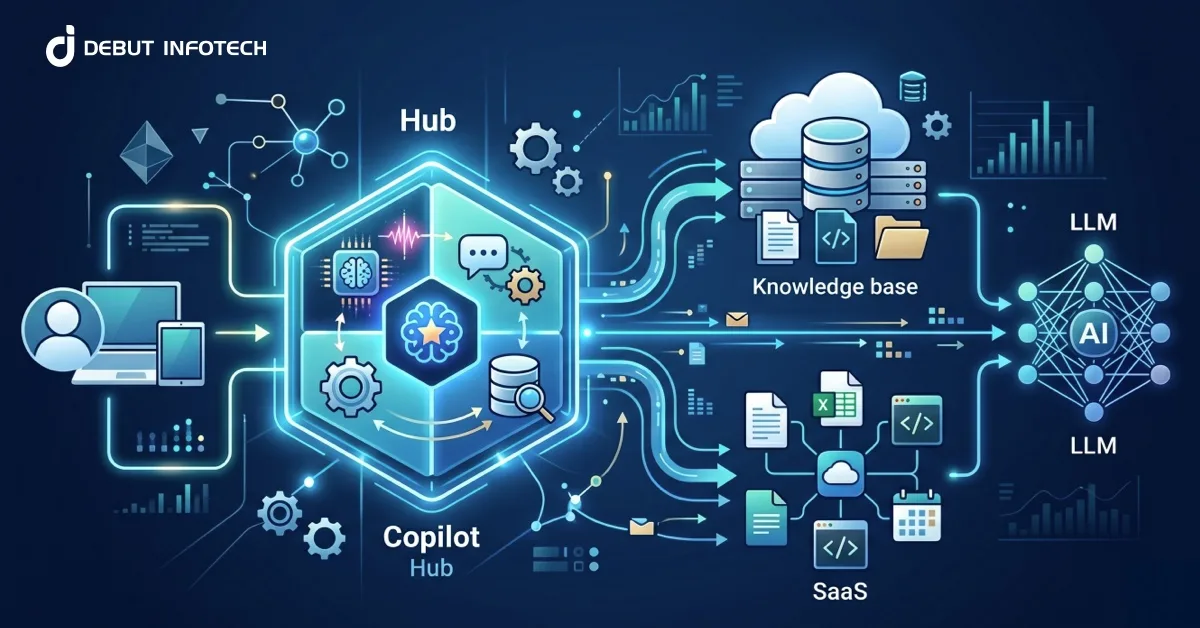
Artificial intelligence is no longer limited to chatbots and automation tools. Modern organizations are increasingly adopting AI-powered assistants that can streamline workflows, improve productivity, and provide employees with instant access to business knowledge. As enterprises continue their digital transformation journeys, AI copilots are emerging as valuable tools for enhancing operational efficiency and decision-making.
The Rise of Enterprise AI Assistants
The enterprise AI landscape has evolved rapidly over the past few years. Organizations are leveraging advanced language models and intelligent assistants to support employees across departments, including customer service, human resources, finance, sales, and operations.
A reliable AI copilot development company should demonstrate experience building customized solutions that align with industry-specific requirements. Organizations should also evaluate security practices, compliance knowledge, deployment methodologies, and long-term support capabilities.
Why Businesses Are Investing in AI Copilots
Organizations across industries are investing in AI copilots because they offer practical solutions to common operational challenges.
1. Increased Productivity
Employees spend a significant amount of time searching for information, creating documents, and managing repetitive tasks. AI copilots can automate many of these activities, allowing teams to focus on higher-value work.
2. Faster Access to Knowledge
AI assistants can instantly retrieve information from enterprise systems, reducing delays and improving decision-making.
3. Improved Customer Experiences
Customer-facing teams can use AI-powered insights to respond more quickly and accurately to inquiries, resulting in higher satisfaction levels.
4. Operational Efficiency
Automated workflows reduce manual effort, minimize errors, and improve consistency across business processes.
5. Better Decision Support
AI copilots can analyze large volumes of data and provide recommendations that help leaders make informed business decisions.
Key Considerations Before Integration
While the benefits are compelling, organizations must carefully plan their implementation strategy.
1. Data Security and Compliance
Enterprise data often contains sensitive information. Businesses must ensure that AI solutions comply with industry regulations and internal security policies.
2. Data Quality
An AI copilot is only as effective as the information it can access. Poor-quality or outdated data can negatively impact performance and reliability.
3. Infrastructure Readiness
Organizations should assess whether their existing technology stack can support AI-powered integrations and large-scale deployments.
4. Scalability
The chosen solution should be capable of supporting future growth as business needs evolve.
5. User Adoption
Employee training and change management play a critical role in maximizing the value of AI initiatives.
Enterprise AI Copilot Integration Roadmap
Businesses can improve their chances of success by following a phased approach.
1. Assess Business Processes
Identify workflows that would benefit most from AI assistance and automation.
2. Define High-Impact Use Cases
Prioritize initiatives that can generate measurable improvements in productivity, customer experience, or operational efficiency.
3. Prepare Enterprise Data
Ensure information is organized, accessible, and governed according to security requirements.
4. Select the Right Technology
Evaluate platforms based on integration capabilities, scalability, security, and customization options.
5. Launch a Pilot Program
Test the solution with a limited user group before expanding deployment.
6. Integrate Core Systems
Connect relevant business applications and knowledge repositories.
Why Choose Debut Infotech
Debut Infotech helps businesses build and deploy customized AI-powered solutions designed around their unique operational requirements. The company combines enterprise integration expertise, scalable development practices, and security-focused implementation strategies to deliver practical AI applications across industries.
From initial consulting and use-case discovery to deployment and ongoing optimization, Debut Infotech supports organizations throughout the entire AI adoption journey, helping them unlock greater productivity, efficiency, and business value from intelligent automation technologies.
Conclusion
Enterprise AI copilots are rapidly becoming essential tools for organizations seeking greater efficiency, smarter decision-making, and improved employee productivity. However, successful implementation requires careful planning, strong data governance, secure integrations, and a clear understanding of business objectives.
Additionally, partnering with an experienced AI development company can help enterprises navigate technical complexities while accelerating implementation timelines and reducing deployment risks.
Frequently Asked Questions
Q1. What is Enterprise AI Copilot integration?
A. It is the process of connecting AI-powered assistants with enterprise systems, workflows, databases, and applications to improve productivity and automate tasks.
Q2. How long does AI Copilot implementation typically take?
A. Implementation timelines vary depending on project complexity, integration requirements, customization needs, and organizational readiness. Pilot deployments can often be completed within a few weeks, while enterprise-wide rollouts may take several months.
Q3. Can AI copilots integrate with existing business software?
A. Yes. Modern AI copilots can integrate with CRM platforms, ERP systems, collaboration tools, document repositories, knowledge bases, and other enterprise applications.
Q4. What industries are adopting AI copilots most rapidly in 2026?
A. Financial services, healthcare, retail, manufacturing, logistics, customer support, and professional services are among the leading adopters of AI copilot technologies.