Market Overview:
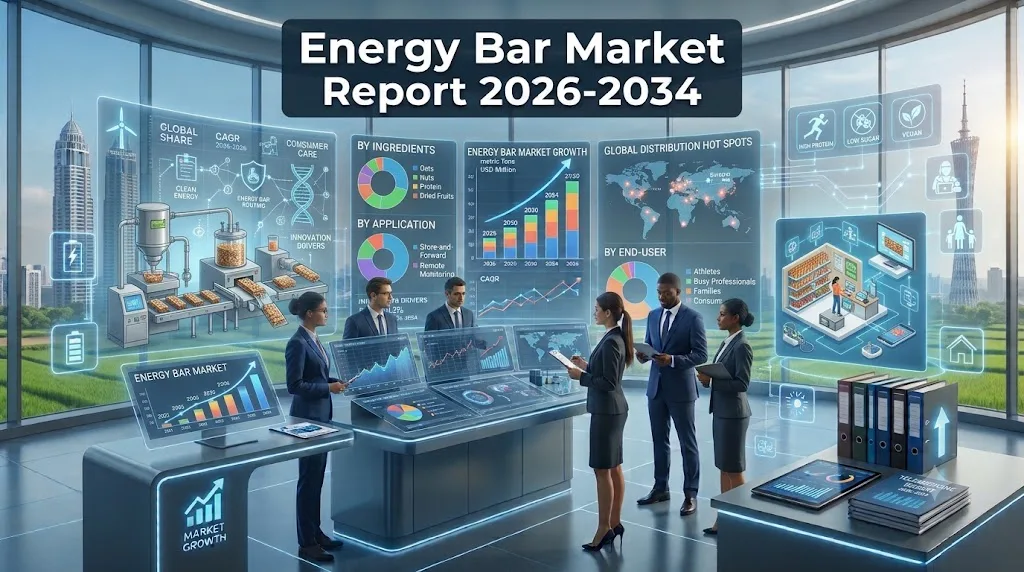
According to IMARC Group’s latest research publication, “Energy Bar Market: Global Industry Trends, Share, Size, Growth, Opportunity and Forecast 2026-2034”, The global energy bar market size grew from USD 4.1 Billion in 2025 to USD 4.3 Billion in 2026. Looking forward, IMARC Group estimates the market to reach USD 6.6 Billion by 2034, exhibiting a CAGR of 5.45% from 2026-2034.
This detailed analysis primarily encompasses industry size, business trends, market share, key growth factors, and regional forecasts. The report offers a comprehensive overview and integrates research findings, market assessments, and data from different sources. It also includes pivotal market dynamics like drivers and challenges, while also highlighting growth opportunities, financial insights, technological improvements, emerging trends, and innovations. Besides this, the report provides regional market evaluation, along with a competitive landscape analysis.
How Innovation Is Reshaping the Future of the Energy Bar Market
- Plant-based protein sources such as pea, hemp, brown rice, and soy are rapidly replacing whey-based alternatives in energy bar formulations, driven by a growing vegan and flexitarian consumer base seeking sustainable nutrition.
- Functional ingredients including adaptogens, probiotics, lion’s mane mushroom, and superfoods are being incorporated into bars to deliver targeted wellness benefits such as cognitive support, immunity enhancement, and stress management.
- In February 2026, ALOHA launched its Cookies and Creme Plant-Based Protein Bar line in the U.S., reflecting growing demand for clean, plant-forward snack options with no artificial ingredients.
- TRUBAR achieved Seed Oil Free certification for its entire plant-based protein bar lineup after reformulating to remove seed oils, setting a new benchmark for clean-label compliance in the energy bar segment.
- Supermarkets and hypermarkets hold a 32% distribution channel share, with prominent endcap displays, loyalty programs, and high foot traffic driving consistent impulse purchases of energy bars across organized retail formats.
Download a sample PDF of this report: https://www.imarcgroup.com/energy-bar-market/requestsample
Key Trends in the Energy Bar Market
- Growing Demand for Plant-Based Ingredients: The shift toward plant-based nutrition is significantly influencing the energy bar industry. Consumers are increasingly seeking bars formulated with plant-derived proteins, driven by concerns related to animal welfare, environmental sustainability, and personal health. In February 2026, ALOHA introduced its Cookies and Creme Plant-Based Protein Bar line in the U.S., reflecting rising consumer demand for clean, plant-forward snack options. This transition is encouraging manufacturers to develop innovative plant-based formulations that deliver comparable taste, texture, and nutritional profiles to traditional dairy or whey-based alternatives. The expanding vegan and flexitarian consumer base is creating new opportunities for brands to introduce products that cater to diverse dietary requirements while maintaining broad market appeal.
- Expansion of Functional and Fortified Variants: The incorporation of functional ingredients into energy bars is reshaping consumer expectations and product development strategies across the industry. Manufacturers are enriching bars with added vitamins, minerals, probiotics, adaptogens, and superfoods to deliver targeted health benefits beyond basic nutrition. In January 2025, UK brand Tribe launched a Protein and Focus energy bar range featuring eight adaptogens and lion’s mane mushroom to support mental clarity and stress resilience, signalling rising demand for bars with functional benefits. The growing influence of social media and health-focused digital platforms is amplifying awareness about functional nutrition, further accelerating adoption among younger demographics.
- Rising Preference for Clean-Label Products: Consumer demand for transparency in food labeling is profoundly influencing product formulation strategies within the energy bar sector. Shoppers are increasingly scrutinizing ingredient lists, favoring bars made with whole, recognizable ingredients and free from artificial preservatives, colors, sweeteners, and genetically modified organisms. In January 2025, TRUBAR achieved Seed Oil Free certification for its entire plant-based protein bar lineup after reformulating products to remove seed oils and meet stringent third-party testing standards. Certifications such as organic, non-GMO, and fair trade are becoming important differentiators on retail shelves, influencing brand loyalty and repeat purchases.
Growth Factors in the Energy Bar Market
- Rising Health Consciousness Among Consumers: Consumers globally are making more deliberate choices about their nutrition, increasingly opting for food products that offer functional benefits, clean ingredients, and balanced macronutrient profiles. This shift is translating directly into higher demand for energy bars as a convenient, portable nutrition solution. Protein bars alone hold 40% of the market type segment, reflecting how deeply protein-focused consumption has embedded itself into daily dietary routines across fitness enthusiasts, athletes, and health-conscious professionals.
- Growing Fitness and Active Lifestyle Culture: The widespread adoption of gym-going, endurance sports, outdoor recreational activities, and structured fitness programs across both developed and developing markets is sustaining robust demand for on-the-go nutritional products. In October 2025, Ready announced a nationwide retail partnership with The Vitamin Shoppe to launch its best-selling protein bars across over 640 U.S. specialty retail locations, underlining the strength of the sports nutrition retail channel in driving energy bar sales.
- Product Diversification and Innovation Driving Wider Adoption: The energy bar segment has expanded well beyond traditional athlete demographics through the introduction of keto-friendly, low-carb, sugar-free, gluten-free, and vegan variants. In April 2025, Clif Bar, a part of Mondelez International, launched a new Caffeinated Collection of energy bars nationwide in the U.S., formulated with organic ingredients and plant-based protein to support active lifestyles. Such diversification is broadening the addressable consumer base and maintaining strong category momentum across retail channels.
- E-Commerce Expansion Enhancing Product Accessibility: The rapid growth of online retail platforms is enabling energy bar brands to reach consumers beyond traditional brick-and-mortar distribution networks. Digital-native brands and established manufacturers alike are leveraging direct-to-consumer channels, subscription models, and platform-based marketing to drive trial, build brand loyalty, and compete effectively without reliance on physical shelf space, particularly in emerging markets across Asia Pacific, Latin America, and the Middle East.
- Expansion Into Emerging Economies Fueling New Demand Centers: Asia Pacific is emerging as a high-growth region for energy bars, driven by rapid urbanization, rising disposable incomes, and increasing adoption of western dietary habits. The growing middle-class population in countries such as India, China, and Indonesia, combined with the proliferation of modern retail formats and e-commerce platforms, is significantly improving product accessibility. In November 2025, Myprotein partnered with Mars to launch Snickers-flavored protein bars in the UK, expanding online and retail availability to health-conscious and active consumers, demonstrating how brand collaborations are being used to accelerate market penetration.
We explore the factors propelling the xx market growth, including technological advancements, consumer behaviors, and regulatory changes.
Leading Companies Operating in the Global Energy Bar Industry:
- General Mills Inc.
- Glanbia plc
- Kellanova
- Lotus Bakeries
- Mars, Incorporated
- Mondelez International Inc.
- NuGo Nutrition
- PowerBar
- Probar Inc.
- Quest Nutrition
- The Hershey Company
- The Simply Good Foods Company
Energy Bar Market Report Segmentation:
Breakup By Type:
- Protein Bar
- Nutrition Bar
- Cereal Bar
- Fiber Bar
Protein bar holds 40% of the market share, becoming a staple in the daily nutrition routines of fitness enthusiasts, athletes, and health-conscious consumers seeking convenient, high-protein snacking options.
Breakup By Nature:
- Organic
- Conventional
Conventional dominates the market with 65% market share due to wide availability, competitive pricing, and accessibility across diverse consumer demographics and retail formats globally.
Breakup By Distribution Channel:
- Supermarkets/Hypermarkets
- Convenience Stores
- Specialty Stores
- Online Retail Stores
- Others
Supermarkets and hypermarkets dominate the market with a share of 32%, offering consumers an extensive selection of brands, flavors, and product variants, enhanced by high foot traffic and regular promotional campaigns that drive consistent sales volume.
Breakup By Region:
- North America (United States, Canada)
- Asia Pacific (China, Japan, India, South Korea, Australia, Indonesia, Others)
- Europe (Germany, France, United Kingdom, Italy, Spain, Russia, Others)
- Latin America (Brazil, Mexico, Others)
- Middle East and Africa
North America holds the leading position with 35% of the global market share, driven by a well-established health and wellness culture, high per capita disposable income, strong consumer awareness of nutritional supplementation, and advanced retail infrastructure spanning supermarkets, specialty health food stores, and e-commerce platforms.
Recent News and Developments in the Energy Bar Market
- February 2026: ALOHA, an award-winning plant-based protein brand, introduced its Cookies and Creme Plant-Based Protein Bar line in the U.S., reflecting rising consumer demand for clean, plant-forward snack options free from artificial ingredients and fillers.
- June 2025: Mars’ Kind brand launched Healthy Grains Energy Bars nationwide in the U.S., featuring five supergrains including oats, millet, buckwheat, amaranth, and quinoa for sustained energy without artificial ingredients or sugar spikes, available in flavors like Dark Chocolate Chunk, Mixed Berry, and Strawberry Banana.
- March 2025: BioTechUSA inaugurated a multi-layer protein bar production line in Hungary, tripling annual capacity to 75 million bars. The launch introduced premium flavors including Salted Caramel and Peanut Butter, enhancing contract manufacturing and European market reach, while reducing environmental impact with solar panels and energy-efficient production.
Note: If you require specific details, data, or insights that are not currently included in the scope of this report, we are happy to accommodate your request. As part of our customization service, we will gather and provide the additional information you need, tailored to your specific requirements. Please let us know your exact needs, and we will ensure the report is updated accordingly to meet your expectations.
About Us:
IMARC Group is a global management consulting firm that helps the world’s most ambitious changemakers to create a lasting impact. The company provides a comprehensive suite of market entry and expansion services. IMARC offerings include thorough market assessment, feasibility studies, company incorporation assistance, factory setup support, regulatory approvals and licensing navigation, branding, marketing and sales strategies, competitive landscape and benchmarking analyses, pricing and cost research, and procurement research.
Contact Us:
IMARC Group
134 N 4th St. Brooklyn, NY 11249, USA
Email: [email protected]
Tel No: (D) +91 120 433 0800
United States: +1-201-971-6302