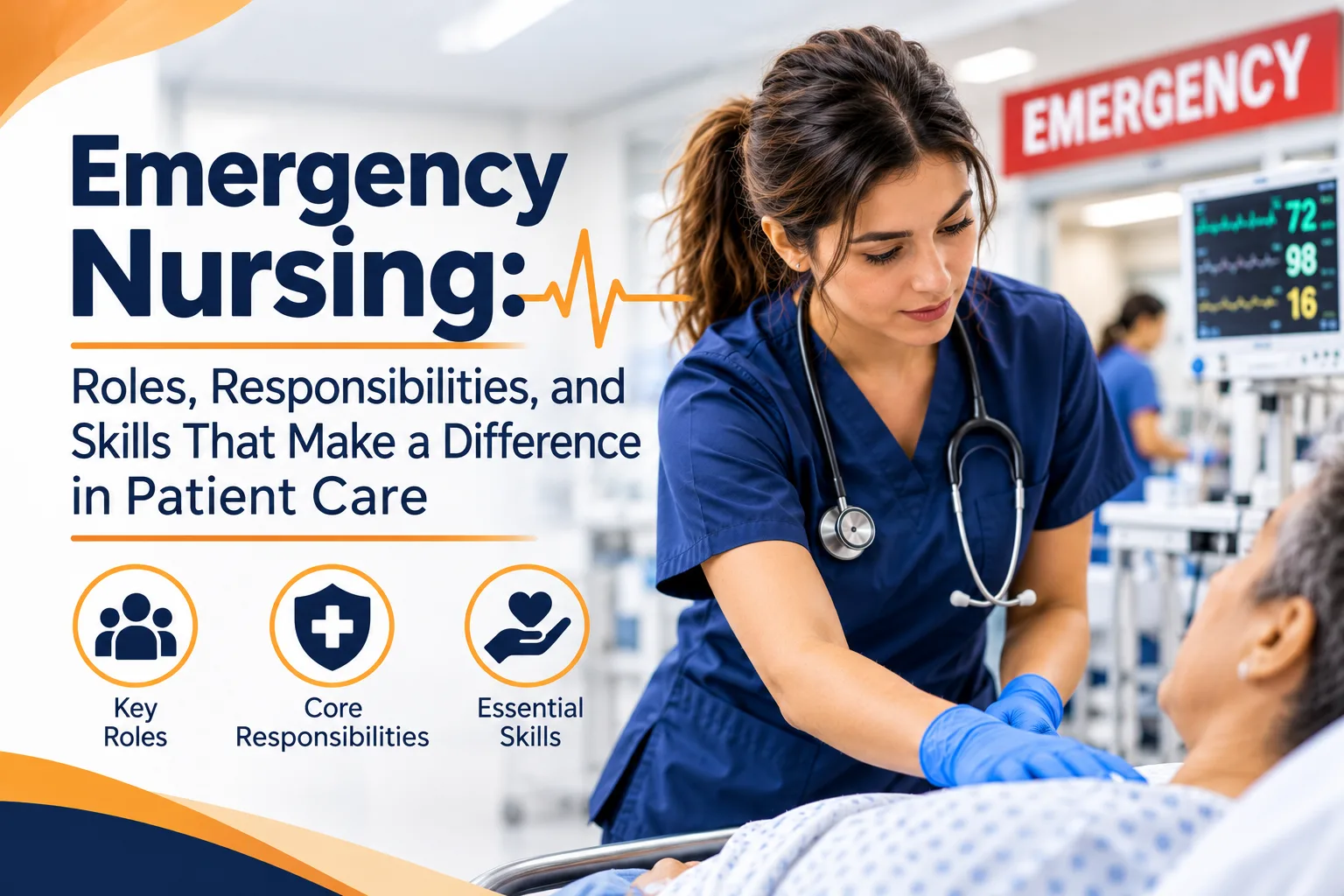
Emergency care is one of the most demanding areas of healthcare. Patients often arrive at emergency departments with unexpected injuries, sudden illnesses, or life-threatening conditions that require immediate medical attention. In these situations, healthcare professionals must work quickly, communicate clearly, and make informed decisions to support patient safety.
Emergency nursing plays an essential role in delivering timely and effective care when patients need immediate medical support. Emergency nurses assess patients, identify urgent health concerns, coordinate with physicians, and provide treatment in fast-changing clinical environments. Their ability to remain focused under pressure helps healthcare facilities maintain efficient emergency services and improve the patient care experience.
What Does an Emergency Nurse Do?
Emergency nurses care for patients who require immediate medical attention. They work in hospital emergency departments, trauma centers, urgent care facilities, and other emergency healthcare settings. Their responsibilities can change within minutes depending on the patient's condition and the number of people requiring treatment.
Some of their key responsibilities include:
- Patient assessment: Evaluating symptoms, checking vital signs, and identifying urgent medical concerns.
- Emergency triage: Prioritizing patients according to the seriousness of their medical conditions.
- Immediate treatment: Assisting with wound care, medication administration, oxygen therapy, and other emergency interventions within their scope of practice.
- Patient monitoring: Observing changes in a patient's condition and communicating concerns to the medical team.
- Care coordination: Working with physicians, paramedics, specialists, and other healthcare professionals.
- Patient and family support: Explaining procedures, providing updates, and offering reassurance during stressful situations.
These responsibilities require nurses to combine clinical knowledge with sound judgment and compassionate communication.
Essential Skills Every Emergency Nurse Should Have
Working in an emergency department requires more than general nursing knowledge. Nurses must be prepared to handle unpredictable situations while maintaining professional standards and patient safety.
1. Critical Thinking and Decision-Making
Emergency nurses frequently encounter patients with multiple symptoms and varying levels of medical urgency. They must recognize warning signs, assess available information, and respond appropriately. Strong clinical judgment helps them identify potential complications and communicate concerns without unnecessary delays.
2. Effective Communication
Clear communication is essential when several healthcare professionals are involved in treating a patient. Nurses must share accurate patient information, document clinical observations, and provide understandable updates to patients and families.
3. Ability to Work Under Pressure
Emergency departments can become extremely busy, especially during accidents, seasonal illness outbreaks, and other unexpected events. Nurses must remain organized, focused, and responsive even when managing several priorities.
4. Compassion and Emotional Awareness
Patients arriving at emergency departments may be frightened, confused, or experiencing severe pain. A compassionate approach helps nurses build trust and provide respectful care during difficult situations.
5. Clinical Knowledge and Technical Skills
Emergency nurses need knowledge of trauma care, cardiac emergencies, respiratory conditions, medication safety, and infection prevention. Continuing education and practical experience help them maintain their clinical competencies.
Why Emergency Nursing Is Important for Healthcare Facilities
Emergency departments are often the first point of contact for patients experiencing serious or unexpected health problems. The quality of nursing support can influence how efficiently patients are assessed, treated, and transferred to the appropriate care setting.
A well-supported emergency nursing team helps healthcare facilities:
- Improve patient assessment and prioritization.
- Maintain efficient emergency department operations.
- Respond more effectively to sudden increases in patient volume.
- Support physicians and other clinical professionals.
- Reduce delays caused by staffing shortages.
- Maintain consistent communication throughout the treatment process.
Appropriate staffing, clinical experience, and ongoing competency assessment are important considerations for healthcare facilities that want to maintain safe and responsive emergency services.
Common Challenges in Emergency Department Staffing
Even experienced healthcare facilities can face difficulties maintaining adequate emergency department staffing. Patient volumes are not always predictable, and sudden increases in demand can place additional pressure on existing nursing teams.
Some common staffing challenges include:
Unexpected Patient Surges: Emergency departments may experience sudden increases in patient numbers due to accidents, public health emergencies, or seasonal illnesses.
Nursing Shortages: A limited supply of qualified nurses can make it difficult to maintain appropriate coverage across shifts.
Staff Burnout: Long working hours, demanding responsibilities, and emotionally challenging situations can contribute to fatigue and workplace stress.
Specialized Skill Requirements: Emergency departments need nurses with relevant clinical knowledge and experience. Finding professionals who meet these requirements can take time.
Scheduling Difficulties: Maintaining coverage during nights, weekends, holidays, and unexpected staff absences can create additional operational challenges.
Addressing these issues requires effective workforce planning and access to qualified nursing professionals.
How Healthcare Staffing Agencies Support Emergency Departments
Healthcare staffing agencies can help hospitals and medical facilities connect with qualified professionals when additional nursing support is needed.
Rather than relying entirely on existing employees, facilities can work with staffing partners to identify professionals who match their clinical requirements and scheduling needs.
A reliable staffing partner can support healthcare facilities through:
- Flexible staffing solutions: Helping facilities address temporary vacancies and changing workforce requirements.
- Qualified nursing professionals: Connecting employers with candidates who have relevant education, experience, and credentials.
- Recruitment assistance: Supporting the process of identifying and evaluating potential candidates.
- Workforce continuity: Helping facilities manage staffing gaps caused by absences or increased patient demand.
- Long-term workforce planning: Supporting recruitment strategies that align with changing healthcare needs.
Healthcare facilities should always verify professional licenses, clinical competencies, certifications, and experience before assigning nurses to emergency care responsibilities.
How to Choose the Right Emergency Nursing Staffing Partner
Selecting a healthcare staffing agency is an important decision because the quality of recruitment directly affects workforce readiness.
Healthcare administrators should consider the following factors when evaluating a staffing partner:
- Healthcare recruitment experience: Look for an agency familiar with nursing roles and clinical workforce requirements.
- Candidate screening: Ensure the agency follows appropriate processes for verifying qualifications and professional credentials.
- Flexible staffing options: Consider whether the agency can support temporary, per diem, and longer-term staffing requirements.
- Communication: Choose a partner that provides clear updates throughout the recruitment process.
- Understanding of facility needs: The agency should understand the specific responsibilities, experience requirements, and scheduling expectations associated with each position.
A thoughtful selection process can help healthcare organizations build stronger teams while maintaining their standards of patient care.
Building Stronger Emergency Care Teams with EmpowerCare
Reliable nursing professionals are essential to maintaining responsive and effective emergency departments. Healthcare facilities need staffing solutions that consider patient needs, clinical responsibilities, workforce availability, and long-term operational goals.
EmpowerCare supports healthcare staffing needs by connecting healthcare professionals with facilities seeking qualified workforce support. With experience in healthcare staffing, the company helps facilities find nurses and other healthcare professionals to support their workforce requirements.
Whether a facility needs additional nursing support or wants to strengthen its recruitment strategy, working with an experienced staffing partner can make workforce planning more manageable.
Looking for dependable healthcare staffing support? Connect with EmpowerCare to discuss your facility's staffing requirements and explore solutions for building a reliable healthcare team.
Frequently Asked Questions
1. What is emergency nursing?
Emergency nursing is a nursing specialty focused on providing immediate care to patients experiencing sudden illnesses, injuries, and other urgent medical conditions. It involves patient assessment, triage, treatment, monitoring, and care coordination.
2. What qualifications are important for emergency nurses?
Emergency nurses generally need an active registered nursing license, relevant clinical experience, and the skills required for emergency care. Additional training and certifications in areas such as trauma, cardiac care, and emergency nursing can strengthen their qualifications.
3. How can healthcare staffing agencies help emergency departments?
Healthcare staffing agencies help facilities identify qualified nursing professionals to address workforce shortages, temporary vacancies, and changing staffing requirements. They can also support recruitment and workforce planning.