It's a fair question, and one worth asking before you appoint anyone. London is full of architecture practices, and plenty of them will happily take on your extension wherever it sits. So does it actually matter whether the firm knows your particular corner of the city, or is a good architect simply a good architect?
The honest answer is that location matters more than most homeowners expect, though not for the reasons you might think. When people search for architects in london, they often assume the whole city is one market. In planning terms, it really isn't.
Every borough plays by its own rules
This is the heart of it. National planning policy exists, but each London borough interprets and applies it differently through its own local plan. What sails through in one borough can run into real resistance in another just a few miles away.
A scheme that a Hackney officer would wave through might face genuine pushback in Richmond. Something standard in one area triggers a full application in another. The rules look national on paper, but the reality on the ground shifts every time you cross a borough line, and that local interpretation is exactly what decides whether your project glides or stalls.
So the value of a firm that knows your borough isn't about geography for its own sake. It's about knowing, before a single drawing is submitted, what your specific council actually approves.
What borough knowledge actually buys you
A practice with a real track record in your borough brings a practical advantage that speeds the process and cuts the risk of refusal or an expensive mid-application redesign.
They know how the local design guidance gets applied in practice, not just what it says. They know which concerns a particular planning department raises most often, and they design those objections out before they're ever voiced. They know the tone of the local officers and how to address a worry before it hardens into a reason for refusal.
That kind of knowledge is often worth more than any amount of general polish. A firm can produce beautiful drawings and still get refused if it doesn't understand the borough it's applying to.
Local knowledge in practice
To see how this plays out, it helps to look at how a practice talks about the specific areas it works in. Take somewhere like New Malden, out in the Kingston borough. A short walkthrough from an architect New Malden homeowners might consider shows the kind of area-specific understanding that separates a genuinely local practice from a firm treating every project the same.
Kingston is a good example of why this matters, because a meaningful share of the borough sits under Green Belt or conservation constraints that don't apply in much of inner London. A firm that already knows that walks in prepared. A firm that doesn't finds out the hard way, on your time and your budget.
Article 4 is the London trap
There's one London specific catch that makes local knowledge especially valuable. Permitted development rights, the ones that let you build certain things without a full application, are far more restricted in London than elsewhere because so many boroughs have Article 4 Directions in place.
These directions quietly strip away rights you might assume you have. A local firm knows which streets carry them and checks before promising you anything. Where permitted development does still apply, a good architect will usually secure a lawful development certificate to confirm the works are legal, which protects you when you eventually sell.
Miss an Article 4 direction and you can find yourself submitting a full application for something you were told needed none. That's the sort of mistake local familiarity prevents.
Bigger isn't the same as better
None of this means you need a huge, famous firm. Often the opposite.
For most London homeowners extending a terraced or semi detached property, a small to medium RIBA chartered practice with a strong residential portfolio and genuine local knowledge is the better fit. You get the credentials and the process without the risk of your project being handed down to a junior at a large firm juggling far bigger commissions.
What you're really looking for is a practice that has done extensions like yours, in boroughs like yours, and can show you the results.
The question that settles it
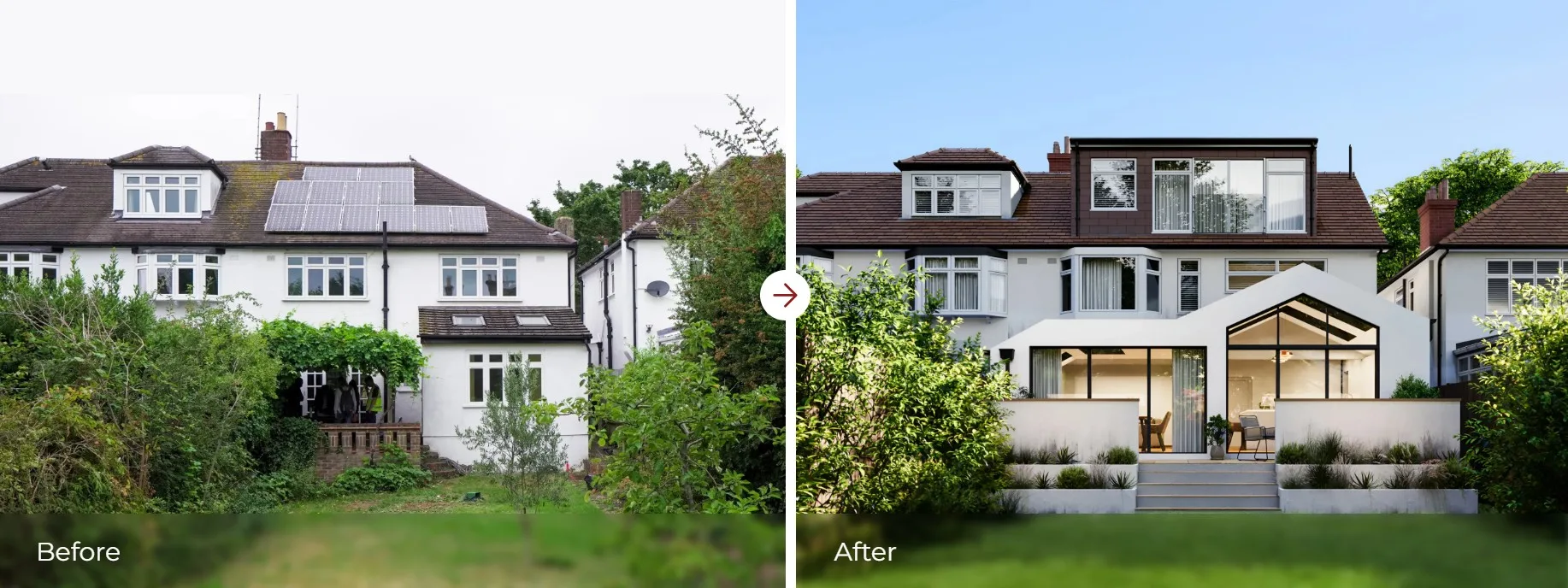
So when you sit down with any London practice, don't ask whether they cover your area. Almost all will say yes. Ask instead how many projects they've taken through your specific borough's planning department, and ask to see completed extensions on properties like yours. A Victorian mid terrace rear return and an Edwardian semi side extension face completely different constraints, and you want proof they've handled yours.
If the answers are specific and backed by real examples, you've found a firm whose local knowledge will actually work for you. If they're vague, keep looking. In a city where the borough decides so much, that specific experience is the thing quietly working in your favour long before the plans are ever drawn.