
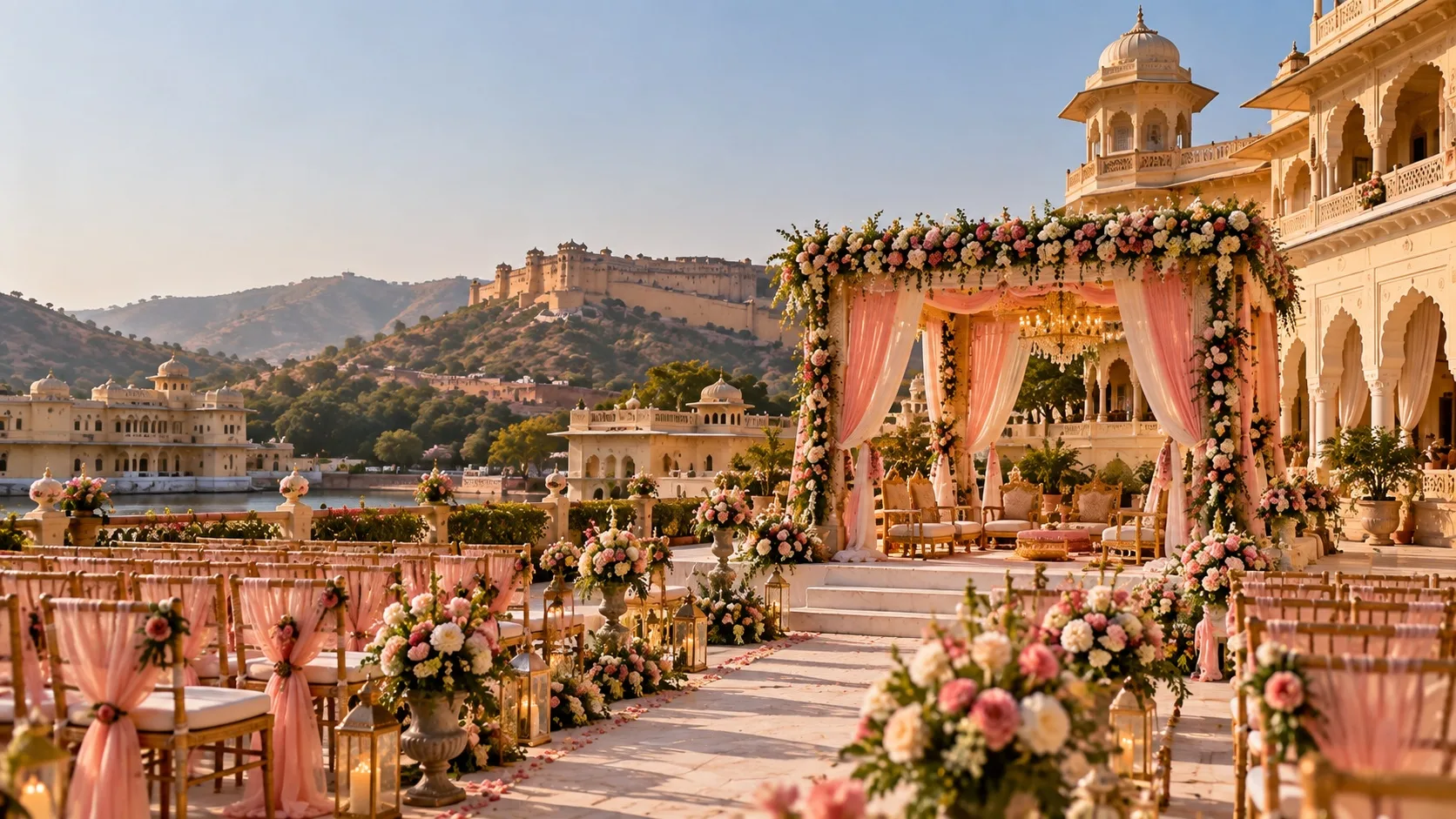
Anyone researching a destination wedding in Jaipur quickly runs into a mix of accurate information and half truths repeated across travel blogs and wedding forums. Some of it comes from outdated pricing, some from generalized advice that doesn't actually apply to Rajasthan's specific climate or regulations, and some from simple assumption. For couples trying to make real decisions about their wedding, it helps to separate what's actually true about planning in Jaipur from what tends to get exaggerated or misunderstood.
Myth: Jaipur Weddings Are Only for Couples With Unlimited Budgets
This is perhaps the most common misconception, largely because the photographs that circulate online tend to come from the most expensive palace properties. In reality, Jaipur's wedding market spans a wide range of price points. A boutique haveli wedding for around seventy five to a hundred guests can be organized considerably more affordably than people assume, since these properties often have lower base rental costs than the larger palace hotels and still deliver genuine heritage character. The higher end weddings that dominate social media, often hosted at properties like Rambagh Palace or Samode Palace, represent one segment of the market, not the entire market. Couples with more modest budgets can still access authentic Rajasthani architecture and hospitality, just at a different scale of venue and guest count.
Myth: December and January Are the Only Good Months
While December and January are genuinely the busiest months for a destination wedding in India, and Jaipur is no exception, they are not the only viable window. October, November, February, and early March all offer comparable weather, with daytime temperatures typically in a comfortable range and evenings cool enough for outdoor functions. The real difference in peak versus shoulder months is availability and pricing rather than comfort. Venues and top tier vendors that are fully booked a year in advance for January dates often have considerably more flexibility for October or early March, sometimes at meaningfully better rates. Couples fixated only on peak season frequently end up compromising on their preferred venue simply because they didn't consider these adjacent months.
Myth: All Heritage Venues Operate the Same Way
Treating Jaipur's havelis and palace hotels as interchangeable is a mistake that causes real planning problems. Some heritage properties are run as full service hotels with in house catering, event teams, and strict vendor policies, while others are privately owned havelis that rent out the space and expect couples to bring in their own vendors for nearly everything. This distinction matters enormously for budgeting and coordination. A property with an in house team simplifies logistics considerably but usually comes with less flexibility and sometimes higher catering costs, while an independently managed haveli offers more control and often lower costs, but requires the couple or their planner to coordinate every vendor separately. Knowing which category a venue falls into before booking prevents a lot of confusion later in the process.
Myth: Jaipur Is Too Hot for Most of the Year
While Jaipur does experience genuinely extreme heat between April and June, with daytime temperatures regularly climbing well above what most guests would find comfortable, this reputation for heat sometimes gets applied to the entire year unfairly. The reality is that from late October through early March, Jaipur's climate is genuinely pleasant, with daytime temperatures generally comfortable and evenings cool enough that outdoor ceremonies work well, sometimes requiring light jackets for late night functions in December and January. Couples who avoid Jaipur entirely because of its summer reputation are often missing a five month window where the city's weather is actually one of its strongest assets.
Myth: Guest Logistics Are Too Complicated to Manage
This concern is understandable but often overstated. Jaipur International Airport handles a substantial volume of domestic and international traffic, and the drive from the airport to most major wedding venues within the city typically takes under an hour, with some heritage properties located even closer. For couples worried about coordinating large groups, the more accurate picture is that Jaipur's hospitality and transport infrastructure has been shaped by decades of hosting exactly this kind of event. Hotels near wedding venues are accustomed to group bookings, and local transport providers regularly handle guest lists in the hundreds. The complexity that does exist tends to come from insufficient advance planning rather than any inherent difficulty in the city itself.
What Actually Requires Careful Planning
Beyond the myths, there are genuine considerations that deserve real attention. Noise regulations in Rajasthan do restrict amplified sound after certain hours, typically around ten at night in residential areas, and this affects how late sangeet or reception functions can run, particularly at venues located within city limits rather than more isolated heritage properties. Drone photography and filming at forts and palaces often require prior permits, and these can take one to two weeks to process depending on the property, so this is not something to arrange at the last minute. Vendor pricing in Jaipur can also vary significantly based on whether bookings are made directly or through a planner with established relationships, and couples working without local representation sometimes end up paying noticeably more for comparable services.
How Jaipur Fits Within India's Broader Wedding Destination Landscape
When comparing cities for a destination wedding in India, Jaipur is frequently placed alongside Udaipur, Jodhpur, and Goa, and each offers a genuinely different experience rather than a better or worse one. Udaipur's lakeside settings suit couples wanting water views as a backdrop, Jodhpur's fort dominated skyline offers a more dramatic, slightly rugged aesthetic, and Goa suits those who want a beach wedding entirely outside the heritage category. Jaipur's specific advantage lies in combining palace grade architecture with a wider range of price points and stronger flight connectivity than most of these alternatives, making it accessible to a broader range of guest lists without sacrificing the sense of occasion that draws couples to Rajasthan in the first place.
Frequently Asked Questions
Is a Jaipur wedding always expensive? Not necessarily. Costs range widely depending on venue type and guest count, with boutique havelis offering considerably more affordable options than large palace properties while still delivering authentic heritage settings.
What is the actual best time to get married in Jaipur? The window from late October through early March offers the most reliable weather, with December and January being busiest and most expensive, while October and early March often offer better availability at lower cost.
Do all Jaipur venues include catering and vendor services? No, this varies by property. Some heritage hotels offer full in house services, while independently managed havelis often require couples to arrange their own vendors separately.
Are there restrictions on drone photography or filming at heritage venues? Yes, most forts and palaces require advance permits for drone use and filming, and these can take one to two weeks to process.
Final Thoughts
Much of what circulates about destination weddings in Jaipur mixes genuine insight with outdated or exaggerated claims, and separating the two makes for far better planning decisions. Once the real considerations, season, venue type, permits, and vendor coordination, are understood clearly, Jaipur consistently proves itself as one of the more practical and rewarding choices among India's destination wedding cities, offering couples a celebration that feels both grand and genuinely well organized.