destination wedding in Abu Dhabi, understand the rules governing what can be built, hung, lit, and left behind on the property. Decor policies protect the venue's spaces, its other guests, and your own event from last minute dismantling. They are rarely deal breakers; they are the frame your decorator designs within. This guide covers the rules that matter most, so your design is approved once and built without drama.
The key principle is timing: decor rules should reach your decorator before the design is finalized, not after. A concept built around ceiling rigging or open flames becomes an expensive problem if the venue declines both. Share the venue's policies at the briefing stage. Experienced decorators in Abu Dhabi know most properties' positions and will steer you right.
Why venues regulate decor in the first place
It helps to see the venue's perspective. A ballroom or lawn is a working asset that must look pristine for the next event, sometimes the next morning. Rules about attachments, flames, and floor debris are how the venue guarantees that. Guest safety matters too: overhead installations, open flames near fabric, and cables across walkways each carry risks the venue owns. When you treat rules as engineering constraints rather than rejections, the conversation with the events team turns collaborative, and collaborative conversations get faster approvals.
Open flame: candles, diyas, and fire features
This is the rule couples ask about most, and the answer genuinely varies by venue. Open flames, from diyas and candles to fire features, fall under each property's fire and safety policy. Some venues permit real flames in controlled setups, such as enclosed lanterns or supervised outdoor areas; others require LED alternatives throughout. Ask about each element specifically rather than seeking a blanket yes or no; a venue may allow table candles while declining an entrance fire feature. If real flame matters, raise it in your first decor discussion and get the decision in writing, so your decorator designs around a confirmed answer.
Rigging, hanging installations, and weight limits
Dramatic ceiling installations photograph beautifully and worry venues most, because they involve weight, fixings, and working at height. Most properties have clear positions: some ballrooms offer engineered rigging points with published weight limits, while others prohibit anything attached to ceilings or existing structures. Outdoors, hanging installations need support structures the venue may or may not allow on lawns or terraces. Ask what fixing methods are permitted, whether the venue provides rigging support or requires certified vendors, and what load limits apply. Share the answers before the structural design is drawn, and submit technical drawings for approval well in advance.
Flowers, fabrics, and the outdoor factor
Fresh flowers and draped fabric seem low risk, but outdoor venues add variables worth discussing. Afternoon heat can wilt delicate blooms before the evening begins, so ask your florist about hardy varieties and installing close to guest arrival. Wind is the other factor: tall centerpieces, loose draping, and lightweight structures need proper weighting, and your venue can advise on what its terraces tolerate. For fabrics, confirm where draping is permitted and how it must be secured; venues generally prefer free standing structures over anything tied to their architecture. Decorators working in the emirate navigate these practicalities routinely.
Setup windows, teardown, and what stays behind
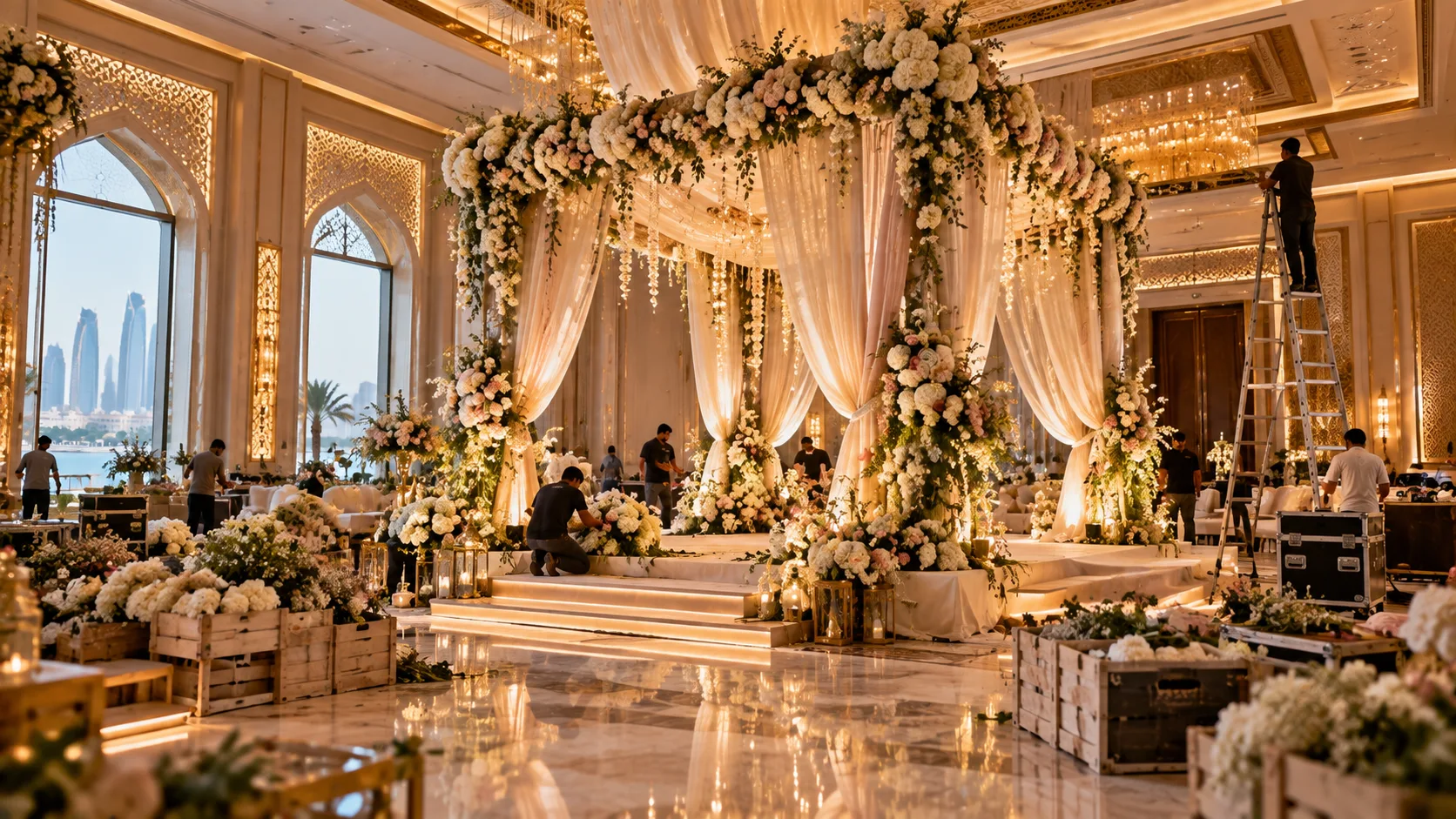
Design approval is half the story; the other half is logistics. Ask exactly when your decor team can access each space and when everything must be cleared. Ballrooms often have tight turnarounds, giving your decorator only hours to build a full mandap or stage. Confirm whether overnight setup is possible, whether extended access carries a charge, and who supervises load in. Clarify teardown too: who removes what, by when, and what happens to items left behind. Get the access schedule in writing and share it with your decorator and planner, so timelines rest on facts rather than assumptions.
Getting the design approved in one round
Approvals go smoothly when the venue sees a complete picture. Ask your decorator to submit one package: scaled layouts, elevations of key structures, materials lists, flame and rigging details, and the setup schedule. A complete submission lets the events team review everything once instead of trading emails for weeks. Discuss flagged items on a call rather than by message; most concerns have workable alternatives. Keep a written record of every approval, and ensure the version built on the day matches the version approved. Installing something never cleared is the fastest way to lose a venue's trust.
Questions to ask about decor before you sign off on the design
Cover these with the events team early, and share the answers with your decorator:
- What is the policy on open flames, candles, diyas, and fire features in each of our spaces?
- Can anything be rigged or hung from ceilings, and what are the weight limits and approved methods?
- Are there restrictions on fixing anything to walls, floors, or existing structures?
- What are the setup and teardown windows for each function space?
- Does the venue require certified vendors for rigging, electrical work, or large structures?
- What must be removed by when, and what happens to anything left behind?
Frequently Asked Questions
Can we use real candles and diyas at our wedding?
Possibly, depending on the venue and setup. Some properties allow real flames in enclosed or supervised arrangements; others require LED alternatives. Ask about your specific plan.
Can we hang flowers or fabric from the ballroom ceiling?
Only if the venue permits it. Some ballrooms have engineered rigging points with weight limits; others prohibit ceiling attachments entirely. Confirm the position and approved methods before your decorator designs the installation.
Who handles teardown after the final function?
Clarify this in advance. Some decorators include teardown in their scope; venues may require everything cleared by a set time. Confirm responsibilities and deadlines in writing.
Our decorator is flying in from India. Anything to watch for?
Brief them on the venue's rules before they design, and connect them directly with the events team. A decorator unfamiliar with the property needs the policies, access schedule, and approval process spelled out early.