
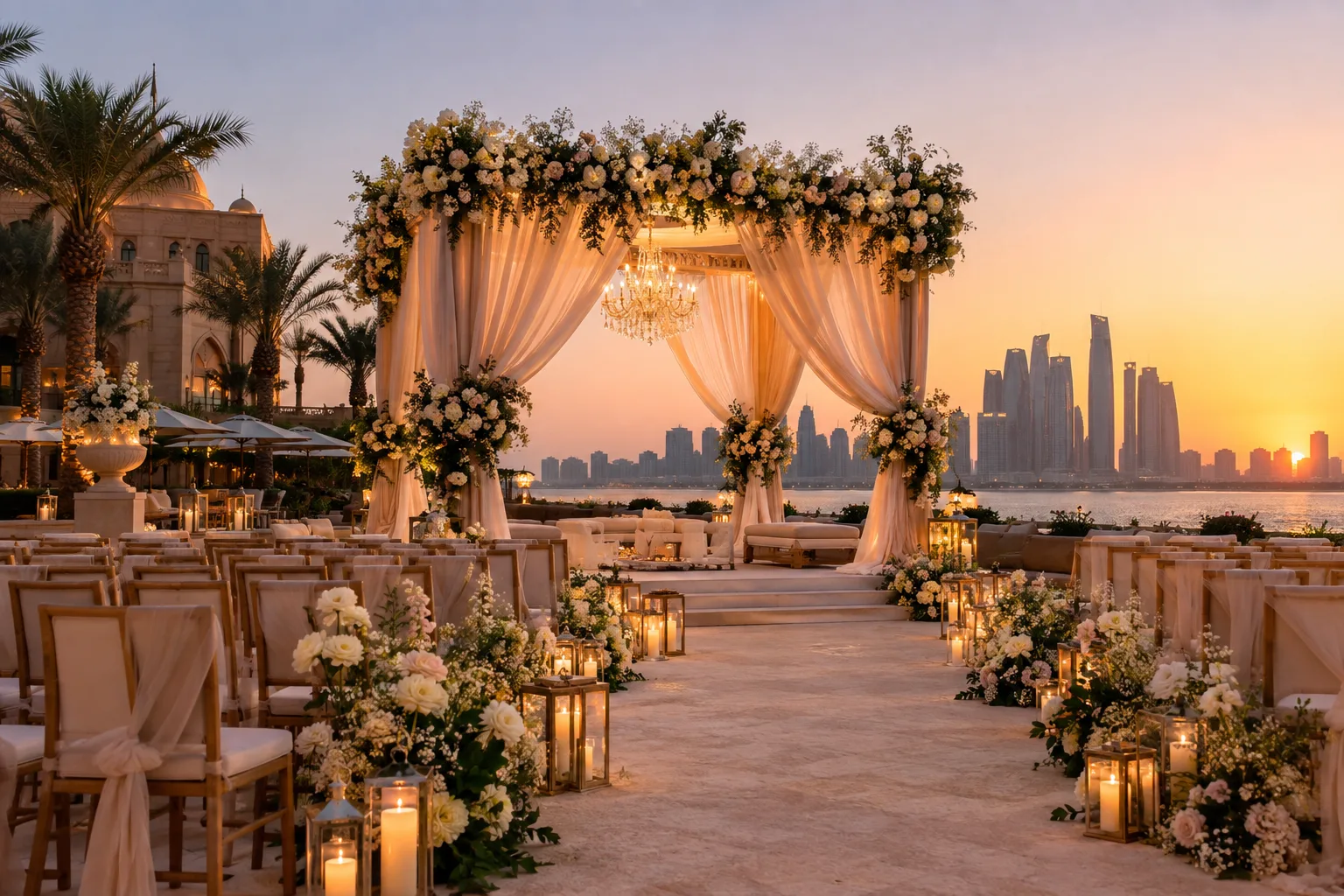
Planning a destination wedding in Abu Dhabi often means imagining an elegant outdoor ceremony, sunset portraits, an open-air dinner or a celebration beside the water. But beautiful outdoor plans need an equally thoughtful backup strategy. Abu Dhabi Weddings can help couples explore wedding settings and planning considerations, while the final event plan should account for heat, humidity, wind, guest comfort and the practical requirements of moving an outdoor celebration indoors when necessary.
Don't Treat the Backup Plan as Plan B
A backup plan should not be something created after the main wedding design is finished. It should be part of the original concept.
Abu Dhabi has a predominantly arid climate, with very warm conditions for much of the year. Experience Abu Dhabi describes December to mid-March as the cooler winter period, while summer temperatures can rise sharply from late May through September. That difference can significantly change how an outdoor ceremony, guest seating, photography session or evening reception should be planned.
Rather than asking whether an outdoor event is possible, couples should ask how the event will work under different conditions. The ideal setup should remain attractive and functional whether guests are outside throughout the ceremony, move to a shaded area, or transition into an indoor space.
Design the Ceremony Around Guest Comfort
An outdoor ceremony can be visually spectacular, but guests experience the event very differently from the couple looking at the final photographs. Elderly relatives, young children and guests wearing layered traditional clothing may be affected by heat long before the ceremony ends.
For that reason, seating should not be designed only around the stage or mandap. Consider shaded waiting areas, accessible pathways, convenient refreshments and the distance guests need to walk from the hotel or indoor space. Comfortable seating and sensible spacing can also make it easier for elderly guests and families to settle without unnecessary movement.
Timing is equally important. Experience Abu Dhabi notes that summer outdoor activity is generally more manageable in the early morning or after sunset, with temperatures easing during the evening. This makes the timing of an outdoor wedding one of the most important design decisions, particularly during warmer months.
Make the Indoor Alternative Feel Like the Same Wedding
One of the biggest mistakes couples can make is creating a beautiful outdoor concept and then choosing a completely unrelated indoor fallback.
Imagine a wedding designed around soft ivory florals, warm lighting and a contemporary Indian aesthetic outdoors. If the ceremony suddenly moves into a ballroom filled with a different colour scheme and layout, the celebration can feel disconnected.
Instead, design the indoor alternative at the same time. Use the same colour palette, floral direction, signage style and visual identity wherever possible. The guest should feel that the wedding has simply moved location rather than changed personality.
This also makes the production process easier. Décor teams can prepare reusable elements, photographers know what visual style to expect and the planner can switch between environments without redesigning the entire celebration.
Protect the Photography Plan Too
Weather planning should include photography, not just guest seating.
An outdoor wedding may have been selected partly because of its landscape, architecture or sunset setting. If conditions change, the couple should already have a second set of portrait locations that still provide interesting backgrounds and good natural or controlled lighting.
This is especially important for Indian destination weddings because several photographs may be required across different functions. Instead of relying entirely on one outdoor location, identify indoor areas with attractive architecture, terraces with shelter and covered walkways that can provide alternatives.
The photographer should know these locations before the wedding day. That way, a change in weather does not result in an improvised search for a usable portrait area while guests are waiting.
Protect Décor From the Environment
Outdoor décor has requirements that are very different from indoor décor. Flowers, fabrics, candles, paper stationery, furniture and technical equipment can all behave differently depending on heat, humidity and wind.
Ask the décor team which materials are suitable for the conditions and how long installations can remain outdoors. Delicate floral arrangements may need to be positioned closer to the ceremony, rather than being exposed unnecessarily early in the day.
Lighting also needs careful planning. Some decorative details that look beautiful in daylight can disappear after sunset without suitable illumination. At the same time, technical equipment should be positioned and protected according to the venue and production team's requirements.
The result should look effortless to guests, but every visible element should have a practical reason behind it.
Build Transitions Into the Wedding Schedule
An outdoor-to-indoor contingency works best when the transition itself has already been planned.
Consider what happens if the ceremony needs to move. Where will guests wait? Who tells them about the change? How quickly can seating be rearranged? Where will the photographer position the couple? What happens to the ceremony décor? How will catering and entertainment adjust?
These questions are particularly important when several functions happen in the same wedding weekend. A five-minute change to one event can create a much larger scheduling problem if another function is already being prepared in the next space.
A good planner therefore builds transition time into the schedule instead of assuming that every function will run exactly as planned.
Keep Guests Comfortable Before They Notice the Weather
Guest comfort is often about small decisions rather than dramatic interventions.
Make water easily available, provide comfortable shaded areas where appropriate and avoid making guests wait outdoors unnecessarily between ceremonies and transportation. For warmer events, the invitation and wedding information should also help guests understand the setting and dress appropriately.
Abu Dhabi's tourism guidance recommends staying hydrated and using sun protection when outdoors during the hotter months. For a wedding, these practical considerations can be incorporated without making the celebration feel clinical. Elegant hydration stations, shaded lounges and carefully planned indoor breaks can become part of the guest experience rather than an interruption to it.
Know When to Change the Plan
The hardest part of a contingency strategy is knowing when to use it.
Couples can become emotionally attached to an outdoor concept because they have imagined the ceremony that way for months. The decision should nevertheless be based on the conditions on the day and the advice of the venue and planning team.
The objective is not to save the original plan at any cost. It is to protect the experience the original plan was supposed to create.
A ceremony moved indoors can still be beautiful. Portraits can still be memorable. Guests can still enjoy the celebration. What matters is that the decision is made early enough for the team to execute it properly.
How Abu Dhabi Weddings Helps
Planning a destination wedding in Abu Dhabi becomes easier when the couple understands the destination beyond its photographs. The right venue, event timings, guest arrangements and wedding services all need to work together, particularly when outdoor celebrations are part of the plan.
Abu Dhabi Weddings helps couples explore Abu Dhabi wedding venues, services and destination-planning options while considering the practical needs of Indian and international celebrations. Instead of treating weather, venue selection, guest comfort and wedding design as separate decisions, couples can use local guidance to build a celebration that works as a complete experience.
An outdoor wedding does not need to be fragile. With the right planning, the ceremony can still have the sunset, setting and atmosphere the couple imagined, while the entire wedding team already knows exactly what to do if conditions change. That is what turns a beautiful wedding concept into a dependable destination celebration.