The cryptocurrency industry has transformed dramatically over the past few years. As blockchain technology becomes more mainstream, businesses are increasingly exploring opportunities to launch their own cryptocurrency exchanges. One of the first and most important decisions is choosing between a centralized exchange (CEX) and a decentralized exchange (DEX).
Both models enable users to trade digital assets, but they differ significantly in terms of security, control, user experience, regulatory compliance, and operational complexity. Understanding these differences is essential for entrepreneurs who want to build a sustainable and competitive crypto trading platform.
What Is a Decentralized Exchange?
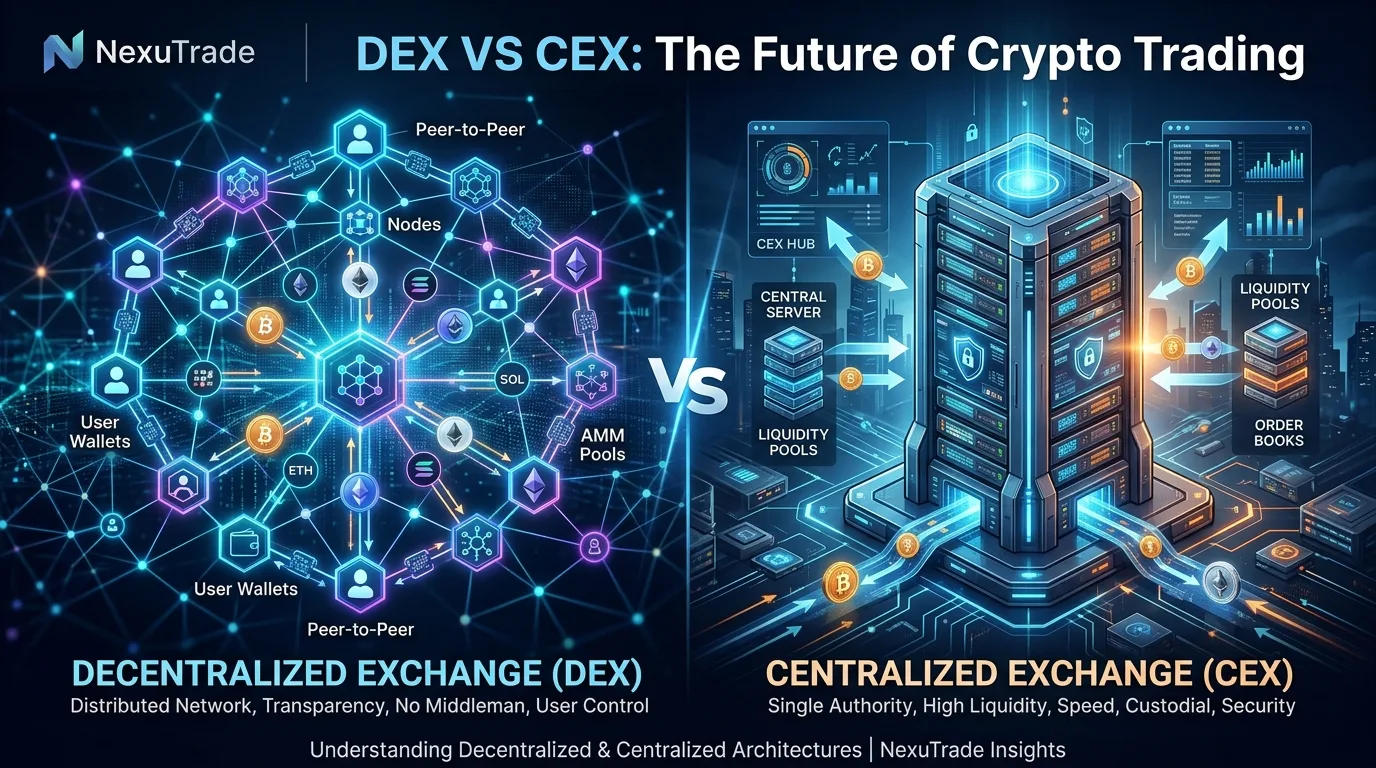
A decentralized exchange operates without a central authority. Instead of depositing funds into an exchange wallet, users trade directly from their crypto wallets using blockchain-based smart contracts. For entrepreneurs researching how to build a decentralized crypto exchange, this model offers a secure, transparent, and trustless trading environment where users retain complete control over their digital assets. Popular DEX platforms such as Uniswap and PancakeSwap have demonstrated how decentralized trading can eliminate intermediaries while enabling efficient peer-to-peer transactions powered by blockchain technology.
Key Benefits
- Users retain full ownership of their cryptocurrencies.
- Greater transparency through public blockchain transactions.
- Improved privacy compared to custodial platforms.
- Lower risk of centralized asset theft.
- Supports permissionless global trading.
Challenges
DEX platforms can present a steeper learning curve for new users. Wallet connectivity, blockchain gas fees, and smart contract interactions may seem complex compared to traditional exchanges. Additionally, liquidity can be lower for newer platforms unless sufficient incentives attract liquidity providers.
What Is a Centralized Exchange?
A centralized exchange is a platform operated by a single organization that manages user accounts, trading activities, and asset custody. Users deposit their cryptocurrencies into wallets controlled by the exchange, which acts as an intermediary for every transaction.
Well-known exchanges like Binance, Coinbase, and Kraken follow this model because it offers fast trading, high liquidity, and a familiar user experience.
Key Benefits
- Fast trade execution with advanced matching engines
- High liquidity and tighter spreads
- Easy onboarding with fiat payment support
- Customer support and account recovery
- Advanced trading tools such as margin and futures trading
Challenges
Despite their popularity, centralized exchanges face several challenges. Since they hold users' funds, they are attractive targets for hackers. They also require compliance with KYC, AML, and regional regulations, increasing operational costs.
Centralized vs. Decentralized Exchanges
FeatureCentralized ExchangeDecentralized ExchangeAsset CustodyExchange controls fundsUsers control fundsTrading SpeedVery fastDepends on blockchain networkLiquidityUsually higherDepends on liquidity poolsPrivacyLower due to KYCHigher, depending on jurisdictionSecurity ModelCustodial securitySmart contract securityCustomer SupportAvailableLimited or community-drivenRegulatory ComplianceExtensiveVaries by regionWhich Model Offers Better Security?
Security is often the deciding factor when selecting an exchange architecture.
Centralized exchanges invest heavily in cybersecurity, cold wallets, encryption, and fraud detection. However, because they store customer funds, they remain attractive targets for cyberattacks.
Decentralized exchanges eliminate custodial risks since users never surrender control of their private keys. However, their security depends entirely on well-designed and thoroughly audited smart contracts.
For startups, investing in professional blockchain development and independent security audits is critical regardless of the chosen architecture.
Business Considerations Before Choosing
Every startup has unique goals, and the ideal exchange model depends on several factors.
Choose a Centralized Exchange if You Want:
- Fiat currency integration
- Institutional investors
- Beginner-friendly interfaces
- High-frequency trading
- Advanced trading features
Choose a Decentralized Exchange if You Want:
- A Web3-native platform
- Self-custody trading
- DeFi integration
- Community governance
- Cross-chain interoperability
Emerging Trend: Hybrid Exchanges
Many modern crypto startups are adopting hybrid exchange models.
Hybrid platforms combine centralized trading performance with decentralized asset custody. This approach delivers faster order execution while allowing users to retain ownership of their digital assets.
As blockchain scalability improves, hybrid exchanges are expected to become increasingly popular among businesses seeking the best of both worlds.
How to Select the Right Development Partner
Building a cryptocurrency exchange requires expertise in blockchain development, cybersecurity, UI/UX design, smart contracts, and regulatory compliance.
When evaluating a development partner, consider:
- Experience with blockchain technologies
- Security auditing capabilities
- Support for multiple blockchain networks
- Customization options
- Scalability and future upgrades
- Post-launch maintenance and technical support
Choosing an experienced development team can significantly reduce technical risks and accelerate your product launch.
The Future of Crypto Exchanges
The crypto exchange landscape continues to evolve with innovations such as Layer-2 scaling, cross-chain interoperability, decentralized identity, and AI-powered trading tools.
Centralized exchanges will likely remain dominant for retail onboarding and institutional trading, while decentralized exchanges will continue driving innovation in decentralized finance and Web3 applications.
Rather than replacing one another, both models are expected to coexist, serving different user needs and business objectives.
Conclusion
choosing between a centralized and decentralized exchange depends on your startup's business model, target audience, regulatory requirements, and long-term growth strategy. While centralized exchanges excel in liquidity, user-friendly experiences, and institutional adoption, decentralized exchanges offer greater transparency, enhanced security through self-custody, and seamless integration with the evolving Web3 ecosystem. As the crypto industry continues to innovate, building a scalable, secure, and future-ready exchange requires the right technical expertise and strategic planning. Blockchain App Factory, a leading Decentralized Exchange Development Company, delivers end-to-end DEX development solutions with advanced blockchain technology, robust smart contracts, and customizable features to help businesses launch competitive and high-performance decentralized trading platforms.