A cardboard box can become a robot. A paper plate can turn into a lion. Even a few leaves collected during a walk can become part of a colourful picture.
For young children, craft activities are more than just a way to keep little hands busy. They give children a chance to create, explore materials, make choices and share their ideas. For families in Singapore, many of these activities can be done at home with affordable materials or adapted for a preschool.
Singapore's Ministry of Education's Nurturing Early Learners (NEL) Framework highlights Aesthetics and Creative Expression as an important area of preschool learning. It encourages children to explore art materials, tools, techniques, and different ways to express their ideas.
Why Craft Activities Matter for Preschoolers
Crafts let children learn while having fun. Tearing paper, using crayons or playing with dough helps build fine motor skills, creativity and hand-eye coordination. Craft is also a small but useful part of preschool education, as children explore materials, make choices, and express their ideas.
Instead of copying a finished craft, children can choose their own colours, shapes and designs. This supports the creative learning approach encouraged by Singapore’s NEL Framework.
Easy Paper Plate Animal Craft
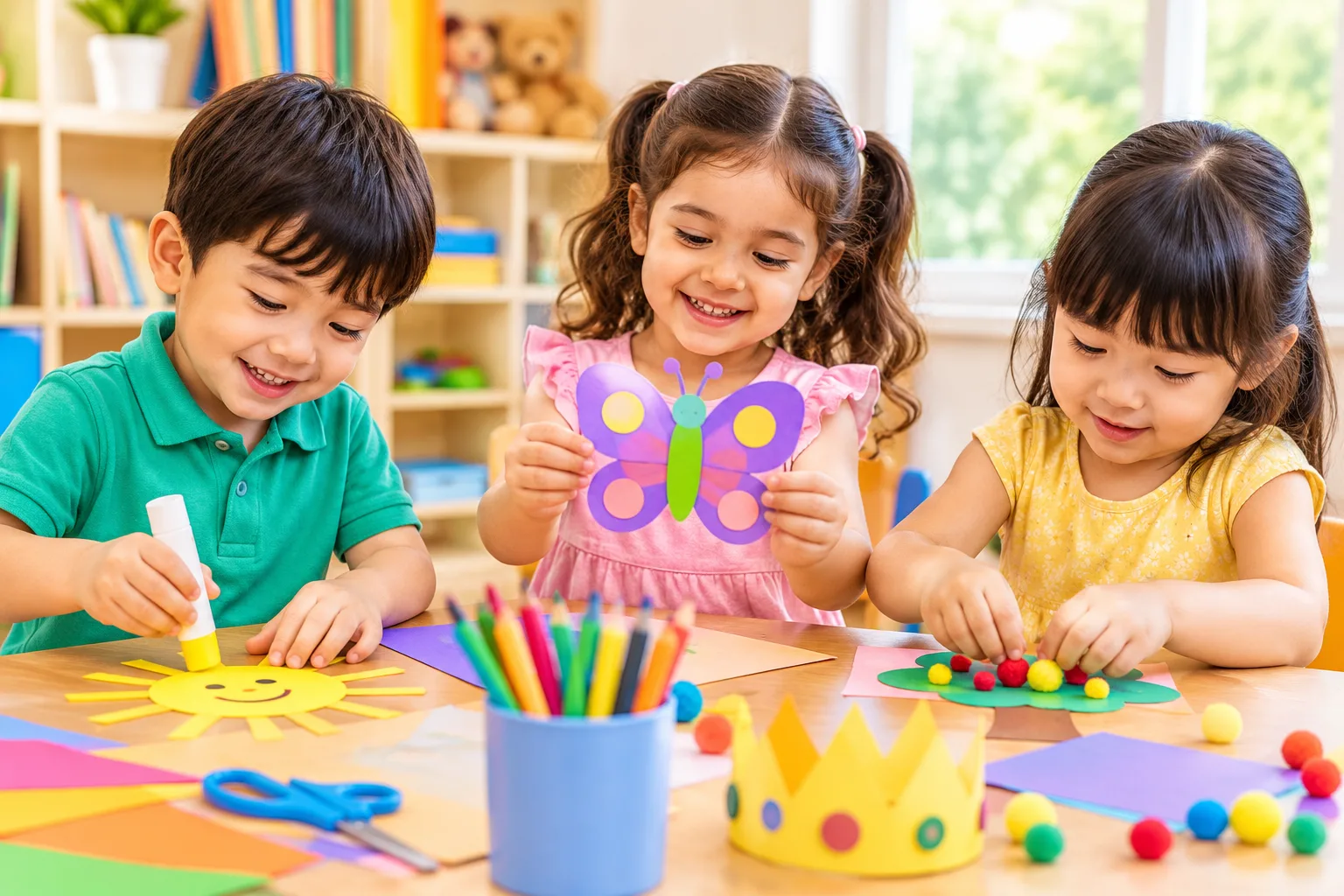
A paper plate can quickly become a favourite animal. Give your child a plate, crayons, coloured paper and child-safe glue. They can make a lion, rabbit, fish or turtle. Let them choose the colours and place the eyes, ears, and other features themselves. The finished animal does not need to look perfect. The fun comes from letting children create it in their own way.
Nature Collage Using Leaves
A walk around a Singapore park can become part of a fun craft activity. Collect a few fallen leaves and other safe natural materials, then use them to make a collage. Children can arrange the leaves into trees, animals, people or patterns. Talk about the colours, shapes and textures as they work. Always check that the materials are clean and safe before using them.
Recycled Box Building
Do not throw away every empty cardboard box. It can become a house, a robot, a bus, or an animal's home. Give your child some boxes, paper tubes and old paper. Let them decide what they want to build, while you help cut or join pieces as needed. This is also a simple way to introduce kids to recycling and show them how to reuse everyday items.
Paper Tearing and Collage
Paper tearing is a simple craft that needs very few materials. Give your child different coloured paper and let them tear it into small pieces. They can use the pieces to make a rainbow, a flower, a tree, or any picture they like. Picking up, placing and glueing the small pieces also gives children extra practice using their fingers.
Simple Shape Stamping
Turn everyday objects into simple stamps. Bottle caps, cardboard tubes and large sponge pieces can make fun shapes on paper. Children can create circles, lines and patterns using washable paint. Older preschoolers can combine the shapes to make pictures. It is also a fun way to introduce early maths words and explore shape activities for preschoolers.
Make a Paper Garden
Create a colourful garden with paper flowers, leaves, grass and insects.
Let your child decide where everything should go. While they work, talk about words such as petal, stem, leaf and insect. For families in Singapore, you can make the activity more interesting by taking a walk in a nearby park first. Your child can then recreate something they spotted outside.
Story Character Craft
Turn story time into craft time. After reading a picture book, ask your child to make one of the characters using paper, crayons, cardboard or play dough. Once it is ready, ask them to tell you what the character is doing. This brings together creative play, storytelling and language. You can also make two characters and let your child create a short story for them.
Cardboard Tube Rocket
An empty cardboard tube can become a fun rocket. Let your child decorate it with crayons or coloured paper, then add paper fins with adult help. Talk about the rocket's shape, size and parts as you build it. Once finished, use it for pretend play and create an imaginary space adventure. This gives children more time to use their imagination after the craft is complete.
Play Dough Nature Prints
Roll out some play dough and press safe leaves or textured objects into it. Carefully remove them to see the patterns they leave behind. Children can compare the different shapes and textures and talk about what they notice.
Always supervise young children when they use small objects, and choose age-appropriate materials.
How Parents Can Make Craft Time More Meaningful
Give children enough time to explore the materials before expecting them to make something. Try not to correct every part of their work. A blue tree or purple sun can show imagination rather than a mistake.
Parents can support learning by asking open questions:
- “What are you making?”
- “Why did you choose this colour?”
- “What could we add next?”
- “Tell me about your picture.”
- “How does this material feel?”
These questions encourage children to describe their choices and explain their ideas.
The NEL Framework also stresses giving children opportunities to explore different media, tools and techniques while developing creativity and imagination.
Choosing Safe Craft Materials
Safety should come before the finished artwork. Choose materials suitable for your child’s age, and supervise activities involving scissors, glue, paint, or small pieces. For younger children, large materials are usually easier to handle. Use washable, child-friendly paints and keep craft supplies out of reach of children.
A simple craft box at home could contain:
- Coloured paper
- Cardboard
- Washable crayons
- Child-safe glue
- Washable paint
- Large stickers
- Paper plates
- Cardboard tubes
- Clean recycled boxes
You do not need to buy a large collection of expensive craft supplies. Everyday materials can offer plenty of opportunities for creative learning for preschoolers.
Craft Ideas for Singapore Preschool Learning
Craft activities can also fit naturally into a Singapore preschool curriculum. The NEL Framework identifies Aesthetics and Creative Expression as a learning area and encourages children to explore art through different media, tools, techniques and processes. It also links creative experiences to children’s confidence, imagination, and ability to express ideas.
A preschool can adapt craft activities to different themes. For example, children might make:
- Paper flowers while learning about plants
- Animal masks during a story theme
- Recycled models while learning about the environment
- Shape collages during early numeracy activities
- Family portraits while discussing relationships
- Cultural artwork when exploring Singapore’s diverse communities
This makes craft part of a wider learning experience rather than a separate activity.
The National Library Board Singapore also provides resources and programmes that support early literacy and creative experiences for children. Its resources on early childhood education highlight the value of art and creative expression in children's learning.
How to Extend a Craft Activity
Ask your child to name their creation, tell you a story about it or use it during pretend play. You could display their artwork at home and ask them to explain it to another family member. For example, after making a paper shop, your child could pretend to run the shop. They can make signs, arrange pretend food and practise simple conversations.
This turns one craft project into a longer learning experience involving communication skills, imagination, and social interaction.
The aim is not to create a perfect classroom display. The aim is to give children time to think, create, talk and enjoy the process.
Final Thought
Craft activities for preschoolers can be simple, affordable and meaningful. A paper plate, cardboard box, leaf or piece of coloured paper can become a starting point for creativity, conversation and learning. For parents in Singapore, these activities can easily fit into home routines, weekend play or preschool learning. Children can explore colours, shapes, textures and materials while developing fine motor skills and expressing their own ideas.
The most valuable part is not the finished craft. It is the thinking, choosing, making and talking that happens along the way. By giving children space to create without worrying about perfection, parents and educators can make everyday craft time a positive part of early childhood learning.
FAQs
1. What craft materials are best for preschool children?
Coloured paper, cardboard, crayons, washable paint, child-safe glue, stickers and paper plates are useful choices. Recycled household materials can also work well when they are clean, safe and suitable for the child's age.
2. How can parents encourage creativity during craft time?
Give children choices instead of asking them to copy a finished example. Let them choose colours, materials and designs, then ask them to explain what they have made.
3. Can craft activities support early maths skills?
Yes. Children can explore shapes, sizes, patterns, counting and position while creating. For example, stamping repeated shapes can introduce simple pattern and counting concepts.
4. How can craft activities support language development?
Children can describe their artwork, name materials, explain their choices and create stories around their finished work. Parents can support this by asking open questions and introducing new words naturally.
5. Where can Singapore families find creative activities for children?
Singapore families can explore programmes and resources from organisations such as the National Library Board and the Ministry of Education Singapore. NLB also runs library and outreach programmes that include arts and crafts activities for children.