
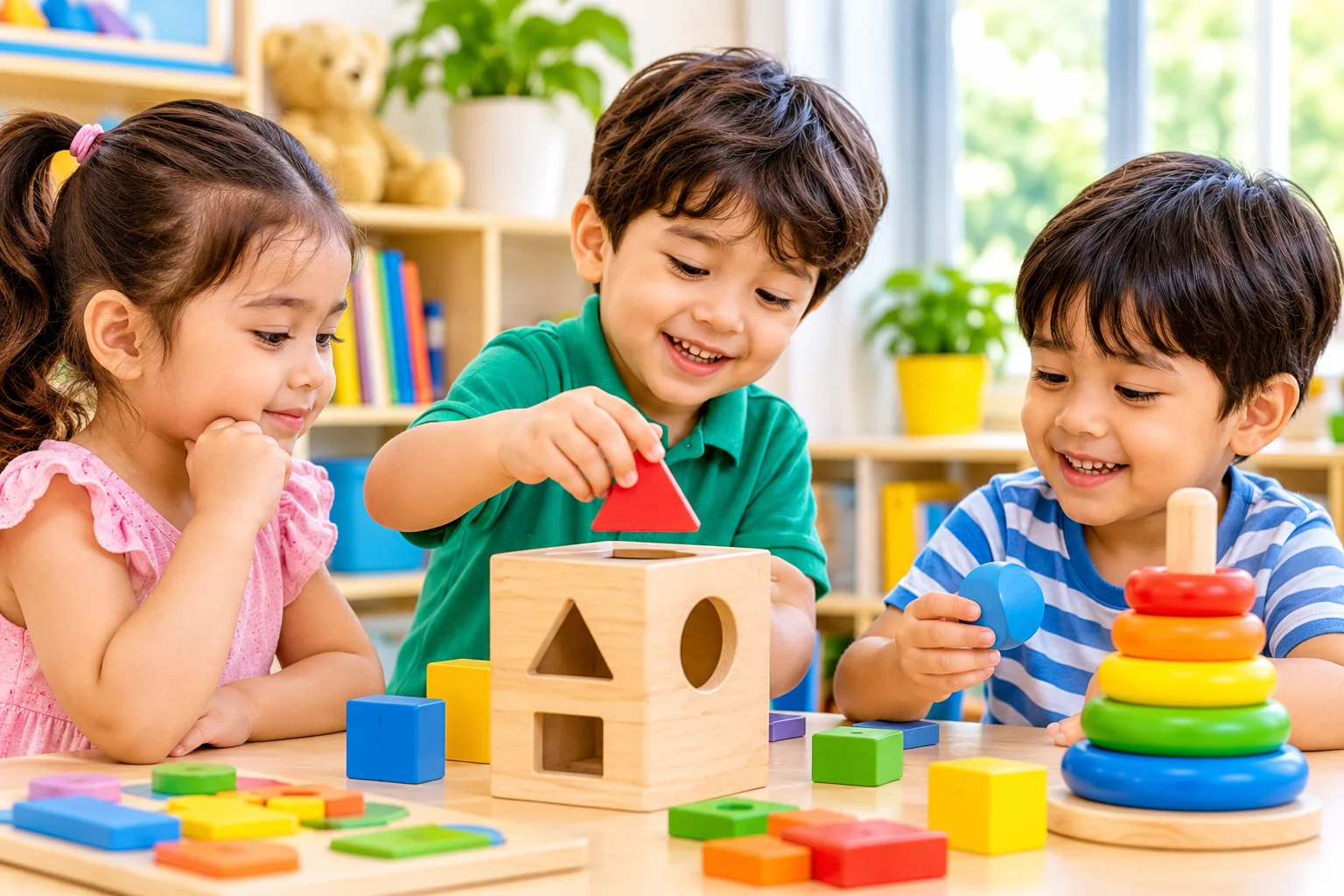
Every child loves to explore, ask questions, and figure things out. Whether they are building blocks, solving puzzles, or finding hidden toys, these small moments help children learn how to think and solve problems on their own.
In busy Singapore life, children often spend time in school, enrichment classes, or on screens. As a result, they may have fewer chances to explore freely. The good news is that children can build problem-solving skills through simple daily activities at home. These fun, easy problem-solving activities help preschoolers build confidence, creativity, and critical thinking while enjoying playtime.
Fun Problem-Solving Activities for Preschoolers
Children learn best when they play and have fun. At this age, they don’t need formal lessons to build thinking skills. Simple play-based activities help them explore, try new ideas, and find solutions on their own. These fun activities also improve confidence, focus, and creativity while keeping learning enjoyable.
1. Building and Block Play
Children enjoy making towers, houses, and small cities with blocks or LEGO bricks. You can also use recycled boxes or containers from home.
For a Singapore touch, children can try building an HDB block, a playground, or Gardens by the Bay.
Materials Needed:
- Building blocks or LEGO
- Small boxes or recycled containers
- Tape or glue
- A safe play area
Why It Helps
Building activities teach children how to plan, balance, and solve small problems. If the tower falls, they learn to try again and think of better ways to make it stronger. This improves patience, creativity, and thinking skills.
2. Puzzle and Sorting Games
Simple puzzles and sorting games are great for young children. They can sort toys, buttons, colours, or shapes into groups.
Materials Needed:
- Shape puzzles or jigsaw puzzles
- Buttons, beads, or toy animals
- Bowls or trays
Why It Helps
Sorting and matching help children notice patterns and improve memory. These activities also support logical thinking and attention skills.
You can ask:
- “Can you find all the blue pieces?”
- “Which toys are big and which are small?”
3. Treasure Hunt Games
Hide small toys or snacks around the house and give your child simple clues to follow.
Materials Needed:
- Small toys or treats
- Paper clues (optional)
Why It Helps
Treasure hunts encourage children to think carefully, follow instructions, and solve clues step by step. They also keep children active and excited.
Everyday Activities That Build Thinking Skills
Children don’t only learn problem-solving from games or activities. They also learn a lot from simple daily routines at home and outside. These small moments help them think, make decisions, and become more independent.
1. Helping in the Kitchen
Let your child take part in small kitchen tasks like making snacks or simple meals.
Materials Needed:
- Safe kitchen tools
- Bread, fruits, or easy ingredients
Why It Helps:
Cooking helps children learn basic skills like counting, measuring, and choosing. It also teaches them to follow steps and do small tasks on their own, which builds independence.
2. Sorting Things at Home
Ask your child to help organise simple things like socks, toys, or books.
Materials Needed:
- Clothes, toys, or books
- Baskets or boxes
Why It Helps:
Sorting helps children notice differences, group items, and make simple decisions. It also improves focus and teaches them how to keep things organised.
3. Grocery Shopping Games
When you go shopping at places like NTUC FairPrice or any local store, involve your child.
Materials Needed:
- A simple shopping list
- A shopping basket
Why It Helps:
Children learn to look carefully, remember items, and make choices as they find things. It also keeps them engaged and makes shopping more enjoyable.
At Children’s Cove, a preschool in Singapore, we help children build problem-solving and thinking skills through a well-planned preschool curriculum. We use simple hands-on activities like building blocks, sorting games, and imaginative play to make learning fun and easy.
Creative Activities That Improve Problem-Solving
Creative play helps children think in new and different ways. It lets them explore ideas, try things out, and learn to find solutions on their own. These simple activities also build confidence and imagination.
1. Role Play and Storytelling
Children love pretending to be different characters like doctors, teachers, shopkeepers, or superheroes. They can use toys or simple household items to act out stories.
Materials Needed:
- Dolls, toys, or soft toys
- Cushions, boxes, or blankets
Why It Helps:
Role play helps children use their imagination and make small decisions during play. They learn how to think of solutions and understand different situations in a fun way.
You can ask:
- “What should happen next?”
- “How can we fix this?”
2. Art and DIY Projects
Let your child draw, paint, or make simple crafts using things at home. There is no right or wrong in these activities, just free creativity.
Materials Needed:
- Paper and crayons
- Paints or markers
- Old boxes or recycled items
- Child-safe scissors and glue
Why It Helps:
Art helps children try new ideas and make choices on their own. It builds creativity, focus, and confidence while they enjoy the process.
3. Simple Science Experiments
Simple science activities are fun and easy for young children. They enjoy watching how things change and react.
You can try:
- Mixing colors
- Watching ice melt
- Playing with magnets
Materials Needed:
- Cups or bowls
- Water, ice, magnets, or food colouring
Why It Helps:
These activities help children observe, ask questions, and test their ideas. This builds curiosity and thinking skills naturally.
Tips to Encourage Problem-Solving Skills
Children learn problem-solving slowly through daily experiences, play, and simple challenges. Parents and teachers can support this growth by giving children chances to think independently and try different solutions. Small changes in daily routines and how adults guide children can make a big difference in building confidence, creativity, and critical-thinking skills.
Let Children Try First
Do not solve every small problem for your child right away. Give them a little time to think and test different ideas on their own. For example, if a block tower falls or a puzzle piece doesn't fit, encourage them to try again instead of fixing it immediately. These small challenges help children build confidence and naturally improve their problem-solving skills.
Ask Simple Questions
Simple questions help children think more carefully and explain their ideas. Instead of giving answers directly, guide them with questions that encourage them to think.
Examples:
- “What do you think will happen?”
- “How can we fix this?”
- “Why do you think that happened?”
These questions help children build critical thinking and learn to make decisions independently.
Praise Their Effort
Focus on your child’s effort instead of only praising perfect results. Even if they make mistakes, encourage them to try and not give up. Simple words like “Good try!” or “You worked really hard on that!” help children feel proud and motivated. This builds confidence and teaches them that learning takes practice and patience.
Keep Activities Short and Fun
Preschoolers learn best through short play sessions. Even 10–15 minutes of fun activities can help build strong thinking skills.
Conclusion
Children naturally enjoy exploring and discovering new things. Simple daily activities like puzzles, building blocks, treasure hunts, role play, and cooking can help preschoolers build problem-solving and critical-thinking skills in a fun way.
These activities also build confidence, creativity, patience, and independence. The best part is that learning happens naturally through play and everyday moments. With a little encouragement and time, parents can help children become curious thinkers who enjoy solving problems and learning new things every day.
FAQs
1. What are good problem-solving activities for preschoolers?
Building blocks, puzzles, treasure hunts, sorting games, role play, and simple science experiments are great activities for preschoolers.
2. Why are problem-solving skills important for young children?
Problem-solving helps children think independently, make decisions, and handle challenges with confidence.
3. Can daily activities improve critical thinking skills?
Yes. Cooking, shopping, sorting toys, and organising items can all help children develop thinking and decision-making skills.
4. Are screen-free activities better for preschoolers?
Screen-free activities like puzzles, art, and outdoor games are very helpful because children learn through hands-on play and interaction.
5. How long should problem-solving activities last?
Short sessions of about 10–15 minutes work best for preschoolers because young children learn better through small, fun activities.