Court paperwork rarely explains itself. A probation officer hands you a form, a judge mentions a condition during a hearing, or a diversion letter names a course you've never heard of, and now you're stuck figuring out exactly what you're supposed to enroll in and why. This guide walks through five commonly required California online courses in plain terms, covering what each one actually teaches, who typically needs it, and how to get through the process without wasting time or money on the wrong enrollment.
How These Courses Work
Before getting into each course individually, it helps to understand the shared format behind all of them. California courts, probation departments, and diversion programs have widely adopted online, self-paced education, which means there's no classroom, no fixed meeting time, and no need to rearrange work or family responsibilities around a session.
What the Process Actually Looks Like
In practice, you enroll in the exact course named on your paperwork, then work through structured material and short knowledge checks entirely online, at whatever pace fits your schedule. Most platforms save your progress automatically, so switching between a laptop and a phone won't cost you your place.
Why the Exact Course Name Matters
Weapon safety and firearm safety, in particular, are two separate courses that get confused for one another often. Confirm the exact title on your paperwork before enrolling in either one, since picking the wrong course typically means doing it twice.
Weapon Safety Course in California
Whether tied to a court condition or a family requirement, the Weapon Safety Course in California covers the everyday side of owning or being around firearms. That means safe storage, handling, and reducing risk in day-to-day situations, rather than shooting fundamentals specifically.
Who Typically Needs It
This course applies to new or prospective firearm owners bringing a weapon into the home for the first time, as well as households with children wanting clear guidance on storage and access prevention. It also comes up as a condition tied to a court case or a family member's request.
What the Course Covers
The material covers core safety rules, treating every weapon as loaded, controlling muzzle direction, and keeping fingers off the trigger until ready, along with safe storage practices like lockboxes and separating ammunition from firearms. It also addresses preventing unauthorized access, everyday handling situations, and a general overview of an owner's legal responsibilities in California.
Firearm Safety Course in California
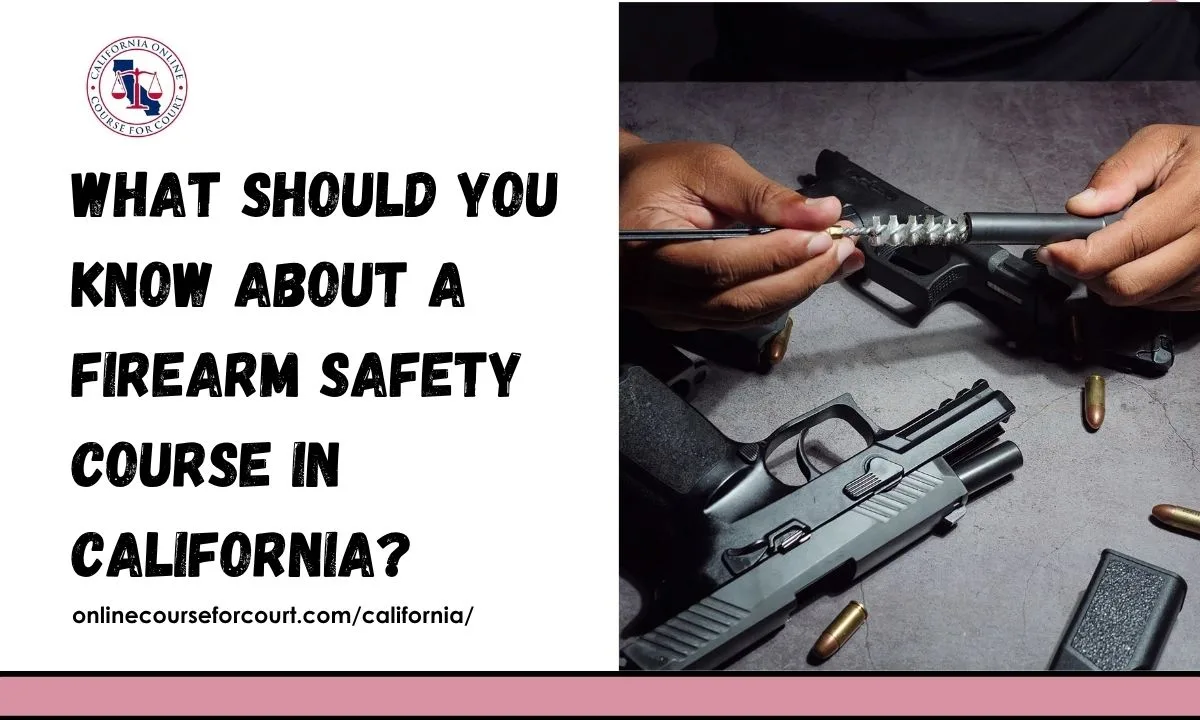
The Firearm Safety Course in California goes a step further into the mechanics of the firearm itself, covering how it functions, how to shoot it correctly, and how to respond if something goes wrong. Because the name overlaps closely with the weapon safety course, it's worth double-checking which one your paperwork actually specifies.
Who Typically Needs It
This course applies to first-time gun owners wanting to understand how their firearm actually works before using it, as well as individuals fulfilling a firearm-related condition named in court paperwork. New shooters preparing to shoot for the first time, and experienced owners looking for a refresher, also commonly enroll.
What the Course Covers
The material covers firearm mechanics, including how different firearm types function and cycle, along with shooting fundamentals like stance, grip, sight alignment, and trigger control. It also addresses emergency response for a misfire or malfunction, plus the broader ethical and social responsibility that comes with firearm use around others.
Drug Awareness Program in California
Possession-related citations and certain school or workplace referrals in California often come with an education requirement, and the Drug Awareness Program in California is built to address that directly. It focuses on understanding patterns of use and improving decision-making rather than delivering a lecture.
Who Typically Needs It
This program commonly applies to individuals facing a drug-related citation as part of a diversion agreement or probation condition. It also shows up for students referred by a school following a policy violation, and for employees completing it as a condition tied to a workplace issue.
What the Course Covers
The material walks through the legal consequences of a possession-related charge under California law, including how a record can affect background checks. It also covers the short and long-term effects of drug use on the body and mind, recognizing when use is trending toward dependency, and practical decision-making strategies for navigating peer pressure and high-risk situations.
Domestic Violence Prevention Class in California
Cases involving a domestic dispute or a related citation frequently come with an education requirement attached, and the Domestic Violence Prevention Class in California is built specifically for that situation. The course focuses on understanding patterns of conflict and building healthier responses rather than assigning blame.
Who Typically Needs It
This class is generally required for individuals completing a probation or diversion condition tied to a domestic-related case, as well as those referred through family court as part of a broader custody or protective order matter. Some people also enroll voluntarily to work through recurring conflict patterns before they escalate further.
What the Course Covers
The material covers recognizing the early signs of escalating conflict, understanding the cycle of abuse and how it develops over time, and practical de-escalation and communication techniques for high-tension situations. It also addresses the legal consequences tied to domestic violence charges and long-term strategies for building healthier relationship patterns going forward.
Driving While Intoxicated 1st Offender Class in California
A first DUI citation in California is one of the most common triggers for a required education course, and the Driving While Intoxicated 1st Offender Class in California is specifically built for someone facing that situation for the first time. It's usually paired with other conditions like fines, license actions, or a diversion agreement.
Who Typically Needs It
This course applies to individuals with no prior DUI history who are working through their first citation, often as part of a diversion program aimed at resolving the case without a lasting mark. It's also frequently required as part of a broader license reinstatement process.
What the Course Covers
The material covers the legal consequences of a first DUI, including fines and license implications, along with how alcohol and drugs affect reaction time, coordination, and judgment behind the wheel. It also addresses recognizing impairment before it becomes dangerous and practical strategies for planning transportation ahead of time.
How to Enroll, Step by Step
Getting through any of these courses correctly starts with locating your exact requirement, the court order, diversion agreement, or referral document, and confirming the precise course name listed. If anything is ambiguous, especially between the weapon safety and firearm safety courses, call your attorney or probation officer before paying for anything.
Once you've confirmed the right course, enroll and set aside realistic time to work through the material rather than rushing it. Complete the lessons and any knowledge checks at your own pace, keeping in mind that progress typically saves automatically across devices. When finished, download your certificate immediately and save a digital copy. Confirm exactly who needs it, whether that's a court clerk, attorney, probation officer, or diversion coordinator, along with the deadline, and keep your own copy indefinitely in case your compliance is ever questioned later.
Frequently Asked Questions
Do these classes have to be completed in person?
No. All five courses covered here are offered fully online and self-paced. It's still worth confirming with your specific court or probation office if you have any doubt about the format.
What's the real difference between the weapon safety and firearm safety courses?
Weapon safety focuses on storage, household safety, and preventing unauthorized access. Firearm safety focuses on how the firearm functions and shooting fundamentals. Check your paperwork, or confirm with whoever issued the requirement, before choosing.
Will completing a course guarantee a reduced sentence or dismissed charge?
No course can guarantee a specific legal outcome. Completion is generally viewed favorably as documented proof of accountability, but the final result always depends on your specific case, county, and judge.
Does the firearm safety certificate authorize me to purchase a firearm?
No. The certificate documents safety education, not a purchase authorization. If a license or permit is your goal, confirm current requirements with the relevant licensing authority separately.
What happens if this isn't my first DUI?
This course is built for a first offense. If you have a prior DUI, confirm with your attorney or the court whether a different course or additional requirements apply to your case.
Who do I actually submit my certificate to?
This varies by case. It could be a court clerk, an attorney, a probation officer, a school administrator, or a diversion coordinator. Confirm the exact recipient and method before you finish the course so there's no delay afterward.
Final Thoughts
None of these courses are designed to make an already difficult situation harder. Whether you're working through a weapon or firearm safety condition, a drug-related citation, a domestic violence prevention class, or a first DUI offense, the material exists to help you understand what happened and move forward with more confidence. Confirm exactly what your paperwork requires, choose the matching course, engage with the material honestly, and submit your certificate to the right place before the deadline. That's really the whole process, and once it's done, it's done.