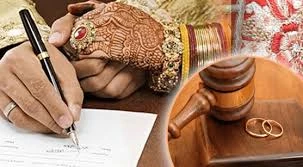
Getting legally married through the court is becoming increasingly common in Pakistan. Whether couples choose this option for personal, legal, or family reasons, understanding the process helps avoid confusion and delays. This article explains everything you need to know about Court Marriage, including the legal framework, required documents, costs, and timelines in a clear and simple way.
Court Marriage In Pakistan
Court Marriage In Pakistan is a legal way for two consenting adults to get married under the law without arranging a traditional ceremony. The marriage is registered officially, and a valid marriage certificate is issued. This type of marriage is recognized by NADRA and all government institutions.
Many couples choose this method for privacy, simplicity, or when families are not directly involved in arranging the marriage. It ensures full legal protection for both spouses.
Court Marriage Law In Pakistan
The Court Marriage Law In Pakistan is mainly governed by the Muslim Family Laws Ordinance 1961 for Muslims. For other religions, their respective personal laws apply. According to the law, both individuals must freely consent to the marriage and meet the legal age requirement.
A valid Nikah is performed in the presence of witnesses, and the marriage is then registered with the relevant Union Council.
Court Marriage Age
One of the most important legal requirements is Court Marriage age. In Pakistan, the legal age for marriage is 18 years for males. For females, it is generally 16 years, although in some provinces like Sindh, the minimum age is 18 years for both. It is always advisable to confirm the latest provincial regulations before proceeding.
Court Marriage Process In Pakistan
The Court Marriage Process In Pakistan is straightforward when handled properly. It typically includes the following steps:
- Initial consultation with a legal professional.
- Preparation of required documents.
- Drafting of marriage papers and affidavit.
- Performing the Nikah in the presence of witnesses.
- Registration of the marriage.
- The overall Court Marriage Procedure In Pakistan is designed to be simple, provided all documents are complete and both parties are legally eligible.
Documents For court marriage
Preparing the Documents For court marriage is a key part of the process. Generally, the following are required:
- Original CNIC (Computerized National Identity Card) of both bride and groom
- Copies of CNICs
- Passport-size photographs
- CNIC copies of witnesses
- Divorce certificate (if previously married)
- Death certificate (if widowed)
- Ensuring complete court marriage documents helps avoid unnecessary delays on the day of registration.
Court marriage witnesses
For a valid Nikah, two adult Muslim male witnesses (or one male and two female witnesses) are required. These court marriage witnesses must carry their original CNICs and be present at the time of the ceremony.
Witnesses play an important legal role, as their presence confirms that the marriage contract was entered into willingly by both parties.
Court Marriage Process and Procedure
Although people often use the terms Court Marriage Process and Court Marriage Procedure interchangeably, both refer to the legal steps involved from documentation to final registration. The procedure ensures that:
- Both individuals give free consent
- The marriage contract (Nikahnama) is properly signed
- The marriage is officially recorded
A qualified Court Marriage Lawyer can guide couples through each stage to ensure compliance with legal requirements.
Court Marriage Lahore
Court Marriage Lahore services are widely available due to the city’s large population and legal infrastructure. Couples in Lahore can complete the entire process within a short time if their documents are ready. Legal professionals in the city are experienced in handling sensitive and urgent cases.
Court Marriage Karachi
Similarly, Court Marriage Karachi services are accessible for residents of Sindh. Since Sindh has specific marriage age regulations, especially for females, it is important to verify eligibility before applying. Legal guidance ensures that all provincial laws are properly followed.
Court Marriage Timeperiod
The Court Marriage Timeperiod is usually very short compared to traditional weddings. In most cases, the process can be completed within one day if documentation is complete. However, registration with the Union Council may take a few additional days for official record issuance.
Court marriage fee and Court Marriage cost
The Court marriage fee depends on various factors, including legal consultation charges, documentation preparation, and registration costs. The overall Court Marriage cost may vary from city to city and from case to case.
It is always advisable to confirm the full fee structure beforehand to avoid misunderstandings. Transparent legal service providers usually explain all charges clearly at the start.
Why Hire a Court Marriage Lawyer?
A professional Court Marriage Lawyer ensures that your marriage is legally valid and properly documented. They handle paperwork, draft affidavits, arrange the Nikah Khawan, and guide you through registration. This reduces stress and protects your legal rights.
Couples often prefer legal assistance to ensure privacy, accuracy, and compliance with Pakistani family law.
Frequently Asked Questions (FAQs)
1. Is court marriage legally recognized in Pakistan?
Yes, it is fully legal and recognized, provided all legal requirements are met and the marriage is properly registered.
2. Can the process be completed in one day?
In many cases, yes. If documents are complete and both parties meet eligibility criteria, the Nikah and initial paperwork can be completed the same day.
3. Do both parties need to be present?
Yes, both bride and groom must be physically present with their original identification documents and witnesses.
Understanding the legal steps makes the process smooth and stress-free. With proper guidance and complete documentation, couples can confidently begin their married life under the protection of Pakistani law.