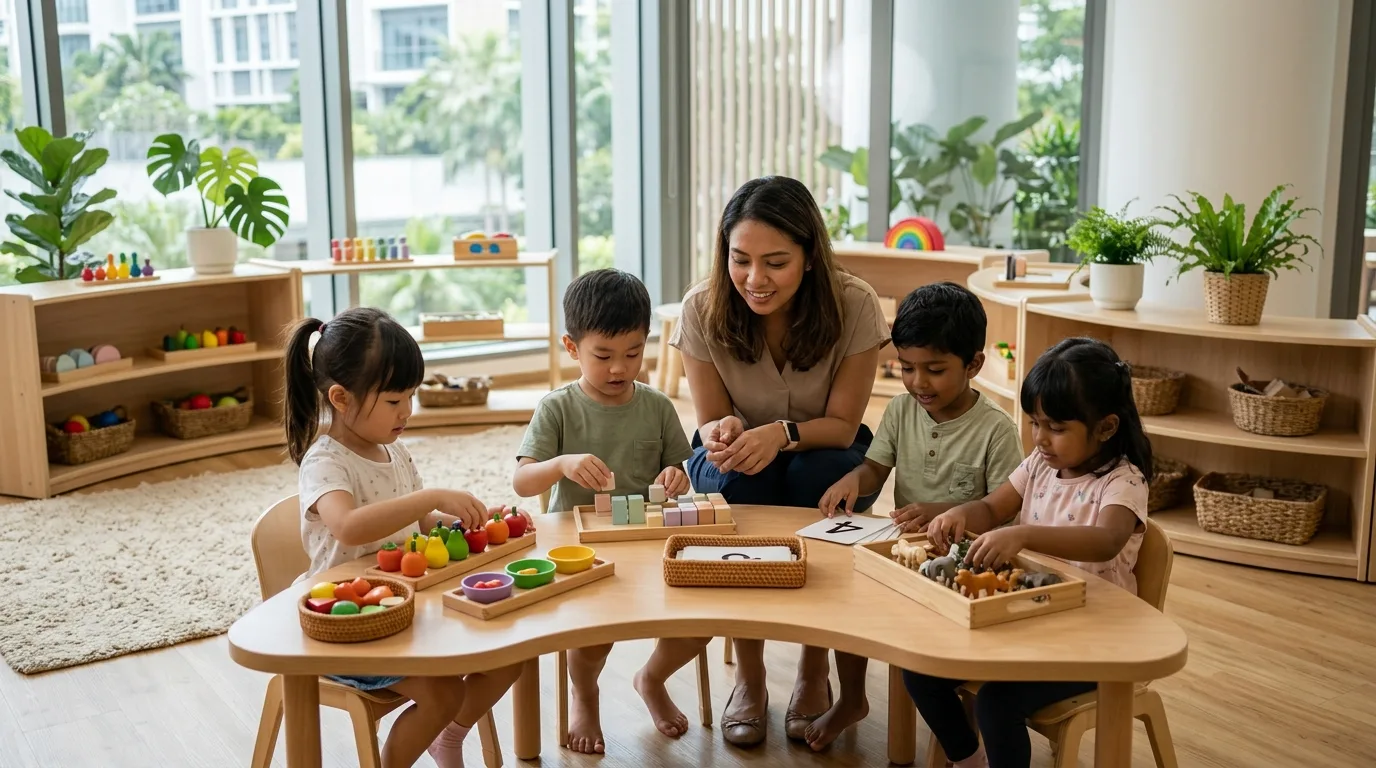
A child can count five biscuits at snack time, six steps to the playground, or ten toy cars on the floor without realising they are learning maths. That's why counting games for preschoolers are so useful. Instead of sitting with worksheets, children can learn numbers through movement, toys, songs and everyday play.
For Singapore parents, these activities fit into busy home routines and complement preschool learning. The National Early Childhood Development Agency (ECDA) also highlights everyday experiences, games and hands-on materials as useful ways to build early numeracy.
Why Counting Games Matter for Preschoolers
Counting is more than saying numbers from 1 to 10. Young children gradually learn that each number represents a quantity and that numbers relate to one another.
The Nurturing Early Learners (NEL) Framework describes numeracy as learning to identify and use numbers, count accurately, understand number relationships, and recognise patterns and shapes. It also recommends learning experiences with concrete materials that children can touch, move, sort and count.
This makes play a natural way to introduce early maths. A child who counts blocks while building a tower is learning about quantity. A child who gives one cup to each person is learning one-to-one matching.
These small moments can support skills such as:
- Counting objects in the correct order
- Matching numbers with quantities
- Comparing more and fewer
- Recognising written numbers
- Sorting and grouping objects
- Following simple patterns
- Developing early problem-solving skills
10 Counting Games for Preschoolers to Try
You do not need expensive toys or complicated materials for these activities. Everyday household objects can become useful counting activities for preschoolers.
1. Snack-Time Counting
Snack time is a great chance to practise counting without making it feel like a lesson. Put a few pieces of fruit, crackers or cereal on a plate and ask your child to count them one by one. Once they finish, ask simple questions such as, “How many are there?” or “Can you add two more?” Use foods your child already enjoys, such as banana slices, small pieces of bread, or cereal. Keep the game relaxed and let your child take their time.
2. Toy Car Number Parking
Turn toy cars into a simple number game by making your own parking spaces. Write numbers from 1 to 10 on small pieces of paper and place them on the floor. Ask your child to park one car in space 1, two cars in space 2 and so on. This helps children connect a written number with the number of objects it represents. Once they are comfortable, ask which space has more cars and which has fewer. It is a fun way to practise number recognition games at home.
3. Number Hunt Around the House
Children see numbers in many places during the day, so turn it into a little treasure hunt. Ask your child to find numbers on a clock, calendar, books, remote control or lift buttons. Choose one number and see how many times they can spot it around the home. For example, ask, “Can you find the number 4?” This simple activity helps children recognise numbers and understand that numbers are part of everyday life. It can easily become one of their favourite preschool counting games.
4. Step and Count
Take counting outside and add some movement to the game. At the playground, ask your child to count five steps, three jumps or ten claps. Change the number each time to keep the activity interesting. Children who find it hard to sit for long may enjoy this type of game because they can move while learning. It also gives them a chance to practise counting numbers in order while being active.
5. Building Block Towers
Building blocks can become a simple maths game in minutes. Give your child some blocks and ask them to build a tower with a certain number, such as five or seven blocks. Count the blocks together when the tower is finished. Then build another tower and ask which one has more blocks. This helps children see that a number represents a real amount, rather than just being a word they have memorised.
6. Counting and Sorting Toys
Gather a few of your child's toys and ask them to sort the toys into groups. They could group them by colour, size or type. Once the toys are sorted, count how many are in each group. You might say, “How many red cars do we have?” or “Which group has more?” This gives children a chance to practise counting while also learning how to sort and compare objects. It is a useful math game for preschoolers because one activity can practise several early maths skills.
7. Number Hopscotch
Make a small hopscotch game using numbers from 1 to 10. Write the numbers on paper or use chalk outside, then have your child hop from one number to the next while saying them aloud. Once they know the game, call out a number and ask them to hop to it. You can also ask, “What comes after 5?” or “Can you find 8?” This adds movement to fun counting activities for preschoolers and gives children extra practice with number order.
8. Count the Steps to the Door
Turn an ordinary walk around the home into a quick counting activity. Start in one room and count how many steps it takes to reach another room. Try counting the steps from the bedroom to the living room, or from the sofa to the front door. Repeat the game another day to see whether the number stays the same. Ask your child which journey took more steps to introduce a simple comparison.
9. Counting with Bottle Caps
Clean bottle caps make a great hands-on counting game, but keep an adult nearby because small objects can be a choking risk. Put number cards from 1 to 10 on a table and ask your child to place the matching number of bottle caps beside each card. For example, place six bottle caps next to the number 6. Children can touch and move each cap as they count, which can help them connect the written number with the amount it represents.
10. Sing-and-Count Games
Some children learn numbers more easily when counting is part of a song or rhyme. Try counting while clapping, tapping or using your fingers. Sing a familiar number song and stop before the last number, giving your child a chance to finish. For example, start with “1, 2, 3, 4...” and let your child continue. Repeating the same song over several days can give children extra practice while keeping the activity playful.
How to Make Counting Activities More Meaningful
Children do not need long maths sessions. A few minutes during normal daily routines can create plenty of opportunities to practise.
Start with small numbers that your child can manage comfortably. Once counting becomes familiar, add another challenge, such as comparing two groups or finding a particular number.
Ask questions that make your child think rather than repeat answers.
Instead of only asking, “What number is this?”, try:
“Which plate has more?”
“How many do we need?”
“What comes next?”
“Can you show me five?”
This type of questioning helps children explain their thinking and use mathematical language.
The NEL Framework encourages adults to model words such as more, fewer, bigger and smaller during everyday experiences.
Counting Games for Preschoolers at Home and Preschool
Counting does not have to stop at home. Children can practise the same ideas during classroom play, outdoor activities, art, block building and story time.
A quality preschool education in Singapore can give children regular opportunities to explore early numeracy as part of a wider learning experience.
For children below three, Singapore's Early Years Development Framework (EYDF) 2023 supports developmentally appropriate learning experiences across cognitive, communication and language, physical, and social-emotional areas.
For preschool-aged children, the NEL Framework places numeracy within everyday learning and encourages children to enjoy using numeracy concepts in meaningful situations. Parents can support this at home by keeping number play relaxed and connected to things children already enjoy.
When Should You Move Beyond Basic Counting?
When your child is comfortable counting a few objects, you can make the games a little harder. Give them five blocks, add two more and ask, “How many blocks are there now?” You can also put two groups of toys together and ask which group has more.
These little games help children understand numbers through play. ECDA also recommends activities that help young children count, compare amounts and understand quantities before moving on to more advanced maths.
Common Mistakes to Avoid During Number Games
Counting games work best when children have space to explore. Avoid turning every activity into a test. Correcting every small mistake can make number play feel like work. Instead, count together and let your child try again. Use familiar, safe objects, and adjust the number range to your child's current skills.
Varying the activity also helps. One day might involve counting toys, while another could involve counting steps, sorting blocks or singing a number song. HealthHub also highlights the value of active, screen-free play for young children, making hands-on counting activities a useful alternative to passive screen use.
Final Thought
Counting games for preschoolers can turn ordinary moments into early maths learning. From counting snacks and toy cars to hopping between numbers, building towers and spotting numbers around Singapore, children can develop number sense through playful experiences.
The most useful activities do not need expensive resources or long lessons. They give children chances to count real objects, recognise numbers, compare quantities, move, talk and solve small problems.
For parents, the key is to keep number learning connected to everyday life. A few minutes of playful counting during snack time, bath time, a walk to the playground or block play can help build the foundations for future maths learning while keeping the experience enjoyable.
FAQs
1. What are the best ways to teach number recognition to preschoolers?
Number recognition can develop through repeated exposure to numbers in everyday settings. Parents can point out numbers on clocks, calendars, books, lift buttons, and toys, then match each written number to the correct quantity.
2. How can parents tell whether a preschooler is ready for more challenging maths games?
A child may be ready for a greater challenge when counting small groups becomes comfortable, and they can match quantities with numbers. Parents can then introduce comparing groups, simple patterns or small addition activities through play.
3. Can counting games help children who do not enjoy maths?
Playful activities can make maths feel less like a formal lesson. Movement, toys, songs, stories and familiar objects can give children different ways to interact with numbers and may make number learning more enjoyable.
4. Are screen-based counting games suitable for preschool children?
Digital activities are one option, but children also benefit from hands-on play, movement, and interaction with adults. Singapore HealthHub advises limiting screen use for children aged 18 months to 6 years to under one hour a day outside school.
5. How can parents make counting part of a busy Singapore family routine?
Use moments that already happen during the day. Count fruit pieces at breakfast, steps on the way to the lift, cars in a car park, toys during tidy-up time or playground jumps. These short activities give children regular exposure to numbers without requiring a formal lesson