
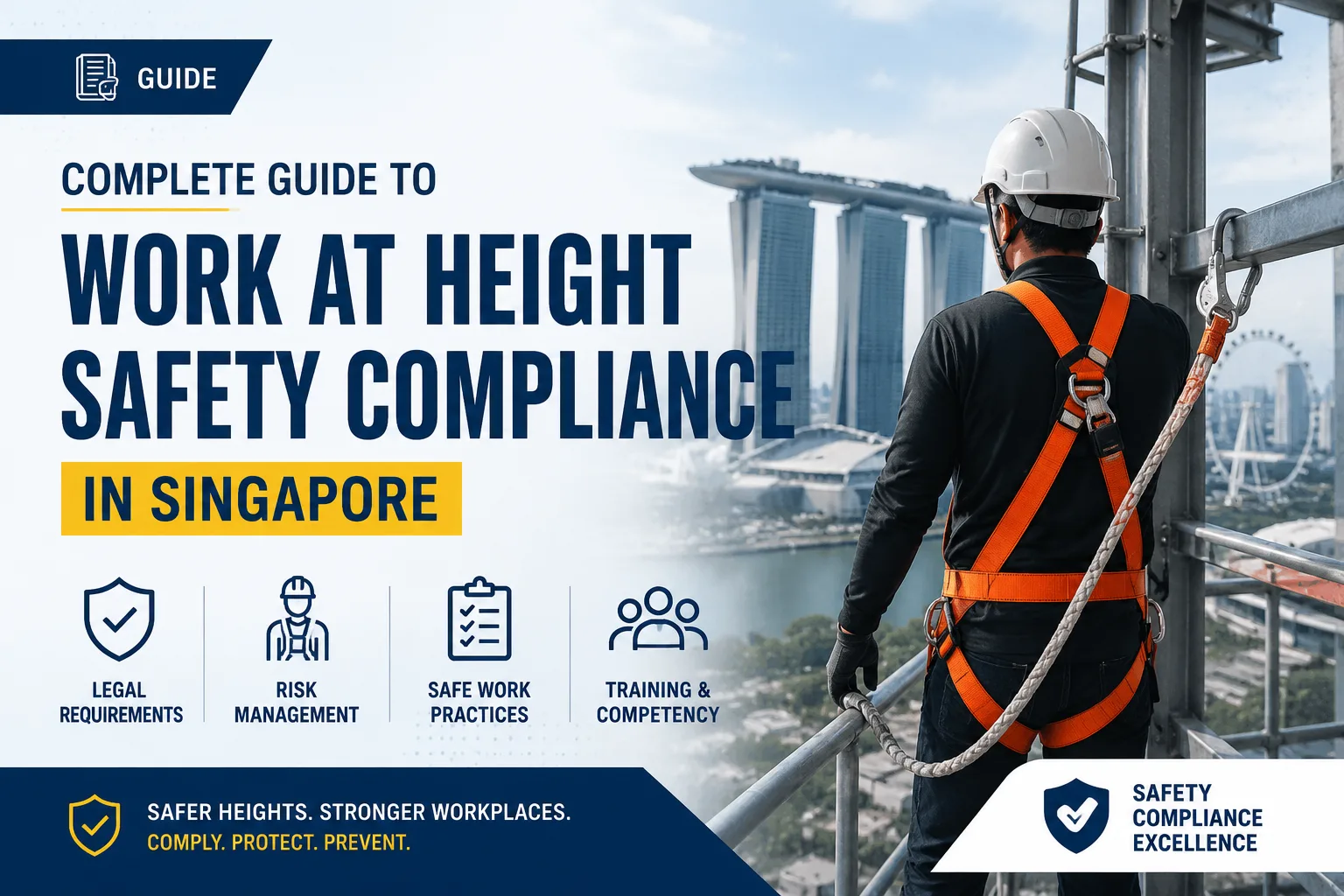
Work at height activities are some of the highest risk tasks in Singapore’s construction, maintenance, marine, manufacturing and industrial sectors. Falls from height are still among the leading causes of workplace injuries and deaths, making safety compliance vital for employers and employees.
Singapore has developed a full set of Workplace Safety and Health (WSH) regulations to minimise fall-related accidents and raise the safety standards at worksites. Companies engaging in " work at height "activities must have proper work at height protocols, provide safety training, conduct risk assessments and ensure personnel are using approved fall protection gear.
This guide is a comprehensive guide for employers and workers on what they need to know about Work at Height safety compliance in Singapore.
What is working at a height?
Work at height is any activity carried out in a place where a person could fall from one level to another and be injured. This includes work performed:
- On Ladders
- On scaffolding
- On the roofs
- On high platforms
- Close to openings or edges
- Within raised buildings
- Using boom lifts or scissor lifts
Even a low fall can result in serious injury if proper safety precautions are not taken.
Why Work at Height Safety Compliance Is Important
Falls from height are one of the most common workplace accidents in the construction and industrial sectors in Singapore. Contributing factors cited are unsafe work practices, missing guardrails, improper ladder use and lack of safety training.
Proper compliance helps:
- Reduce workplace accidents
- Protect workers from serious injuries
- Improve workplace productivity
- Ensure legal compliance with WSH regulations
- Avoid penalties and enforcement actions
- Strengthen workplace safety culture
Companies that prioritise safety compliance also improve employee confidence and operational efficiency.
Work at Height Regulations Singapore
Singapore’s " Ministry of Manpower (MOM) " has stringent safety regulations under the Workplace Safety and Health Act. Employers must ensure that all work at height is properly planned, supervised and carried out safely.
Key compliance requirements are:
- Performing risk assessments
- Implementation of safe work procedures
- Providing approved fall protection systems
- Making sure workers are involved in the right safety training
- Regular maintenance of equipment
- Supervision of high risk activities
WSH violations can lead to fines, stop-work orders or prosecution.
Risk Assessment for Work at Height
Employers must carry out a proper risk assessment before any elevated work starts to identify possible hazards.
A risk assessment should evaluate:
- Falling risks
- Unstable surfaces
- Climate conditions
- Equipment conditions
- Workers’ competency
- Electrical hazards nearby
- Emergency rescue equipment
- Once hazards have been identified, companies need to put in place control measures to reduce risks as much as possible.
- Nearby electrical hazards
- Emergency rescue procedures
After identifying hazards, companies must implement control measures to reduce risks as much as possible.
Importance of Work at Height Training
Singapore safety training is a vital part of work at height compliance. Workers should know:
- Hazard identification
- Measures to prevent falls
- Correct use of personal protective equipment (PPE)
- Emergency response measures
- Safety of ladders
Anchoring systems and lifelines
The Perform Work at Height course provides workers with the practical knowledge and competency to perform work at heights.
Better trained workers are more likely to identify hazards and follow safe work procedures.
Fall Prevention and Protection Measures
1. Guardrails and BarriersGuardrails are one of the most effective fall prevention methods. They should be installed around open edges, platforms, and elevated work areas whenever possible.
2. Safety Harness SystemsWorkers performing high-risk tasks may need:
- Full-body harnesses
- Shock-absorbing lanyards
- Lifelines
- Anchorage systems
All equipment should be inspected regularly before use.
3. Proper Ladder SafetyUnsafe ladder use is a major cause of workplace falls.
Workers should:
- Use industrial-grade ladders
- Ensure ladders are stable
- Avoid overreaching
- Maintain three-point contact
- Inspect ladders before use
Scaffolds must be:
- Properly erected
- Regularly inspected
- Stable and secure
- Used according to load limits
Only trained personnel should handle scaffold-related work.
Responsibilities of Employers
Employers play a critical role in maintaining work at height safety compliance.
Their responsibilities include:
- Providing safety training
- Conducting toolbox meetings
- Supplying PPE
- Monitoring workplace safety practices
- Maintaining equipment
- Developing emergency rescue plans
- Ensuring competent supervision
Employers must also stop unsafe work immediately if serious hazards are identified.
Responsibilities of Workers
Workers also have legal responsibilities under workplace safety regulations.
Workers should:
- Follow safety procedures
- Use PPE correctly
- Report hazards immediately
- Avoid unsafe work practices
- Attend mandatory training
- Cooperate with supervisors during safety inspections
Ignoring safety rules can place both workers and colleagues at risk.
Common Work at Height Hazards
Some of the most common hazards include:
- Slippery surfaces
- Unprotected edges
- Weak roof structures
- Falling objects
- Improper ladder positioning
- Faulty safety equipment
- Poor weather conditions
- Lack of supervision
Regular inspections and strong safety management can significantly reduce these risks.
Emergency Planning & Rescue Procedures
Emergency preparedness is important when working at height activities. Companies should have rescue procedures in place before they begin work.
Emergency plans should contain:
- Availability of rescue equipment
- Communication procedures
- Emergency contact information
- First aid supplies
- Plans for evacuation of workers
Quick response times can reduce injury severity during accidents.
Benefits of Robust Work at Height Compliance
Companies that maintain high safety compliance can enjoy:
- Fewer accidents at work
- Less downtime
- Improved worker morale
- Better company reputation
- greater productivity
- Claims of lower pay
- Better legal compliance
- Company image improved
- Improved legal compliance
A safer workplace also supports long-term business sustainability.
Concluding Thoughts
Adhering to work at height safety standards in Singapore is crucial to protect workers and ensure safe working conditions. There are strict rules to keep people safe at work. Employers and workers have to work as a team to cut down on hazards of falling and increase safety standards.
Proper training, risk assessment, fall protection systems and regular supervision are essential for the effective management of work at height. Companies that prioritize workplace safety are not only meeting the regulations, but are creating safer, more productive work environments for all.
click her - “ Perform Work at Height in Singapore ”