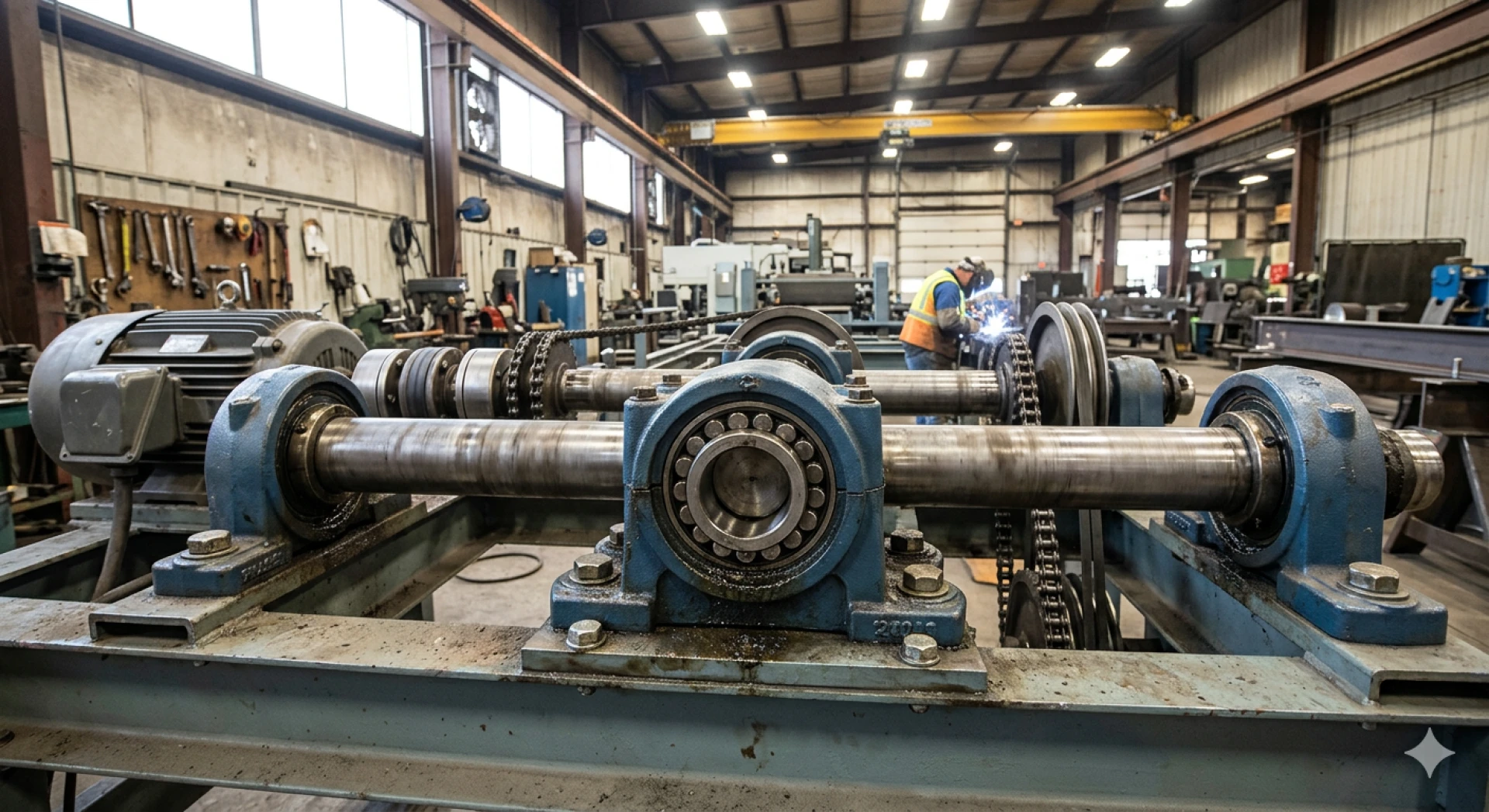
Selecting the right industrial bearing is critical for ensuring smooth machinery operation, reducing downtime, and improving efficiency. In heavy-duty applications, using the wrong bearing can lead to frequent failures, increased maintenance costs, and production loss. This guide explains how to choose the right OEM industrial bearings based on load, speed, and application requirements.

Understanding Industrial Bearing Requirements
Industrial machinery requires bearings that can handle:
- High load capacity
- Continuous operation
- Harsh environments
Choosing the right bearing improves machine performance and extends equipment life.
Types of Bearings Used in Industrial Applications
Common bearing types include:
- Ball Bearings (for high-speed applications)
- Roller Bearings (for heavy loads)
- Tapered Roller Bearings (for combined loads)
- Spherical Bearings (for misalignment handling)
Each type serves a specific industrial purpose.
Key Factors to Consider
Load Capacity: Choose bearings based on radial and axial load requirements.
Speed: High-speed machinery requires low-friction bearings.
Environment: Dust, moisture, and temperature impact bearing performance.
Material: Stainless steel and hybrid bearings improve durability.
Importance of OEM Bearing Solutions
OEM bearings are customized to match machine specifications. They ensure:
Better compatibility
Improved efficiency
Longer service life
Businesses looking for reliable solutions often prefer working with experienced manufacturers.
Conclusion
Selecting the right industrial bearing is essential for long-term machine performance. By considering load, speed, and environment, businesses can reduce downtime and increase productivity.