Rising electricity costs, greater pressure to improve energy efficiency and long-term sustainability targets are encouraging more UK businesses to consider commercial solar panels. For offices, warehouses, industrial units and other commercial properties with suitable roof space, solar photovoltaic systems can provide a practical way to generate electricity on site and reduce dependence on electricity purchased from the grid.
At AEG Energy, we approach commercial solar as part of a wider property and energy strategy. The right system should not simply place as many panels as possible on a roof. It should consider the building's electricity consumption, roof condition, available space, structural requirements, operating hours, future energy demand and the amount of solar electricity that can realistically be used on site.
For many commercial properties, particularly buildings that consume significant electricity during daylight hours, Commercial Solar PV can become an important part of long-term energy management.
Why Commercial Solar Panels Are Becoming Important for UK Businesses
Commercial buildings can have substantial electricity requirements. Offices need power for lighting, computers, servers, ventilation, cooling, lifts and other equipment. Warehouses may operate lighting systems, machinery, refrigeration, charging equipment, security systems and logistics technology throughout the working day.
A commercial solar PV system generates electricity directly from daylight. When the electricity produced by the system is consumed within the property, the business can reduce the amount of electricity it needs to purchase from its energy supplier.
This relationship between daytime generation and daytime consumption is one reason solar panels for commercial buildings can be particularly effective.
The UK Government's Solar Roadmap specifically identifies offices, warehouses, industrial and manufacturing buildings as part of the commercial rooftop solar opportunity. It also highlights design, permissions, grid connections, finance and insurance as important considerations for commercial rooftop installations.
Rather than treating solar as an isolated technology, we believe businesses should evaluate how generation fits with their actual electricity demand and future plans.
How Commercial Solar PV Works
Solar photovoltaic panels contain cells that convert daylight into direct current electricity. An inverter then converts this electricity into alternating current that can be used by the building's electrical systems.
When the building is consuming electricity at the same time the solar system is producing it, solar generation can supply part of that demand.
For example, a warehouse operating between morning and late afternoon may use electricity continuously for lighting, equipment, offices, IT systems and operational machinery. A correctly sized rooftop solar array can generate electricity during many of those same working hours.
If generation exceeds immediate demand, the treatment of surplus electricity depends on the system design, export arrangements and whether battery storage has been incorporated.
The objective should therefore be to design the system around the property rather than selecting a standard package.
Commercial Solar Panels for Offices
Office buildings can be strong candidates for commercial solar because much of their electricity use occurs during daylight hours.
Typical office demand may include computers, displays, meeting-room technology, servers, lifts, lighting, ventilation systems, air conditioning and kitchen facilities. Larger offices may also operate electric vehicle chargers and other electrical infrastructure.
Solar generation can offset a proportion of this daytime consumption.
For organisations planning future electrification, the case for solar may become even more relevant. Businesses may expect additional electricity demand from EV charging, heat pumps, expanded IT infrastructure or increased occupancy.
Considering future demand during the initial solar assessment can help ensure that the proposed system supports both current requirements and longer-term plans.
Roof configuration is equally important. Plant equipment, skylights, roof access routes, shading and safety zones may reduce the area available for panels. A professional survey should therefore establish usable roof space before system capacity is proposed.
Warehouse Solar Panels and Large Commercial Roofs
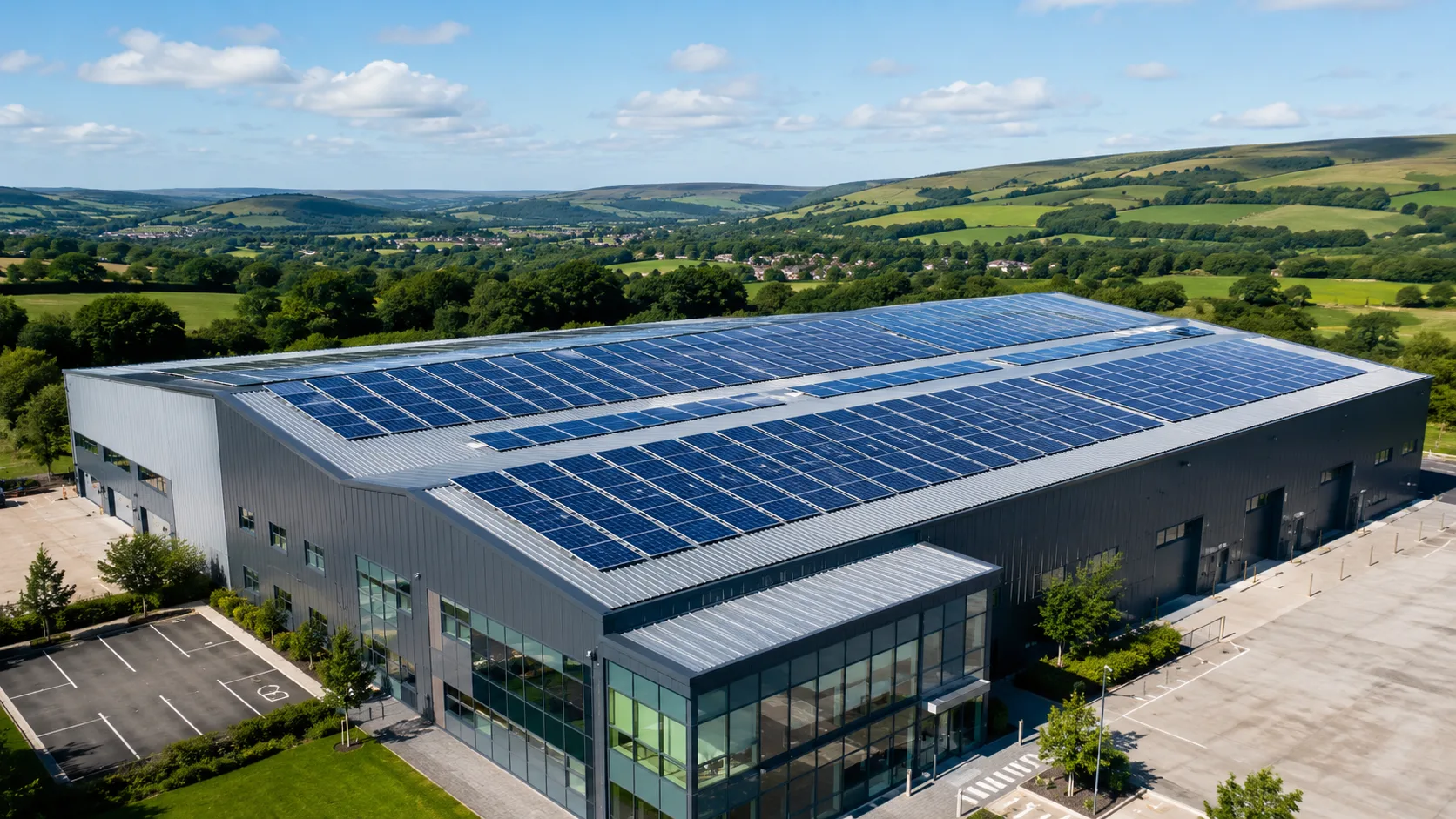
Warehouses are particularly interesting for commercial solar because many have extensive roof areas that are otherwise unused.
Large distribution centres, storage facilities, logistics buildings and industrial warehouses can potentially accommodate significant numbers of solar panels, subject to structural suitability and other technical considerations.
However, a large roof does not automatically mean the largest possible system will provide the best commercial outcome.
We first need to understand the building's electricity profile.
A warehouse with high daytime electricity demand may be able to consume a substantial proportion of its solar generation directly. A storage facility with relatively low electricity consumption may require a different system design.
This distinction is important because self-consumption often plays a major role in the financial performance of commercial solar.
The UK Government has also highlighted the potential contribution of the warehouse sector to wider rooftop solar deployment, reflecting the considerable amount of commercial roof space available across the country.
For businesses operating warehouses, the opportunity therefore lies in matching available roof area with genuine energy requirements.
Reducing Business Electricity Costs with Solar
One of the primary reasons organisations investigate commercial solar panels is the potential to reduce the amount of electricity purchased from the grid.
Every kilowatt-hour generated and consumed directly within the property is electricity that would otherwise have needed to be bought from an energy supplier.
The actual financial benefit depends on several factors, including:
Electricity consumption, operating hours, system size, roof orientation, shading, panel performance, electricity tariffs and the proportion of solar generation used directly on site.
Businesses with consistent daytime consumption can often achieve strong levels of self-consumption because their operational demand coincides with solar production.
This makes accurate system modelling particularly important.
Rather than quoting savings based purely on panel numbers, we consider the relationship between expected generation and actual electricity demand.
Commercial Solar as a Long-Term Energy Investment
A commercial solar installation should be viewed as a long-term building infrastructure project.
Once installed, solar panels can continue generating electricity for many years. The system can therefore reduce exposure to a portion of future grid electricity purchases while allowing the business to generate more of its own electricity on site.
This does not mean solar completely removes reliance on the grid.
Generation varies throughout the day and across seasons, while commercial electricity demand may continue after sunset or during periods of lower solar production. Most businesses therefore remain connected to the electricity network.
The benefit comes from reducing the quantity of electricity that must be purchased when solar generation is available.
For organisations assessing investment decisions, commercial solar can therefore be evaluated alongside other capital improvements such as building upgrades, heating systems, insulation, lighting improvements and EV infrastructure.
Roof Condition and Structural Assessment
Before installing solar panels on a commercial building, the condition and suitability of the roof must be understood.
Commercial roofs vary significantly. Properties may have pitched roofs, metal sheet roofing, standing seam systems, flat roofing membranes or other construction types.
The assessment should consider the available installation area, roof condition, structural capacity, access requirements, drainage routes, existing services and potential shading.
If a roof is approaching the end of its useful life, it may make sense to coordinate roofing work before solar installation rather than installing panels and later removing them to complete repairs.
This is why combining construction knowledge with renewable energy planning can be valuable.
At AEG Energy, we understand that commercial solar forms part of the building rather than existing independently from it.
Solar Panel Orientation, Shading and Available Roof Space
The amount of electricity a solar PV system can generate depends partly on the physical characteristics of the site.
Roof orientation, pitch and shading should all be considered during design.
Commercial roofs can contain obstacles such as HVAC equipment, vents, rooflights, access hatches, parapets and other building services. These features may affect panel placement and create areas where installation is unsuitable.
Safe access must also remain available for future maintenance of both the solar system and the building itself.
Modern commercial solar design can accommodate a variety of roof configurations, but the layout should always balance generation potential, safety, accessibility and technical requirements.
Commercial Solar Panels and Battery Storage
Battery storage can sometimes complement commercial solar by storing electricity that is not immediately required.
Instead of exporting surplus generation straight away, a battery may allow part of that electricity to be used later.
Whether battery storage makes commercial sense depends heavily on the building's electricity profile.
A property that already consumes most solar generation during daylight hours may have relatively little surplus electricity available for storage. Another site may produce substantial excess generation during certain periods and have significant evening demand.
The decision should therefore be based on consumption data rather than assuming every commercial solar installation requires a battery.
Solar and battery systems should be modelled together where appropriate.
EV Charging and Commercial Solar
Electric vehicle charging is becoming another consideration for commercial property owners.
Businesses may install chargers for employees, customers, visitors or commercial vehicle fleets. This creates additional electricity demand.
Combining commercial solar PV and EV charging can allow some vehicle charging to be supported by electricity generated on the property.
The level of direct solar contribution depends on when vehicles are charging, the size of the solar system and the building's other electricity requirements.
For businesses planning fleet electrification, considering solar and EV charging together can help create a more coordinated long-term energy strategy.
Commercial Solar for Sustainability and ESG Objectives
Commercial solar can also support wider environmental objectives.
Generating renewable electricity on site can help organisations reduce their reliance on grid electricity and demonstrate practical investment in lower-carbon infrastructure.
For companies reporting sustainability performance, environmental targets or ESG commitments, rooftop solar provides a visible physical improvement to the property.
However, sustainability claims should always be supported by measurable information.
Generation monitoring can provide businesses with data showing how much electricity the solar system has produced over a defined period. This information can support internal energy management and sustainability reporting.
The goal should be measurable performance rather than simply installing solar for appearance.
Planning a Commercial Solar PV Installation
Successful commercial solar projects usually begin with understanding the site.
We consider the commercial property's electricity usage, roof characteristics, available space and operational requirements before developing an appropriate solution.
Historic electricity consumption can be particularly useful.
Half-hourly electricity data, where available, can provide a more detailed picture of when energy is being consumed. This allows expected solar generation to be compared against actual demand throughout the day.
From there, system capacity, panel layout, inverter requirements and potential generation can be evaluated.
Grid connection requirements and electrical infrastructure must also be considered as part of the project. UK guidance notes that energy generation equipment may require appropriate registration and network procedures depending on the installation.
This technical planning helps reduce the risk of installing a system that is unnecessarily large, too small or poorly aligned with the property's actual needs.
Commercial Solar for Owner-Occupied and Leased Buildings
Solar installation can be relatively straightforward to consider when a business owns its commercial property, but many UK offices and warehouses are leased.
Leased commercial buildings can involve additional considerations.
Responsibilities between landlords and tenants must be clear, particularly regarding installation approval, electricity use, maintenance, roof access and what happens at the end of a lease.
The UK's Solar Roadmap specifically identifies traditional commercial lease structures as one of the issues that can affect rooftop solar deployment and highlights work intended to improve arrangements between landlords and tenants.
Businesses occupying leased properties should therefore involve relevant property owners and stakeholders early in the assessment process.
What Makes a Commercial Property Suitable for Solar Panels?
There is no single type of building that automatically qualifies as the perfect solar site.
Suitability depends on several interconnected factors.
A strong candidate will generally have useful available roof space, suitable structural conditions, manageable shading and meaningful electricity consumption during solar generation hours.
The business should also consider how long it expects to occupy the building and whether major roof works, extensions or other property improvements are planned.
Warehouses with large roofs may offer excellent physical capacity, while office buildings with strong daytime consumption may offer an attractive demand profile.
Manufacturing facilities may combine both characteristics.
This is why each commercial property should be assessed individually.
Why System Sizing Matters for Commercial Solar
System sizing is one of the most important parts of commercial solar design.
Installing more panels increases potential generation, but that does not automatically mean it creates the most appropriate commercial solution.
A useful assessment considers how much electricity the building uses and when that electricity is consumed.
For some organisations, maximising rooftop generation may be appropriate. For others, designing around self-consumption may provide a better balance.
Future electricity requirements should also be considered.
A business expecting to install electric heating, expand production, introduce EV charging or increase working hours may need a different system from a business expecting stable electricity consumption.
Commercial solar therefore requires a site-specific approach rather than a standard panel package.
Monitoring Commercial Solar Performance
Once commissioned, monitoring helps businesses understand how their system is performing.
Commercial solar monitoring platforms can provide information about electricity generation, system performance and potential faults.
Businesses can compare generation across different periods and identify unexpected drops in output.
Monitoring is particularly useful for larger commercial installations because even small performance issues can represent meaningful lost generation when multiplied across a large array.
Regular inspection and appropriate maintenance can help ensure that the system continues operating as intended.
Solar PV for Offices, Warehouses and Commercial Properties
The opportunity for commercial solar panels extends beyond conventional offices and warehouses.
Solar PV may be suitable for distribution centres, industrial properties, retail buildings, manufacturing sites, educational facilities, community buildings and other commercial premises.
What matters is whether the property has an appropriate combination of available space, electrical demand and technical suitability.
For businesses reviewing long-term energy costs, rooftop space represents an asset that is often underused.
Commercial solar allows part of that space to become an electricity-generating component of the building.
Integrating Solar with Wider Commercial Property Improvements
Solar can deliver greater strategic value when it forms part of a wider building improvement programme.
A business may be considering roofing works, insulation upgrades, heating improvements, lighting upgrades, EV charging or wider refurbishment at the same time.
Coordinating these improvements can help avoid unnecessary duplication and ensure that individual technologies work effectively together.
For example, completing required roof repairs before installing solar can reduce disruption later. Improving energy efficiency can change the building's electricity profile, which may influence solar system sizing.
This integrated approach allows property owners to make decisions based on the building as a whole.
Choosing the Right Commercial Solar Approach
The strongest commercial solar projects begin with data, site assessment and realistic expectations.
Businesses should understand their electricity consumption before deciding how much solar capacity they need.
Roof suitability should be assessed before assuming the entire surface is available.
Electrical infrastructure and grid requirements should be reviewed before finalising the system.
Future expansion and electrification plans should also be considered.
When these factors are brought together, commercial solar PV can become more than a collection of rooftop panels. It becomes part of the organisation's long-term property and energy infrastructure.
Commercial Solar PV with AEG Energy
At AEG Energy, we support businesses looking to understand how solar PV can work across commercial properties.
Whether the site is an office, warehouse, industrial building or another commercial facility, we focus on developing solutions around the characteristics of the property and the organisation's actual energy requirements.
Our approach considers roof suitability, available installation space, energy consumption, technical requirements and the wider objectives of the property.
Businesses considering renewable electricity generation can explore our Commercial Solar PV solutions and discuss the requirements of their building with our team.
Start Planning Solar Panels for Your Commercial Building
Commercial rooftops offer UK businesses an opportunity to generate renewable electricity from space that may otherwise provide little direct financial value.
For offices with consistent daytime electricity demand, warehouses with extensive roof areas and businesses planning future electrification, commercial solar panels can form an important part of a long-term energy strategy.
The key is choosing a system based on evidence rather than assumptions.
By assessing electricity consumption, roof suitability, solar generation potential and future business requirements together, we can develop a commercial solar strategy that is appropriate for the property.
If your organisation is considering solar panels for offices, warehouse solar panels or Commercial Solar PV, speak with AEG Energyto explore the potential of your commercial building.