
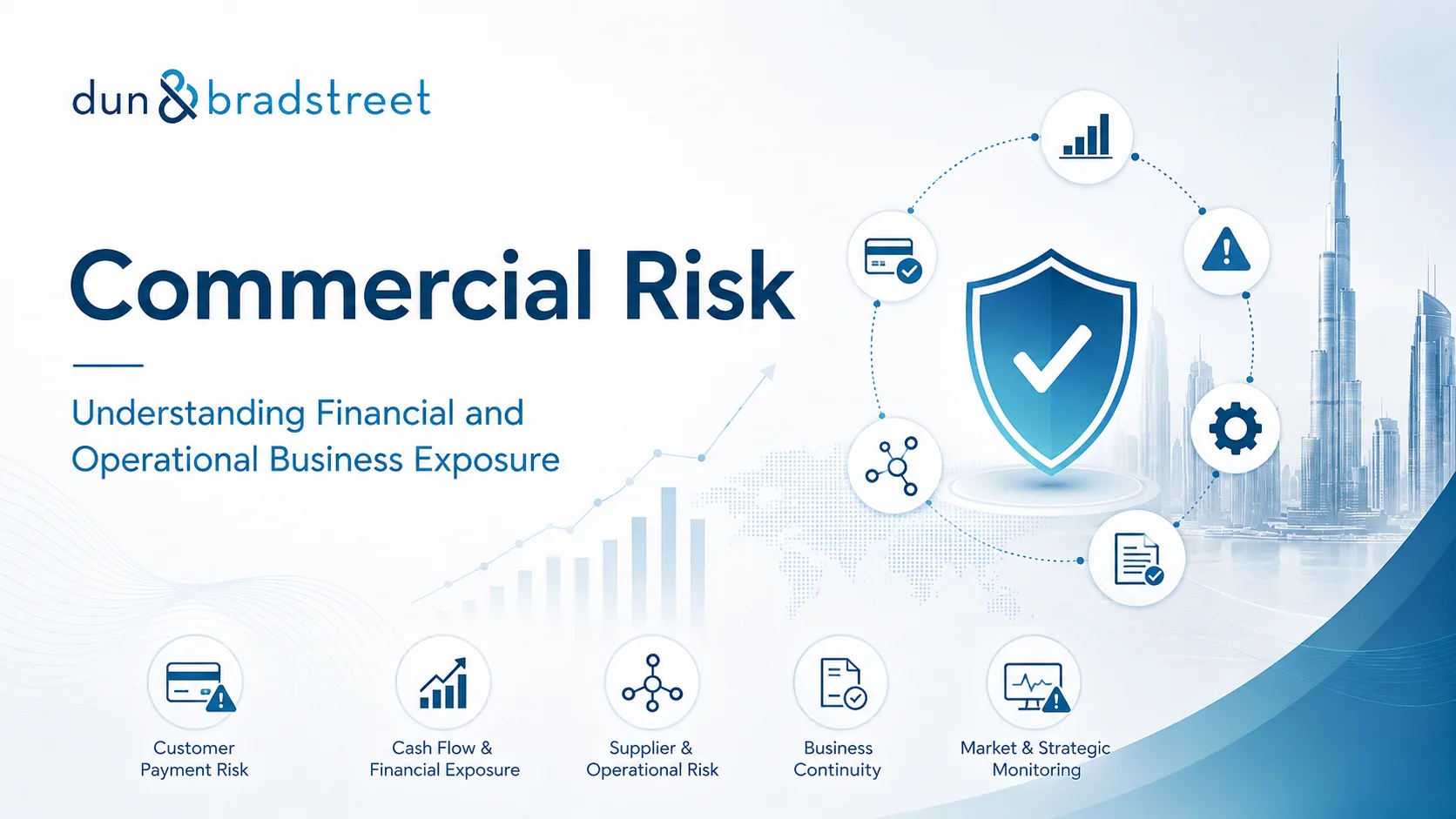
Every business faces uncertainty, but not every risk has the same impact. Commercial risk refers to the possibility that financial, operational, market, or counterparty-related events may reduce profitability, interrupt activity, or prevent a company from achieving its growth objectives.
For organisations operating in competitive markets, understanding commercial risk is essential. A profitable opportunity can quickly become a costly problem if a customer fails to pay, a supplier becomes unreliable, operating costs rise, or market demand changes. By identifying these exposures early, businesses can make better decisions, protect cash flow, and build long-term resilience.
What Is Commercial Risk?
Commercial risk is the potential for loss arising from the way a business operates, trades, invests, and interacts with customers, suppliers, partners, and markets. It covers threats that can affect revenue, expenses, liquidity, reputation, and operational continuity.
Many commercial risks develop through everyday business decisions. Extending credit to an unstable customer, depending on a single supplier, entering an unfamiliar market, or signing a poorly structured contract can all increase exposure.
Commercial risk is therefore closely connected to both financial and operational performance. Managing it requires a clear understanding of where the organisation is vulnerable and how those vulnerabilities could affect future results.
Financial Risks Affecting Business Performance
Financial exposure is one of the most visible forms of commercial risk. It can directly affect cash flow, profitability, and the ability to meet short-term obligations.
Customer Payment Risk
When a business sells products or services on credit, it assumes the risk that the customer may pay late or fail to pay. Even a profitable company can face pressure if outstanding invoices continue to grow.
Reviewing a customer’s financial condition, payment behaviour, credit history, and obligations can help businesses set suitable credit limits and payment terms. Continuous monitoring is also important because a customer that appeared stable several months ago may now be facing financial difficulty.
Cash Flow and Liquidity Risk
A company may generate strong sales but still struggle if cash does not arrive when needed. High operating costs, delayed receivables, excessive inventory, and unexpected expenses can create liquidity pressure.
Commercial risk management should include cash flow forecasting, working capital analysis, and contingency planning. Businesses need to understand not only how much they earn, but also when money enters and leaves the organisation.
Pricing and Margin Risk
Rising supplier costs, inflation, currency movements, discounting, and competitive pressure can reduce margins. If pricing decisions do not reflect changing costs, revenue growth may not improve profitability.
Companies should regularly review cost structures, customer profitability, and contract pricing. Long-term agreements may also need clauses that allow adjustments when material or operating costs change significantly.
Operational Risks That Disrupt Growth
Commercial risk is not limited to finance. Operational weaknesses can interrupt delivery, damage customer relationships, and increase costs.
Supplier and Supply Chain Risk
Businesses often depend on suppliers for materials, technology, logistics, or specialist services. If a critical supplier fails, experiences financial trouble, or cannot meet quality standards, the impact may spread across the operation.
Supplier due diligence can help assess financial stability, ownership, compliance, delivery capability, and concentration risk. Companies should also identify alternative suppliers for essential products and avoid excessive dependence on a single source.
Process and Technology Failures
Manual processes, outdated systems, poor data quality, and weak cybersecurity can create serious exposure. A system outage may delay orders, while inaccurate information may lead to poor decisions or regulatory problems.
Businesses can reduce this risk by documenting key processes, improving system controls, maintaining reliable backups, and training employees. Technology investments should support business continuity as well as efficiency.
People and Management Risk
A company may rely heavily on a small number of employees, managers, or technical specialists. If a key person leaves unexpectedly, important knowledge and relationships may be lost.
Succession planning, role documentation, cross-training, and clear approval structures help reduce this dependency. Strong governance also ensures that major decisions are reviewed rather than concentrated in one individual.
Market and Strategic Exposure
Changes in customer demand, competitor behaviour, technology, regulation, or economic conditions can affect growth. Entering a new market without sufficient research may result in weak demand, unsuitable pricing, or unexpected compliance costs.
Strategic commercial risk can be reduced through market analysis, scenario planning, competitor monitoring, and careful evaluation of expansion opportunities. Businesses should test assumptions before making large commitments and establish measurable indicators to track performance.
Common Warning Signs of Commercial Risk
Commercial risk often develops gradually. Warning signs may include increasing payment delays, falling margins, repeated supplier issues, rising customer complaints, unexpected staff turnover, or dependence on one customer or market.
Other indicators include frequent contract disputes, inaccurate forecasting, inventory build-up, and declining cash reserves. Tracking these signals through regular reporting allows management teams to respond before problems become more difficult or expensive to control.
How Businesses Can Manage Commercial Risk
Effective commercial risk management begins with accurate information. Businesses should assess customers, suppliers, contracts, markets, internal processes, and financial performance using reliable data.
A practical approach includes identifying major exposures, evaluating their likelihood and impact, assigning responsibility, and creating clear mitigation actions. Risk reviews should be ongoing because business conditions and counterparties can change quickly.
Organisations can strengthen decision-making by combining financial analysis, business verification, credit monitoring, supplier assessments, and operational reporting. This provides a more complete view of exposure and helps leaders balance growth opportunities with acceptable risk.
Conclusion
Commercial risk is a natural part of doing business, but unmanaged exposure can weaken profitability, disrupt operations, and limit growth. Customer defaults, supplier failures, process weaknesses, financial instability, and market changes can all affect performance.
By identifying risks early, monitoring warning signs, and using reliable business information, companies can make more confident decisions. A structured commercial risk strategy does not eliminate uncertainty, but it helps organisations protect cash flow, maintain continuity, and pursue growth with greater control.