
A commercial golf simulator can be a significant investment, with costs ranging from approximately $6,000 for a basic bay to more than $100,000 for a premium, fully integrated installation. The wide price range comes from the many components involved in building a commercial system, including the launch monitor, impact screen, enclosure, projector, computer, software, hitting surface, installation, and room preparation.
For businesses considering an indoor golf facility, sports bar, golf lounge, training center, country club, or entertainment venue, understanding the complete cost is more important than looking at the advertised price of a simulator package. A system that appears affordable initially may require substantial additional spending before it is ready for customers.
The right commercial golf simulator should balance technology, durability, customer experience, and long-term operating costs.
How Much Does a Commercial Golf Simulator Cost?
A commercial golf simulator typically costs between $6,000 and $100,000 or more per bay, depending on the equipment and level of customization.
A basic commercial bay may focus on essential tracking and simulation functionality, while a premium installation can include advanced launch-monitor technology, high-resolution projection, custom enclosures, commercial-grade hitting surfaces, integrated audio, lighting, and architectural finishes.
For many businesses, the actual cost will fall somewhere between these extremes. The number of bays, available space, intended customer experience, and business model all influence the final investment.
It is important to distinguish between equipment pricing and the cost of a complete installation. A manufacturer's advertised starting price may not include the projector, computer, screen, construction, electrical work, software, installation, or other necessary components.
Six Major Components of a Commercial Golf Simulator
Understanding where the money goes makes it easier to develop an accurate budget.
1. Launch Monitor
The launch monitor is one of the most important components of a commercial simulator. Depending on the technology and capabilities required, commercial-grade systems can cost several thousand dollars and reach $30,000 or more.
Premium systems use advanced radar or camera technology to measure detailed club and ball information. Accuracy is particularly important in a commercial environment because customers expect reliable performance and consistent data.
The appropriate launch monitor depends on the type of facility. An entertainment venue may have different requirements from a professional training center or golf club.
2. Simulator Software
Simulation software provides the virtual courses, practice environments, games, and other experiences customers interact with.
Software costs vary by platform and may involve annual subscriptions or licensing fees. Businesses should include recurring software expenses in their operating budget rather than treating the software as a one-time purchase.
A commercial operator should also evaluate the available course library, multiplayer capabilities, business features, updates, and licensing terms before choosing a platform.
3. Enclosure and Impact Screen
The enclosure and impact screen need to withstand significantly more use in a commercial environment than a typical residential simulator.
A commercial-grade screen should be selected for durability and consistent image quality. Depending on the size and configuration, enclosure and screen costs can add several thousand dollars to each bay.
Safety should also be considered. Protective sidewalls, ceiling protection, padding, and appropriate clearances can help create a safer environment for customers and staff.
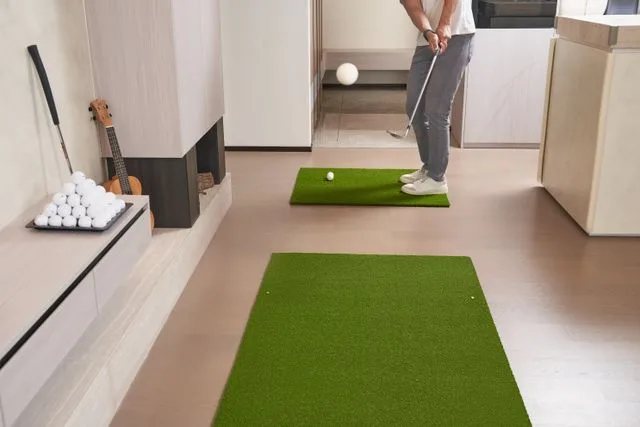
4. Hitting Mat and Turf
The hitting surface will experience repeated use, potentially every day. A low-cost residential mat may not be appropriate for a busy commercial facility.
Commercial-grade hitting mats and synthetic turf can provide greater durability while creating a more professional appearance. The choice should account for expected traffic, maintenance requirements, golfer comfort, and replacement costs.
5. Projector and Display System
The projector has a major effect on the visual quality of a commercial golf simulator. High-lumen projectors are generally necessary when the room has ambient light or when a large screen is being used.
The projector needs to be selected and positioned according to the screen dimensions and room configuration. A poorly matched projector can result in shadows, distorted images, or a display that lacks the brightness needed for an immersive experience.
6. Computer and Supporting Equipment
The computer powering the simulator needs enough processing capability to handle the selected simulation software and display configuration.
A commercial facility should not necessarily choose the least expensive computer available. System performance affects customer experience, and inadequate hardware can lead to slow loading, interruptions, or other operational problems.
Networking, audio equipment, cables, mounting hardware, and other supporting components should also be included in the overall budget.
Commercial Golf Simulator Cost by Budget Tier
Commercial simulator installations can generally be separated into three broad investment levels.
Budget Commercial Simulators: Approximately $6,000–$15,000
Entry-level commercial systems can provide the essential functionality needed to launch a business without the expense of a premium installation.
These systems may use simpler tracking technology, basic enclosures, standard hitting mats, and more modest projection equipment. They can be suitable for businesses where golf simulation is one part of a broader entertainment offering.
However, operators should carefully review what is included in the quoted price. Additional installation, software, computer, screen, projector, and room-preparation costs can significantly increase the final investment.
Mid-Range Commercial Simulators: Approximately $15,000–$60,000
Mid-range systems provide a balance between performance, durability, and cost. This tier can be suitable for indoor golf lounges, sports bars, training facilities, and entertainment venues seeking a stronger customer experience.
Businesses can invest in better tracking technology, larger screens, improved projection, durable hitting surfaces, and professional installation without necessarily reaching the cost of a flagship system.
For many operators, this range provides flexibility to create a professional environment while keeping the investment aligned with the size and revenue potential of the facility.
Premium Commercial Simulators: Approximately $40,000–$100,000+
Premium systems are designed for businesses where presentation, technology, and performance are major parts of the customer experience.
These installations can include advanced launch monitors, large immersive displays, premium materials, custom enclosures, integrated audio and lighting, and sophisticated room design.
High-end golf clubs, luxury entertainment venues, flagship training facilities, and businesses targeting premium customers may choose this level of installation.
Don't Forget the Cost of the Room
The simulator itself is only part of the project.
The room may require electrical upgrades, lighting, HVAC modifications, flooring, acoustic treatment, blackout shades, networking, construction, and other improvements before the simulator can be installed.
Room preparation can vary dramatically depending on the existing space. A facility with a purpose-built room may require relatively little additional work, while an unfinished commercial property could require substantial construction.
Planning these expenses from the beginning helps prevent a situation where the equipment budget is exhausted before the room is ready.
Installation and Calibration
Professional installation is particularly important for commercial systems. The launch monitor, projector, screen, enclosure, turf, lighting, and audio equipment all need to work together correctly.
Installation can include screen mounting and tensioning, projector alignment, launch-monitor positioning, system configuration, software setup, and calibration.
Commercial operators should also consider training. Employees may need to understand how to start sessions, select courses, troubleshoot basic issues, and assist customers.
A professional installation can therefore provide value beyond the initial assembly of equipment by helping establish a reliable operating environment.
Ongoing Commercial Golf Simulator Costs
The initial investment is not the only expense. Businesses should budget for recurring software licenses, equipment maintenance, replacement hitting surfaces, screen wear, repairs, electricity, and future upgrades.
The exact annual cost will depend heavily on usage and the technology selected. High-traffic facilities may need to replace consumable components more frequently than low-volume locations.
Planning for these expenses from the beginning provides a more realistic picture of the simulator's total cost of ownership.
Choosing the Right Commercial Golf Simulator
The most expensive simulator is not automatically the right choice for every business. The system should be selected according to the facility's target customers, expected usage, available space, and business model.
An entertainment venue may prioritize ease of use and visual immersion, while a professional training facility may place greater emphasis on detailed performance data. A golf club may need premium presentation and durability, while a startup may need to control its initial capital investment.
The number of bays also matters. A multi-bay facility requires careful planning around customer movement, seating, networking, booking systems, and staff operations.
Building a Commercial Simulator for Long-Term Use
A commercial golf simulator should be viewed as a business investment rather than simply a piece of entertainment equipment. The initial purchase price matters, but so do reliability, durability, customer experience, maintenance, and the facility's ability to generate revenue.
A carefully planned installation can provide a stronger foundation for leagues, lessons, practice sessions, tournaments, corporate events, social gatherings, and casual entertainment.
Before committing to a system, businesses should calculate the complete project cost, including equipment, room preparation, professional installation, software, maintenance, and future replacements. Comparing complete installed solutions rather than equipment prices alone provides a much clearer picture of the investment.
Final Thoughts
A commercial golf simulator can cost anywhere from several thousand dollars to well over $100,000 per bay. The final price depends on the launch monitor, software, enclosure, screen, projector, computer, hitting surface, installation, room preparation, and level of customization.
The most important step is to develop a complete budget before purchasing individual components. By understanding both the upfront investment and ongoing operating costs, businesses can select a commercial golf simulator that fits their facility and provides the performance and customer experience they expect.
Whether the goal is a compact entertainment venue, a multi-bay golf lounge, a training facility, or a premium commercial destination, professional planning can help turn the simulator investment into a durable and practical part of the business.