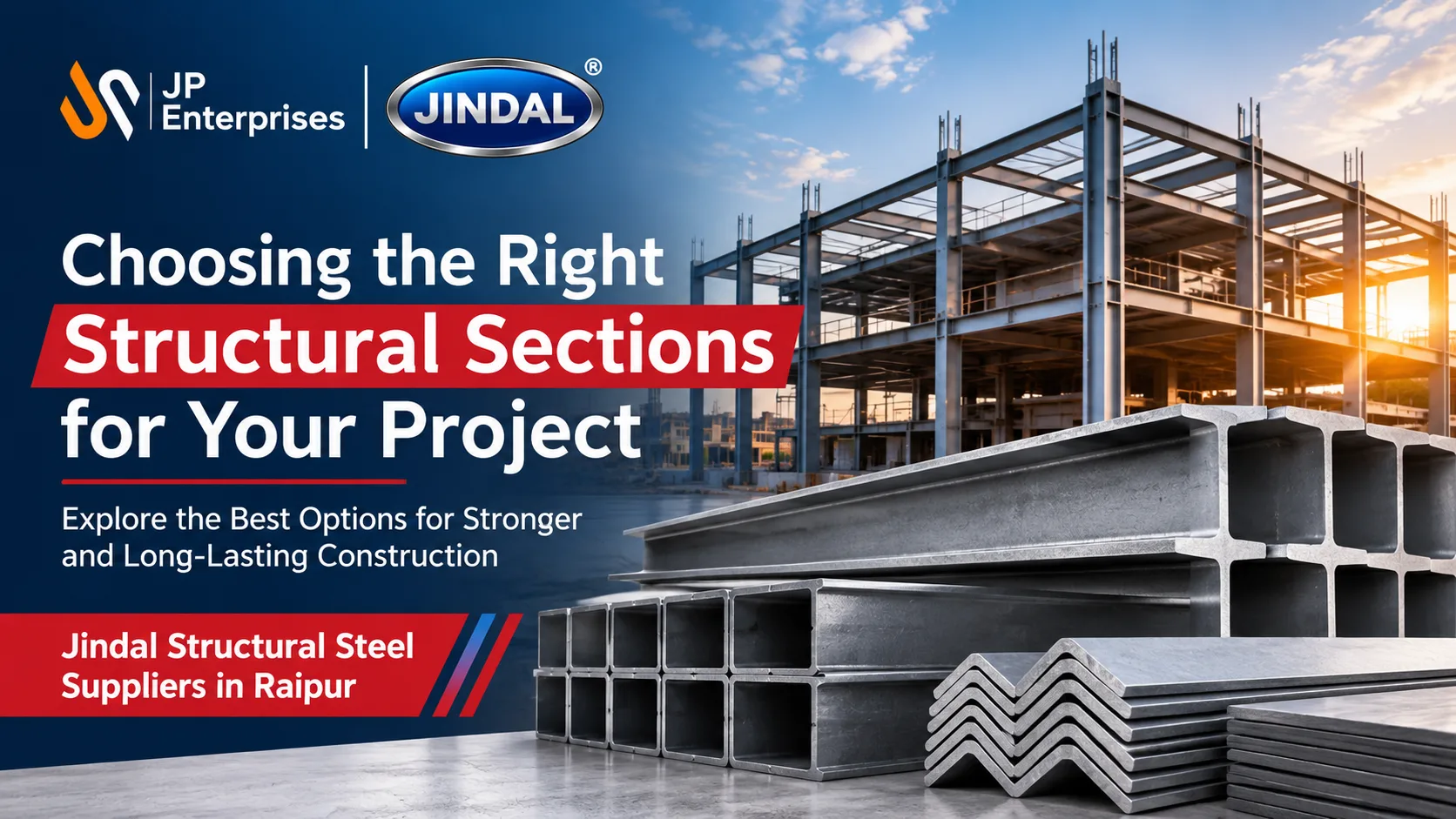
Structural steel plays an important role in modern construction. From commercial buildings and industrial sheds to warehouses, bridges and infrastructure projects, steel sections provide the strength and support required for different structural applications.
However, selecting the right structural section is not simply about choosing a particular size or shape. Factors such as load requirements, building design, material grade, dimensions and application all influence the selection.
For builders, contractors and industrial buyers looking for Jindal Structural Steel Suppliers in Raipur, understanding different steel sections can help simplify material selection and procurement. Working with an experienced steel supplier also makes it easier to source suitable products for specific project requirements.
What Are Structural Steel Sections?
Structural steel sections are manufactured steel products designed to support loads and provide stability to structures. They are available in different shapes and dimensions to meet various construction and engineering requirements.
Their cross-sectional design determines how they handle different types of forces, including bending, compression and tension.
Some commonly used structural steel sections include:
- Steel Beams: Used to support horizontal loads in buildings, bridges and industrial structures.
- Steel Channels: Commonly used in frames, supports, platforms and fabrication work.
- Steel Angles: Used in trusses, towers, brackets and structural connections.
- Steel Flats: Used in fabrication, reinforcement, brackets and general engineering applications.
- H Beams: Used in columns, heavy structural frameworks and industrial construction.
Each section serves a different purpose. Selecting the correct profile is essential for achieving the required structural performance.
Different Types of Structural Steel Sections and Their Applications
Before purchasing structural steel, it is important to understand how different sections are used in construction and fabrication.
1. ISMB Beams
Indian Standard Medium Weight Beams, commonly known as ISMB beams, are widely used in building frameworks and industrial construction.
Their I-shaped cross-section helps distribute loads efficiently. They are commonly used in:
- Commercial building structures.
- Industrial sheds and warehouses.
- Roof support systems.
- Structural frameworks.
- Bridges and engineering projects.
The required beam size depends on the span, loading conditions and structural design.
2. ISWB Beams
ISWB stands for Indian Standard Wide Flange Beams. These sections have wider flanges compared to conventional medium-weight beams.
They are used in structural applications where the design requires specific flange dimensions and load-bearing characteristics.
Common applications include industrial buildings, structural frameworks, heavy construction and engineering projects.
3. H Beams
H beams have a cross-section resembling the letter H, with wider flanges and a central web.
They are commonly used in heavy structural applications because their profile provides strength and stability.
Typical applications include:
- Industrial buildings.
- Factory structures.
- Heavy columns and supports.
- Infrastructure projects.
- Large commercial developments.
4. ISMC Channels
ISMC channels are steel sections with a C-shaped cross-section. They are used in applications requiring structural support and fabrication flexibility.
Common uses include:
- Roof trusses.
- Industrial sheds.
- Building frameworks.
- Equipment supports.
- Fabricated structures.
The channel size should be selected according to the required load capacity and design specifications.
5. Steel Angles
Steel angles feature an L-shaped cross-section and are available in equal and unequal configurations.
They are commonly used in structural connections, support frameworks and fabrication.
Applications include transmission towers, industrial structures, roof trusses, frames and general engineering work.
6. Steel Flats
Steel flats are rectangular steel sections used across construction, fabrication and engineering industries.
They are commonly used for brackets, supports, frames, connecting plates and fabrication components.
Their dimensions and thickness should match the intended application.
6 Factors to Consider When Choosing Structural Steel Sections
Selecting the correct structural steel section requires an understanding of the project's technical and practical requirements.
Here are six important factors to evaluate before purchasing.
1. Understand the Project Requirements
Start by identifying where the steel section will be used.
A warehouse may require heavy beams and columns, while a fabrication project may need channels, angles and flats.
The intended application helps determine the type of section required.
2. Consider Load-Bearing Requirements
Every structural component is designed to handle specific loads.
These may include dead loads, live loads, wind loads and other forces depending on the structure.
The selected section must meet the requirements specified by the structural engineer.
Avoid choosing a beam, channel or angle based only on its appearance or price.
3. Check Dimensions and Specifications
Structural steel sections are available in different sizes, thicknesses and weights.
Before placing an order, verify the following:
- Section type and designation.
- Web and flange dimensions.
- Thickness requirements.
- Section weight per metre.
- Required length.
- Applicable IS standards.
Correct specifications help avoid material mismatches during construction and fabrication.
4. Verify Material Quality and Grade
Material quality is an important consideration in structural steel procurement.
Buyers should check the applicable grade, manufacturer details and relevant quality documentation.
Request mill test certificates or other supporting documents where applicable. These help verify the material's chemical composition and mechanical properties.
5. Evaluate Fabrication and Installation Needs
Some structural projects require cutting, welding, drilling and other fabrication processes.
The selected steel section should be suitable for the intended fabrication method.
Consider the availability of standard lengths, ease of handling and compatibility with the project's structural drawings.
6. Choose a Reliable Steel Supplier
The supplier plays an important role in the overall procurement process.
Look for a company that offers genuine products, clear specifications, transparent quotations and dependable supply coordination.
An experienced supplier can also help buyers identify available section types and discuss product requirements before placing an order.
Why Choose Jindal Structural Steel for Your Project?
The manufacturer and quality of structural steel are important considerations when selecting materials for construction.
Jindal structural steel products are used across different construction, infrastructure and engineering applications.
The product range includes beams, channels, angles and other structural sections designed for different project requirements.
These products offer several features that buyers look for:
Structural Strength: Suitable sections help meet the load-bearing requirements specified in structural designs.
Dimensional Accuracy: Consistent dimensions support proper fitting, fabrication and installation.
Fabrication Flexibility: Structural sections can be used in different fabrication and engineering applications, subject to their specifications.
Multiple Product Options: Different profiles and sizes allow engineers and contractors to select materials according to project needs.
The correct product should always be selected based on technical specifications and the requirements of the project.
JP Enterprises: Your Source for Jindal Structural Steel in Raipur
Finding the right structural steel supplier is an important part of construction and industrial procurement.
Established in 2003, JP Enterprises has been associated with the iron and steel industry for over two decades. The company supplies a range of steel products sourced from recognised manufacturers and mills, including Jindal.
For customers searching for Jindal Structural Steel Suppliers in Raipur, JP Enterprises offers access to different structural steel sections for construction, fabrication and industrial applications.
Structural Steel Products Available at JP Enterprises
The company's structural steel portfolio includes:
- ISMB Beams: For building frameworks, industrial sheds and structural support.
- ISWB Beams: For applications requiring specific wide-flange beam profiles.
- H Beams: For heavy structural frameworks and industrial construction.
- ISMC Channels: For support structures, frames and fabrication.
- Unequal Angles: For structural connections, supports and engineering applications.
- Steel Flats: For fabrication and general structural requirements.
Product availability, sizes and specifications can be discussed with the JP Enterprises team.
Why Consider JP Enterprises?
Established Since 2003: More than two decades of experience in the iron and steel industry.
Jindal Product Sourcing: Access to Jindal structural steel products through the company's supply network.
Multiple Steel Categories: Along with structural steel, the company deals in TMT bars, MS plates, HR/CR sheets, steel coils, MS pipes, round bars, wire rods and HB wire.
Industry Understanding: Experience serving construction, infrastructure and industrial customers.
Supply Coordination: Support for discussing product specifications, quantities and delivery requirements.
Whether you are planning an industrial shed, commercial building, warehouse or fabrication project, JP Enterprises can help you explore suitable structural steel products.
How to Enquire About Jindal Structural Steel in Raipur?
Before requesting a quotation, keep your project requirements ready.
Providing accurate information helps the supplier understand your needs and respond with suitable product options.
Consider sharing:
- Required structural section, such as ISMB, ISWB, H Beam or ISMC.
- Required size and specifications.
- Total quantity or estimated weight.
- Required material length.
- Delivery location.
- Expected procurement timeline.
You can contact JP Enterprises to discuss availability and obtain a quotation for your structural steel requirements.
Company: JP Enterprises
Established: 2003
Location: 212- 2nd Floor, Deshbandhu Complex, Near, Agrasen Chowk, Nagar Nigam Colony, Bhawani Patna, Ramsagar Para, Jawahar Nagar, Raipur, Chhattisgarh 492001
Phone: +91 9183833303
Conclusion
Choosing the right structural steel section requires careful consideration of the project's design, load requirements, material specifications and fabrication needs.
Understanding the differences between beams, channels, angles and flats helps buyers make informed decisions during procurement.
For contractors, builders and industrial buyers in Raipur, JP Enterprises provides access to Jindal structural steel products and other steel categories through its established supply network.
With its industry experience since 2003 and a range of structural steel options, JP Enterprises can be a sourcing partner for businesses looking to meet their steel procurement requirements.
Frequently Asked Questions
1. What are the most commonly used structural steel sections?
Common structural steel sections include ISMB beams, ISWB beams, H beams, ISMC channels, steel angles and flats. Each section serves different structural and fabrication requirements.
2. How do I select the right beam size for my project?
Beam selection depends on the span, loading conditions, support arrangement and structural design. A qualified structural engineer should determine the required section and dimensions.
3. What is the difference between ISMB and ISWB beams?
ISMB refers to Indian Standard Medium Weight Beams, while ISWB refers to Indian Standard Wide Flange Beams. Their flange dimensions and sectional properties differ, making them suitable for different structural applications.
4. Where are Jindal structural steel products used?
Jindal structural steel products are used in industrial buildings, warehouses, commercial structures, bridges, fabrication projects and infrastructure development.
5. Where can I find Jindal Structural Steel Suppliers in Raipur?
JP Enterprises, established in 2003, deals in Jindal structural steel products, including beams, channels, angles and flats. Buyers can contact the company to discuss available sizes, specifications and supply requirements.
6. What information is required to get a structural steel quotation?
You should provide the product type, section size, required quantity, length and delivery location. Sharing project specifications helps the supplier prepare a more relevant quotation.