A front door is one of the most important access points in any home. It welcomes family members and visitors, protects the interior from weather, and provides a critical layer of security. Yet homeowners often choose entry doors primarily based on appearance, overlooking the role that the door, frame, hardware, and installation all play in protecting the property.
An aging or poorly installed door may have weaknesses that are not immediately obvious. A worn frame, outdated lock, loose hinges, or gaps around the opening can reduce security while also allowing drafts and moisture into the home.
Choosing a replacement door should therefore involve more than selecting an attractive color or decorative style. Homeowners should consider construction, locking systems, frame strength, glass placement, weather resistance, and professional installation.
Start With the Door's Construction
The material and construction of an entry door have a direct impact on its durability and security.
Steel doors are known for their strength and resistance to impact. Fiberglass doors offer a combination of durability, insulation, and design flexibility. Wood doors provide a traditional appearance and can be extremely sturdy when properly constructed and maintained.
The best option depends on the home's architecture, climate, maintenance expectations, and security priorities.
A quality door should feel solid when opened and closed and should sit securely within its frame.
Pay Attention to the Frame
Homeowners sometimes focus entirely on the door slab while overlooking the surrounding frame.
A strong door cannot provide its intended level of security if the frame is weak, damaged, or improperly attached to the surrounding structure.
The frame should be securely fastened, properly aligned, and free from significant deterioration.
When replacing an older entry system, inspecting the entire opening is often more important than simply swapping out the door itself.
Choose Strong Locking Hardware
Locks are another important part of an entry door system.
Modern deadbolts and quality locking hardware can provide greater resistance to forced entry than worn or outdated mechanisms.
Homeowners should consider the quality of the lock, the strength of the strike plate, and how securely the hardware is attached to the frame.
A strong lock provides little benefit if the surrounding frame cannot support it.
For homeowners interested in connected-home technology, some modern entry systems also offer smart locking features. These can provide convenience through keyless entry, temporary access codes, or remote monitoring.
However, convenience should not come at the expense of reliable physical security.
Consider the Hinges
Hinges may not attract much attention, but they are an important part of the door assembly.
Exterior doors should have properly secured hinges that support the weight of the door and maintain alignment over time.
If hinges become loose, the door may sag or fail to close properly. This can create both security and weather-sealing problems.
During replacement, the entire hardware system should be checked to ensure the door operates smoothly and remains securely positioned.
Don't Ignore Glass Panels
Decorative or sidelights can add natural light and visual appeal to an entryway, but glass placement should be considered carefully when security is a priority.
Homeowners may prefer reinforced or impact-resistant glass options depending on the home's location and exposure.
The size and location of glass should also be evaluated in relation to the locking hardware.
A professional can help homeowners select an entry configuration that balances natural light, appearance, privacy, and security.
Look for Signs Your Existing Door Is No Longer Reliable
Sometimes the need for replacement becomes obvious.
Difficulty opening or closing the door, visible warping, cracks, deteriorated frames, loose hardware, or significant gaps around the perimeter can indicate that the entry system is aging.
Drafts are another warning sign.
If outside air enters around the door even when it is fully closed, the weatherstripping or frame may no longer provide an effective seal.
These issues can affect both security and energy efficiency.
Energy Efficiency and Security Can Work Together
A secure entry door does not have to sacrifice comfort.
Modern doors can provide improved insulation and tighter seals around the opening. This reduces air leakage while helping maintain more consistent indoor temperatures.
For homeowners dealing with rising heating and cooling costs, replacing an outdated entry door may therefore provide benefits beyond security.
A properly sealed door can reduce drafts and moisture intrusion while creating a more comfortable entrance area.
Choose a Door That Fits the Home
Security should be the priority, but appearance still matters.
The front entrance contributes significantly to curb appeal, and a new door can dramatically change the character of a home.
Homeowners can select from traditional, contemporary, transitional, and other styles. Glass inserts, panel configurations, colors, and hardware can all be customized.
The key is to choose a design that complements the roof, siding, windows, and overall architecture.
A well-coordinated entry system can make the home appear more polished without compromising practical performance.
Professional Installation Is Essential
Even a high-quality security door can underperform if it is installed incorrectly.
The opening needs to be properly measured, prepared, and sealed. The door must be aligned correctly so it closes securely without excessive force.
Flashing and weatherproofing around the opening are also important because improperly sealed areas can allow water to reach the surrounding wall structure.
Professional installers understand how to address these details and verify that the finished door operates properly.
Installation Affects Long-Term Performance
A door that is slightly out of alignment may become increasingly difficult to operate as temperatures and humidity change.
Poor installation can also create uneven gaps that reduce energy efficiency and allow moisture to enter.
Taking the time to install the entire entry system correctly helps ensure that the investment performs as intended.
Consider Your Home's Specific Needs
There is no single entry door that is perfect for every homeowner.
Families may prioritize impact resistance and strong locking hardware. Others may place greater emphasis on energy efficiency, low maintenance, or architectural appearance.
Homes in areas exposed to strong storms may require additional consideration when selecting door materials and glass.
Understanding the property's environment and the household's priorities makes the selection process much easier.
Security Begins at the Entryway
A front door is more than a decorative feature. It is a physical barrier between the home and the outside world, and its performance depends on the door itself, the frame, hardware, glass, weather seals, and installation.
When an existing entry door shows signs of deterioration or no longer provides the desired level of security, replacement may be a practical investment.
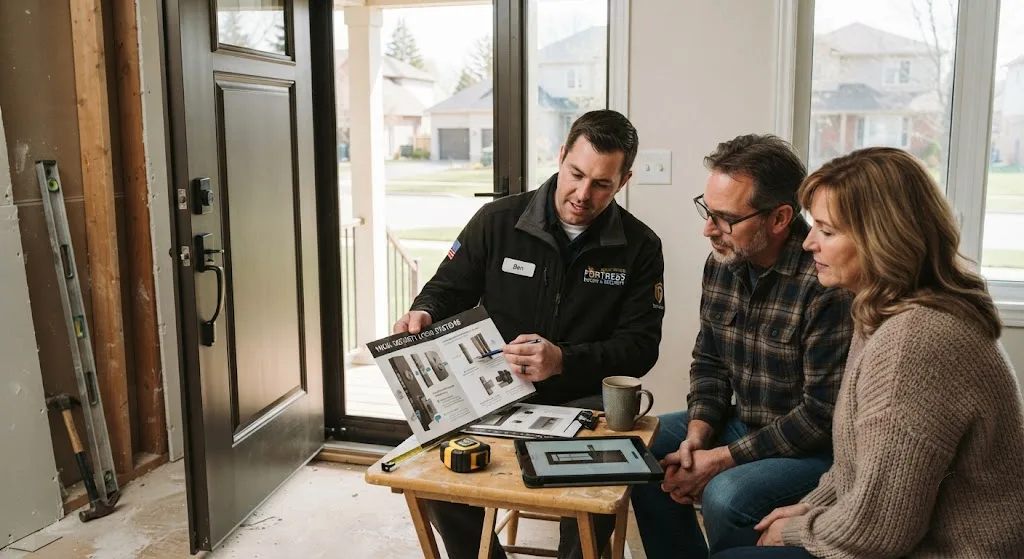
Homeowners considering an upgrade can benefit from working with professional door replacement specialists who can evaluate the existing opening, explain available materials, and ensure the new system is properly installed.
The right entry door can provide stronger security, better weather protection, improved energy efficiency, and a refreshed appearance all at the same time. Choosing carefully and investing in proper installation helps ensure those benefits continue for years.