
Salicylic acid and niacinamide are two ingredients that appear in many acne and oily-skin routines.
But because both are active skincare ingredients, people often wonder whether they can be used together.
The short answer is yes, they can be part of the same routine.
The more important question is how to use them without making your routine unnecessarily complicated.
What does salicylic acid do?
Salicylic acid is commonly used for acne-prone skin because it helps unclog pores and reduce the buildup that can contribute to breakouts.
This makes it particularly useful when your concerns include pimples, clogged pores and excess oil.
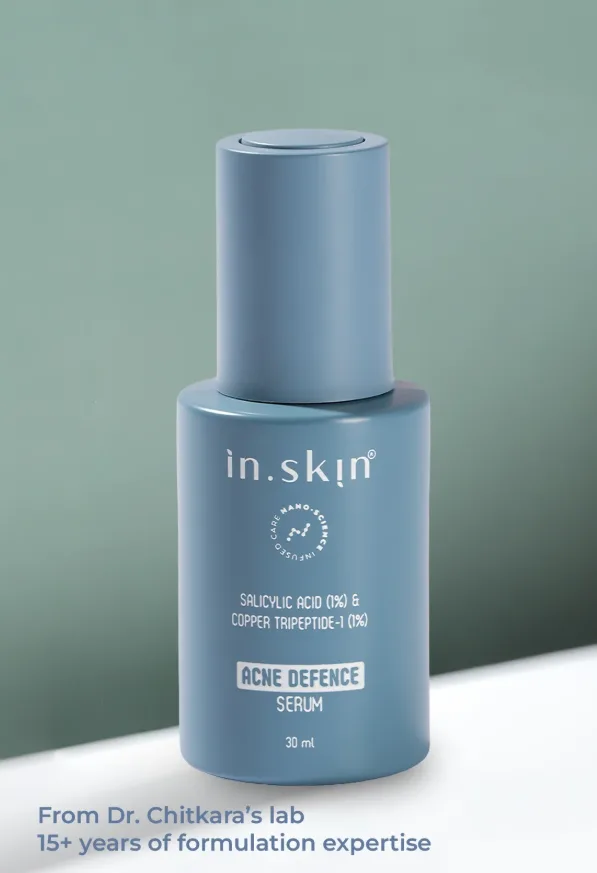
The inskin Acne Defence Serum uses Salicylic Acid (1%) as one of its key actives. The product is positioned for active acne and also helps improve the appearance of post-acne marks.
What does niacinamide do?
Niacinamide is a form of vitamin B3 that is widely used in skincare.
It can be included in routines designed around uneven-looking skin tone, excess oil, skin barrier support and overall skin appearance.
inskin uses niacinamide across several products, including its Clear Glow Toner and Skin Revival Toner. The Clear Glow Toner contains Niacinamide (1%) with Alpha Arbutin (1%) and is designed around dark spots, pigmentation and a more even-looking skin tone.
Can they be used together?
Yes.
There is no general rule that says salicylic acid and niacinamide must be kept apart.
In fact, they can make sense together when your routine has more than one concern.
For example:
- Salicylic acid can be used as part of an acne-focused step.
- Niacinamide can support a routine focused on oil balance, skin appearance and barrier care.
- Together, they can fit into a routine for oily, acne-prone skin.
A simple way to layer them
If you are using separate products, the basic order is:
Cleanser → Salicylic acid treatment → Niacinamide product → Moisturiser → Sunscreen
However, you do not necessarily need to buy separate products for every ingredient.
The easier option is often to choose products that already combine ingredients in a formulated routine.
For example, Inskin's Acne Defence Serum contains Salicylic Acid (1%) and Copper Tripeptide-1 (1%), while its Clear Glow Toner contains Niacinamide (1%) and Alpha Arbutin (1%).
What if your skin is sensitive?
Using compatible ingredients does not mean every routine will suit every person.
If you are new to active skincare, introduce products gradually rather than changing your entire routine in one day.
Watch how your skin feels.
Persistent dryness, discomfort or irritation is a sign that your routine may be doing too much.
You also do not need to use every active ingredient twice a day simply because it is available.
Do you need both in the morning and at night?
Not necessarily.
A simple routine is often easier to maintain.
For example:
AM
Cleanser → Niacinamide-based product → Moisturiser → Sunscreen
PM
Cleanser → Salicylic acid serum → Moisturiser
This is only a basic example. Your actual routine should depend on your skin concerns and the other products you use.
The real goal is balance
Skincare is not about collecting as many active ingredients as possible.
Salicylic acid can be useful for acne and clogged pores. Niacinamide can complement a routine aimed at oil control, skin barrier support and a more even-looking complexion.
Used thoughtfully, they can work comfortably within the same overall routine.
The best routine is usually the one that addresses your main concerns without overwhelming your skin.