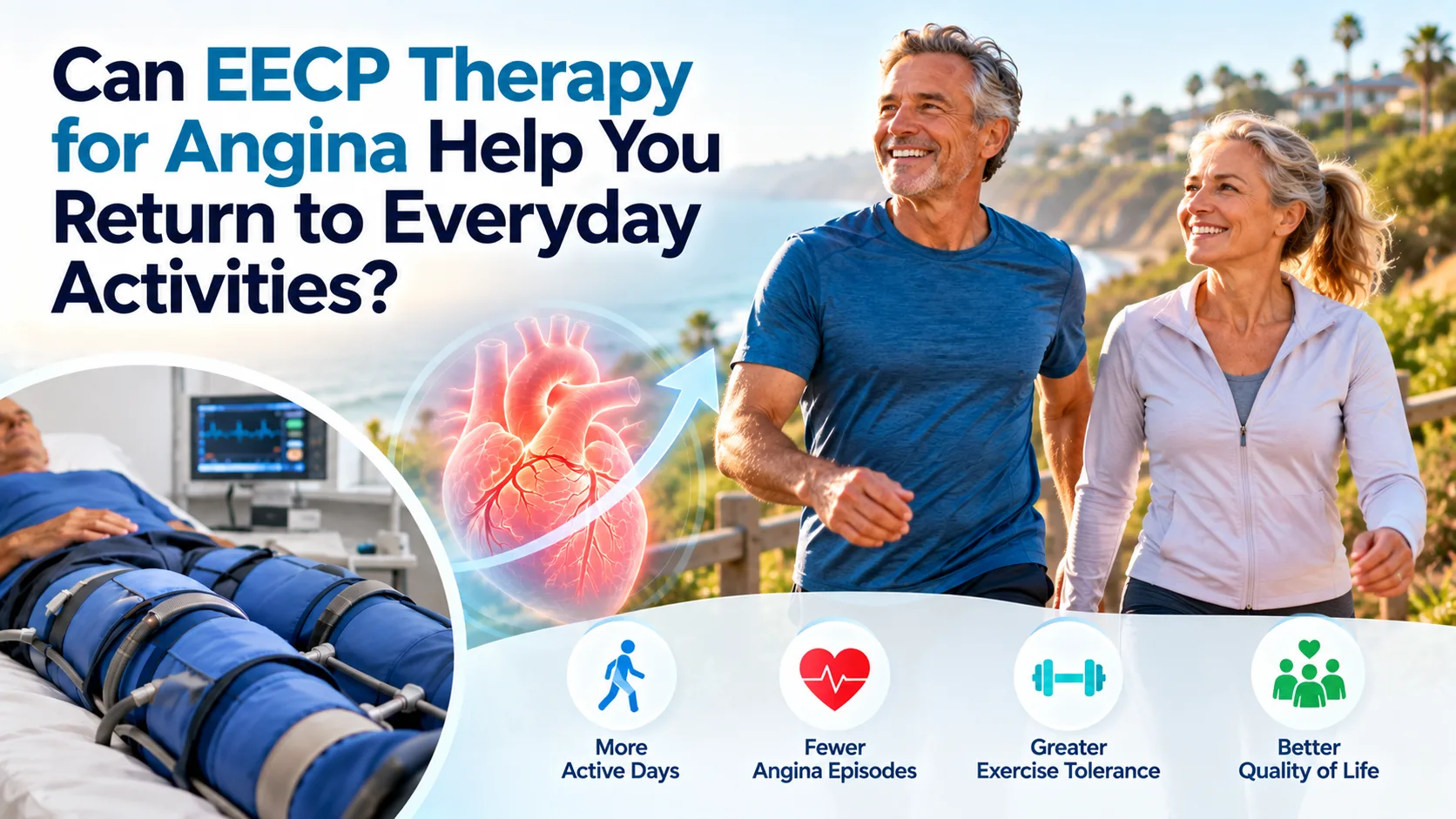
Living with chronic stable angina can make ordinary activities feel more difficult than they once did. Walking around the neighborhood, climbing stairs, shopping, or spending an active day with family may become challenging when chest discomfort repeatedly interrupts your routine. For appropriately selected patients, EECP therapy for angina may be considered as a non-invasive option alongside established medical care. At CoCardio® in Encinitas, evaluation comes first to determine whether this approach may be appropriate for your individual cardiovascular situation.
Why Can Angina Make Everyday Activities Difficult?
Angina can occur when the heart muscle does not receive enough oxygen-rich blood to meet increased demand, particularly during physical activity or emotional stress. Some people gradually reduce how much they walk, exercise, travel, or participate in daily activities because they worry about triggering symptoms. Over time, these limitations can affect independence and quality of life. Persistent or changing symptoms should always be discussed with your healthcare professional so the underlying cause and appropriate treatment can be evaluated.
When Should Persistent Angina Be Reassessed?
If chronic stable angina continues despite an established treatment plan, it may be time to discuss additional options with your cardiologist or healthcare team. New, severe, worsening, prolonged, or unusual chest discomfort, especially symptoms occurring at rest, should receive prompt medical attention rather than waiting for an EECP consultation. EECP therapy for angina is intended for selected non-emergency situations and should never delay necessary emergency or cardiology care. If you believe you may be experiencing a medical emergency, call 911.
How Does EECP Treatment Work?
EECP treatment is a non-invasive therapy that uses inflatable cuffs placed around the lower body. These cuffs inflate and deflate in synchronization with the cardiac cycle, with treatment typically delivered through a series of outpatient sessions. EECP does not require surgery, incisions, or catheter placement. For selected patients with chronic stable angina, research has reported potential improvements in symptoms, exercise tolerance, and quality of life, although individual outcomes vary.
One reason people explore EECP treatment is the possibility of becoming more comfortable with everyday physical activity. The goal is not to promise that every patient will return to a particular activity level, because results depend on the person's underlying cardiovascular health and other medical factors. Instead, progress may be evaluated through changes in symptoms, activity tolerance, and overall functional capacity. Your healthcare team can help determine what level of activity is appropriate for you.
Can EECP Therapy for Angina Improve Activity Tolerance?
For some appropriately selected patients, EECP therapy for angina may help reduce the frequency or severity of chronic stable angina symptoms and improve exercise tolerance. That could make activities such as walking, completing errands, or participating in suitable exercise feel more manageable. However, improvement is not guaranteed, and EECP does not remove coronary plaque or cure coronary artery disease. It should be viewed as one possible component of a broader cardiovascular care strategy.
Returning to Activity Should Be Individualized
Feeling better after treatment does not automatically mean you should immediately increase your activity level. Your physician can help determine which activities and exercise intensity are appropriate based on your diagnosis, symptoms, medications, and cardiovascular history. People with coronary artery disease may need a gradual approach to increasing activity. Keeping track of symptoms and discussing changes with your healthcare team can help make the process safer and more informative.
What Should You Know Before Starting EECP Treatment?
Before beginning EECP treatment, your medical history and current cardiovascular condition should be reviewed to determine whether you are an appropriate candidate. Your healthcare team may consider your symptoms, medications, previous cardiovascular procedures, blood pressure, heart function, and other relevant medical factors. EECP should complement rather than replace medications, cardiac rehabilitation, procedures, or other treatment recommended by your physician. Do not stop or alter prescribed cardiovascular treatment unless the healthcare professional responsible for your care instructs you to do so.
People researching ecp therapy may encounter both ECP and EECP terminology while comparing non-invasive cardiovascular options. The terminology should not distract from the more important questions about candidacy, treatment goals, and appropriate medical oversight. Ask how the provider evaluates patients before starting therapy and how progress is monitored. These questions can help you make a more informed decision.
Should You Look Beyond Angina Symptoms?
Managing symptoms is important, but cardiovascular care also involves understanding the risk factors and health issues contributing to your overall heart-health picture. A root cause consultation at CoCardio® can provide a broader review of relevant cardiovascular and lifestyle factors. This prevention-focused approach is intended to complement care from your physician or cardiologist rather than replace it. Recommendations can then be tailored to the individual's history, goals, and existing care plan.
Learn More Before Making a Decision
Patients who want additional background can review What patients should know about EECP for coronary artery disease prevention. Educational information can help you prepare questions about how treatment works, potential benefits, limitations, and candidacy. It cannot determine whether EECP is suitable for you personally. An individualized evaluation remains the appropriate next step.
How Do You Find EECP Therapy Near You?
If you are searching for EECP therapy near me, consider more than location alone. Ask how the provider evaluates candidacy, what experience they have with ECP/EECP, what the treatment schedule involves, and how the program integrates with your existing cardiovascular care. CoCardio® provides ECP/EECP services in Encinitas within a broader prevention-focused model. A consultation can help you understand whether this type of therapy deserves consideration in your particular situation.
Cost is another practical consideration when planning a multi-session treatment program. Questions about EECP therapy cost are best addressed directly because services and recommendations may vary according to individual needs. Ask what is included, what evaluation may be required, and how the proposed treatment schedule is structured. Understanding both the clinical and financial aspects can help you make an informed decision.
Ready to Find Out Whether EECP Could Fit Your Care Plan?
If chronic stable angina is limiting your everyday activities, you do not have to guess whether EECP is appropriate for you. Contact CoCardio® in Encinitas to discuss your symptoms, cardiovascular history, and current treatment with the team. Call +1(858) 500-1399 or complete the CoCardio® consultation form to request an evaluation. Providing information about your symptoms and current care can help the team understand what you would like to address before your consultation.
Medical Disclaimer: This article is for educational purposes only and does not constitute medical advice, diagnosis, or treatment. EECP/ECP is not appropriate for everyone and does not replace medications, procedures, emergency treatment, or ongoing care from your physician or cardiologist. Seek prompt medical attention for new, severe, worsening, prolonged, or unusual chest discomfort.