
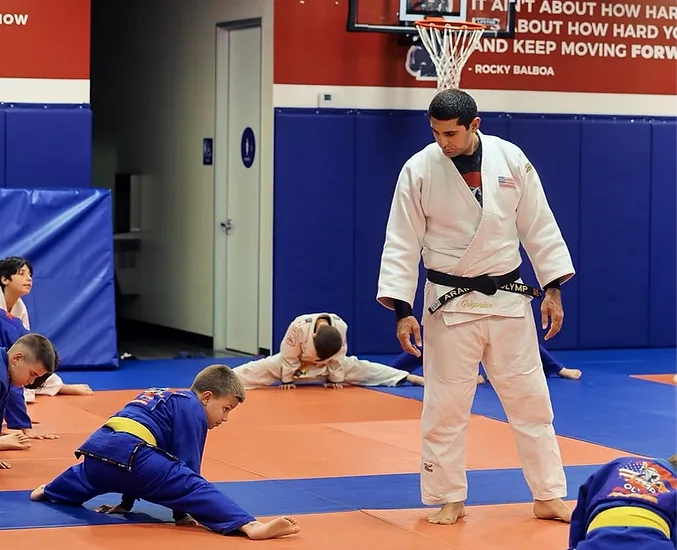
You walk into your first class in a stiff new gi, you can't tie your belt right, and within ten minutes a sixteen-year-old is casually folding you like a lawn chair. It's humbling. It's also, oddly, the exact moment most adult competitors say it hooked them for good.
Here's the question nobody quite answers honestly: can a grown adult with a full-time job, a bad knee, and zero athletic background actually make it to the competition mat? The short answer is yes, and the path is more structured and more forgiving than most people expect.
It’s Never Too Late to Start Competing
Adult divisions in Judo and BJJ aren't a niche afterthought. Tournaments break competitors into age brackets (often 30+, 40+, and even 50+ master divisions), weight classes, and belt rank, so a 35-year-old white belt isn't ever thrown in against a 22-year-old purple belt. The system is built for people who started late.
If you're researching martial arts training in North Hollywood, this matters: local academies typically run adult-only classes at times that fit a work schedule, which means your training partners are other adults navigating the same learning curve, not teenagers with a ten-year head start.
How the Martial Arts Belt System Works
Progress in both arts is slower than people expect, and that's a feature, not a bug. Roughly:
- White Belt (Months 0–12): Learn to survive positions, fall safely, and stop panicking when someone's on top of you.
- Blue Belt / Judo Kyu Ranks (Year 1–3): Start building a real game, a few throws or submissions you actually trust under pressure.
- Purple Belt / Higher Kyu (Year 3–6): Timing and strategy start to matter more than raw strength.
- Brown and Black Belt (Year 6+): Reserved for those who stay consistent for the long haul.
Most adults who compete do so long before black belt. White and blue belt divisions at local tournaments are often the largest brackets in the entire event.
What Actually Gets You Ready to Compete
Competing isn't reserved for the gifted. It's mostly a function of consistent habits:
- Show up 3+ times a week. Frequency beats talent in the first two years, full stop.
- Drill live rounds, not just technique. Sparring (rolling in BJJ, randori in Judo) is where competition-ready instincts actually form.
- Enter a low-pressure local tournament first. Many gyms run in-house or regional novice divisions specifically for first-timers.
- Ask your coach directly. A good coaching staff will tell you honestly when you're ready and help you pick the right first event.
Adults searching for martial arts training in North Hollywood often find that gyms offering both Judo and BJJ under one roof make this transition smoother, since coaches can point beginners toward whichever ruleset suits their body type and goals before they ever step on a competition mat.
Judo or BJJ: Which Suits an Adult Competitor Better?
Neither is objectively easier, but they reward different things:
- Judo favors adults with some athletic background, explosive movement, and balance; a background in wrestling or football often translates quickly.
- BJJ favors patience and problem-solving. Older beginners, or those with prior injuries, often find BJJ's ground-based pace more sustainable long-term.
Plenty of serious adult competitors train both, using Judo's throws to set up BJJ's ground game, a combination coaches frequently recommend for well-rounded competitors.
Conclusion
Nearly every adult who's stepped onto a competition mat will tell you the hardest part wasn't their body; it was making the decision to sign up in the first place. Technique catches up. Conditioning catches up. The only thing that doesn't happen automatically is walking through the door.
If competing is even a passing thought in the back of your mind, the honest advice from every coach worth listening to is the same: stop asking whether you're too old, and start asking which tournament you're aiming for first.