Every strong structure begins long before the first brick is laid. Beneath every highway, bridge, housing society, and skyscraper lies an invisible world that determines whether a project will stand firm or fail under pressure. In Pakistan’s rapidly expanding construction sector, soil investigation companies have become essential partners in ensuring safety, stability, and engineering accuracy. Their work reveals the hidden characteristics of the earth and transforms raw land into a reliable foundation for development.
Soil investigation companies in Pakistan are no longer an optional step in modern construction; they have become a scientific necessity. As urban centers like Karachi, Lahore, Islamabad, and Faisalabad continue to expand, developers depend heavily on geotechnical experts to understand ground conditions before any structural design begins. The growing demand for reliable infrastructure has placed soil investigation companies in Pakistan at the heart of the country’s development journey.
Why Soil Investigation Matters More Than Ever in Pakistan
Pakistan’s geographical diversity creates unique challenges for construction projects. The country includes river plains with soft alluvial soils, coastal regions with sandy and saline conditions, mountainous terrain with rocky layers, and urban zones with heavily compacted ground. Each soil type behaves differently under load, making accurate analysis essential.
Soil investigation helps determine whether the ground can support a structure safely. Engineers assess properties such as load-bearing capacity, soil density, water content, and compressibility. Without this data, construction becomes guesswork, which can lead to serious consequences such as uneven settlement, cracks in foundations, or structural collapse.
In earthquake-prone regions of Pakistan, soil investigation becomes even more critical. Understanding how soil reacts during seismic activity allows engineers to design earthquake-resistant structures. This is especially important for high-rise buildings, bridges, and public infrastructure projects.
The Role of Soil Investigation Companies in Construction Projects
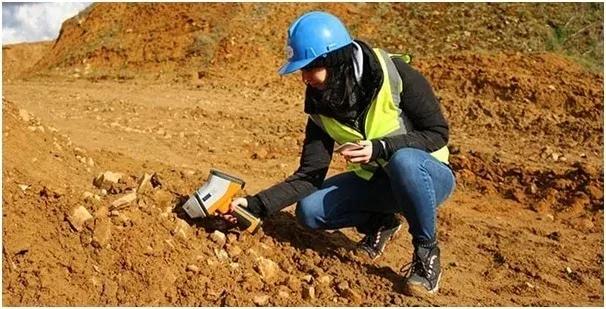
Soil investigation companies in Pakistan act as the technical foundation of any major construction project. Their role begins long before design and construction phases. These companies conduct detailed field studies by drilling boreholes at project sites to collect soil samples from different depths.
Once collected, these samples are tested in laboratories to determine their physical and mechanical properties. Engineers analyze factors such as grain size distribution, moisture levels, plasticity, shear strength, and compaction behavior. These results help determine how the soil will behave under structural loads.
Based on this data, geotechnical engineers provide foundation recommendations. They may suggest shallow foundations for stable soil or deep pile foundations for weaker ground conditions. In many cases, they also propose soil improvement techniques such as compaction, stabilization, or replacement.
The final soil investigation report becomes a crucial document for architects, structural engineers, and contractors, guiding every stage of construction.
Growth of Geotechnical Industry in Pakistan
Over the past decade, Pakistan has witnessed rapid expansion in its construction and infrastructure sectors. Large-scale housing projects, commercial developments, industrial zones, and national infrastructure initiatives have significantly increased the demand for soil investigation services.
Major cities such as Lahore, Karachi, and Islamabad host several well-established geotechnical consultancy firms. These companies are involved in both private and government projects, including highways, dams, airports, and high-rise developments.
At the same time, smaller regional firms are emerging in developing cities, providing essential services for local construction projects. This growth reflects a broader recognition of the importance of soil investigation in ensuring structural safety and long-term durability.
International collaborations and CPEC-related infrastructure development have further strengthened the industry. Many companies are now adopting global engineering standards to meet the requirements of large-scale projects.
Techniques and Methods Used in Soil Investigation
Modern soil investigation companies in Pakistan use a combination of field and laboratory techniques to ensure accurate results. One of the most common methods is borehole drilling, which allows engineers to extract soil samples from different depths.
Standard Penetration Tests (SPT) are widely used to measure soil resistance and density. These tests help determine how much load the soil can safely carry. In addition, cone penetration tests and plate load tests provide further insights into soil strength and settlement behavior.
Laboratory analysis plays an equally important role. Samples are tested for moisture content, Atterberg limits, shear strength, and compaction characteristics. Some advanced firms also conduct chemical analysis to identify soil contamination or corrosive properties.
Geophysical surveys and digital mapping technologies are increasingly being used for large-scale projects. These methods allow engineers to analyze subsurface conditions without extensive drilling, saving time and resources.
Leading Soil Investigation Firms and Their Expertise
Pakistan is home to a number of reputable geotechnical engineering firms that have built strong reputations through consistent performance and technical excellence. These companies operate in major cities and serve a wide range of sectors, including residential, commercial, industrial, and public infrastructure projects.
In Karachi, Lahore, and Islamabad, established consultancy firms employ highly qualified geotechnical engineers and geologists who specialize in complex soil analysis. These firms are often involved in mega projects that require advanced engineering solutions.
Many companies invest heavily in modern drilling equipment, computerized testing systems, and geotechnical software. This allows them to deliver precise, reliable, and internationally compliant reports.
Their expertise is not limited to testing alone. They also provide foundation design consultation, slope stability analysis, retaining wall design recommendations, and soil improvement strategies.
Challenges in the Soil Investigation Sector
Despite significant growth, the soil investigation industry in Pakistan faces several challenges. One of the main issues is lack of awareness among small developers who may not fully understand the importance of detailed soil testing. In some cases, this leads to incomplete or rushed investigations.
Cost considerations can also discourage clients from investing in comprehensive geotechnical studies. However, skipping this step often results in higher long-term expenses due to structural failures or repairs.
Another challenge is the uneven availability of advanced equipment and skilled professionals in remote regions. While major cities are well-equipped, rural and developing areas still lack access to high-end testing facilities.
Maintaining consistent quality standards across all projects is also a key concern, as soil conditions vary significantly across different regions of the country.
The Future of Soil Investigation in Pakistan
The future of soil investigation in Pakistan looks highly promising. As urbanization continues and infrastructure development accelerates, the demand for geotechnical expertise will continue to rise.
More companies are expected to adopt advanced technologies such as automated testing systems, digital data analysis, and AI-assisted soil modeling. These innovations will improve accuracy and reduce project timelines.
Educational institutions are also producing more geotechnical engineers, strengthening the technical workforce in this field. With increasing awareness and regulatory enforcement, soil investigation is becoming a mandatory and respected part of construction planning.
International collaborations and foreign investment in infrastructure projects will further enhance industry standards and introduce global best practices.
Conclusion
Soil investigation companies in Pakistan play a crucial role in shaping the country’s construction landscape. Their work ensures that every structure is built on a foundation of scientific understanding rather than assumption. By analyzing the ground beneath our feet, they protect investments, enhance safety, and support sustainable development.
As Pakistan continues to grow and modernize, these companies will remain indispensable in ensuring that progress is built on solid ground—literally and scientifically.