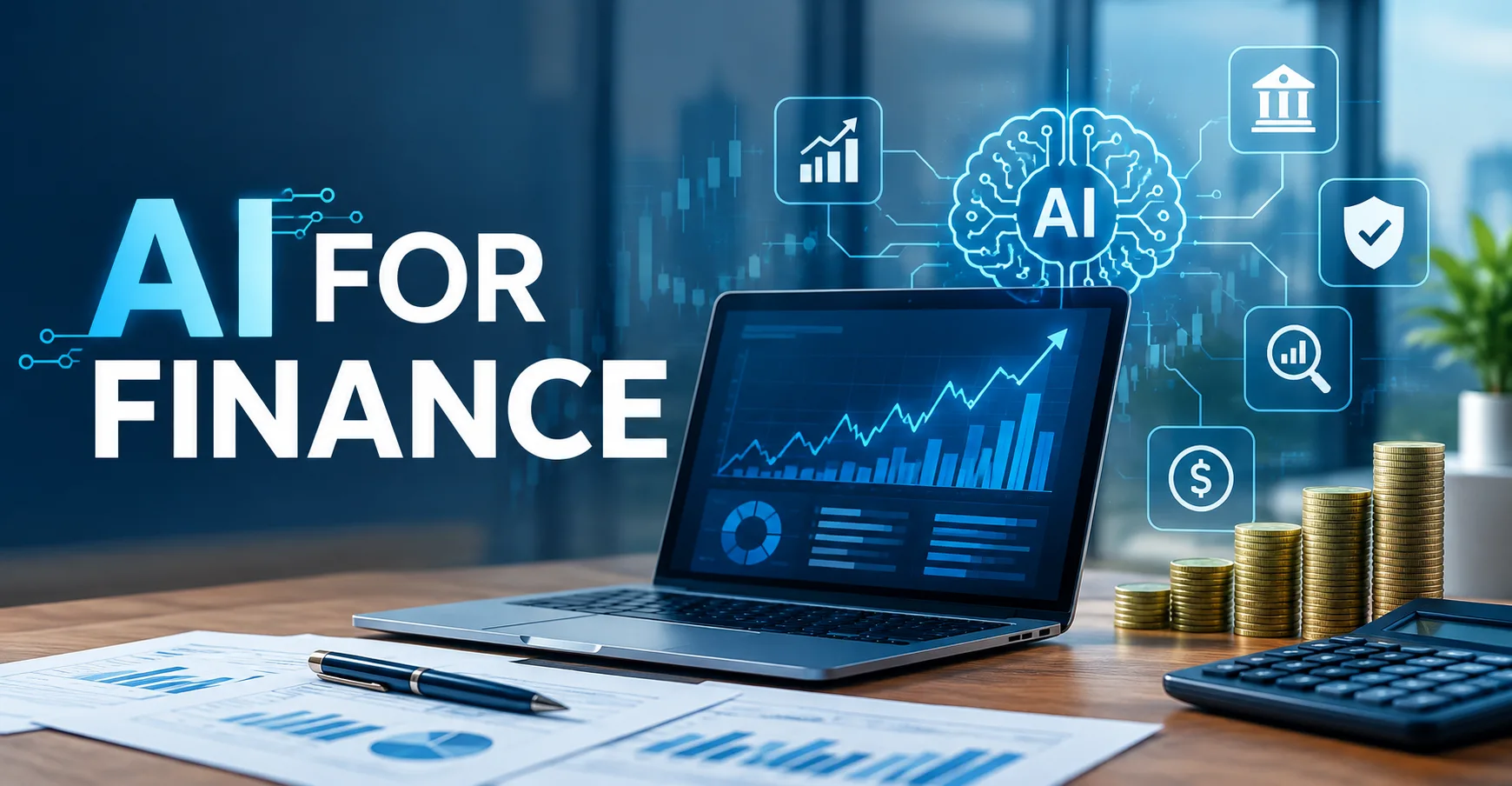
Artificial intelligence is reshaping how financial organizations analyze information, automate processes, manage risk, and support business decisions. As these technologies become part of everyday finance operations, professionals with a combination of financial expertise and digital capabilities can explore emerging career paths. Learning AI can help accountants, analysts, investment professionals, banking specialists, and finance managers expand their technical knowledge while adapting to changing workplace expectations.
Understanding the New Finance Career Landscape
Traditional finance roles increasingly involve data-driven decision-making and technology-enabled workflows. Professionals may work with predictive models, automated reporting systems, intelligent document processing, and analytical platforms.
This transformation is creating opportunities across financial analysis, risk management, fintech, compliance, forecasting, and business intelligence. Instead of replacing financial knowledge, AI can extend what professionals accomplish by helping them process larger datasets and identify useful patterns more efficiently.
Building Practical AI Knowledge
Developing AI literacy is an important step for finance professionals who want to remain adaptable. Key areas include machine learning fundamentals, predictive analytics, natural language processing, generative AI, automation, and data interpretation.
Professionals researching the best ai courses for finance professionals can look for programs that connect technical concepts with practical financial applications. A useful learning path should explain how intelligent tools work while demonstrating where they can be applied in real business situations.
Exploring AI-Powered Financial Analysis
Financial analysis is becoming increasingly supported by intelligent systems. AI tools can examine historical information, identify relationships between variables, detect unusual activity, and support forecasting exercises.
Professionals who understand these capabilities can contribute to revenue planning, expense analysis, investment research, financial modeling, and performance monitoring. However, human judgment remains important because analytical outputs need to be reviewed against business conditions, assumptions, data quality, and organizational objectives.
Creating Opportunities in Risk and Compliance
Risk management is another area where AI knowledge can expand career possibilities. Financial institutions use data-driven technologies to identify unusual transactions, monitor potential fraud, evaluate risks, and strengthen compliance processes.
A finance professional who understands both regulatory requirements and analytical technology can contribute to projects involving risk detection and monitoring. Learning how models generate alerts, where false positives may occur, and how sensitive information should be protected can make this skill combination especially practical.
Developing Generative AI Skills
Generative AI is introducing new workflows for research, summarization, reporting, document review, and communication. Finance professionals can use these systems to organize information, prepare initial drafts, summarize lengthy reports, and support routine knowledge tasks.
Those exploring the best ai courses for finance professionals should consider whether training includes responsible generative AI usage, prompt development, output verification, data privacy, and finance-focused examples. These capabilities can complement existing expertise without requiring every professional to become a software developer.
Moving Toward Strategic Finance Roles
AI skills can also support professionals who want to move beyond routine reporting toward strategic responsibilities. When repetitive tasks become more automated, finance teams can spend additional time interpreting results, evaluating scenarios, advising stakeholders, and supporting business planning.
Professionals who combine financial reasoning with technology awareness may contribute to digital transformation initiatives, AI adoption projects, analytics teams, and technology-focused finance functions.
Strengthening Career Readiness Through Projects
Practical projects can turn theoretical knowledge into demonstrable experience. Examples include building a financial forecasting model, analyzing transaction patterns, creating an automated reporting workflow, or evaluating an AI-generated business report.
A structured learning program with case studies can help professionals understand how AI solutions are designed, assessed, and applied in realistic finance environments. This experience can also provide useful material for portfolios, interviews, and professional discussions.
Can AI skills improve finance career opportunities?
Yes. AI knowledge can complement finance expertise in areas such as analytics, forecasting, automation, risk management, fintech, and strategic planning.
Do finance professionals need coding skills to learn AI?
Not always. Basic technical understanding can be valuable, while advanced programming is mainly needed for specialized development and data science roles.
What AI skills are useful in finance?
Important areas include data analytics, machine learning fundamentals, generative AI, automation, predictive modeling, prompt design, and responsible technology use.
How can finance professionals start learning AI?
They can begin with foundational AI concepts and gradually move into finance-focused applications through courses, practical exercises, case studies, and projects.
Are AI skills useful for accounting professionals?
Yes. AI can support activities such as document processing, reporting, anomaly detection, reconciliation, forecasting, and analysis, giving accounting professionals opportunities to develop technology-focused capabilities.
DataMites Institute provides career-oriented professional training in Artificial Intelligence, Data Science, Machine Learning, Data Analytics, Python, Cloud Computing, and Generative AI at centers across Ahmedabad, Bangalore, Bhubaneswar, Chandigarh, Chennai, Coimbatore, Dehradun, Delhi, Gurgaon, Indore, Jaipur, Kochi, Kolkata, Mumbai, Nagpur, Noida, and Pune. The learning experience combines practical coursework, real-world projects, internships, case studies, and expert mentoring to strengthen industry-ready capabilities. Learners can also access IABAC and NASSCOM FutureSkills certification opportunities, supported by resume assistance, interview preparation, career counseling, and placement guidance.