
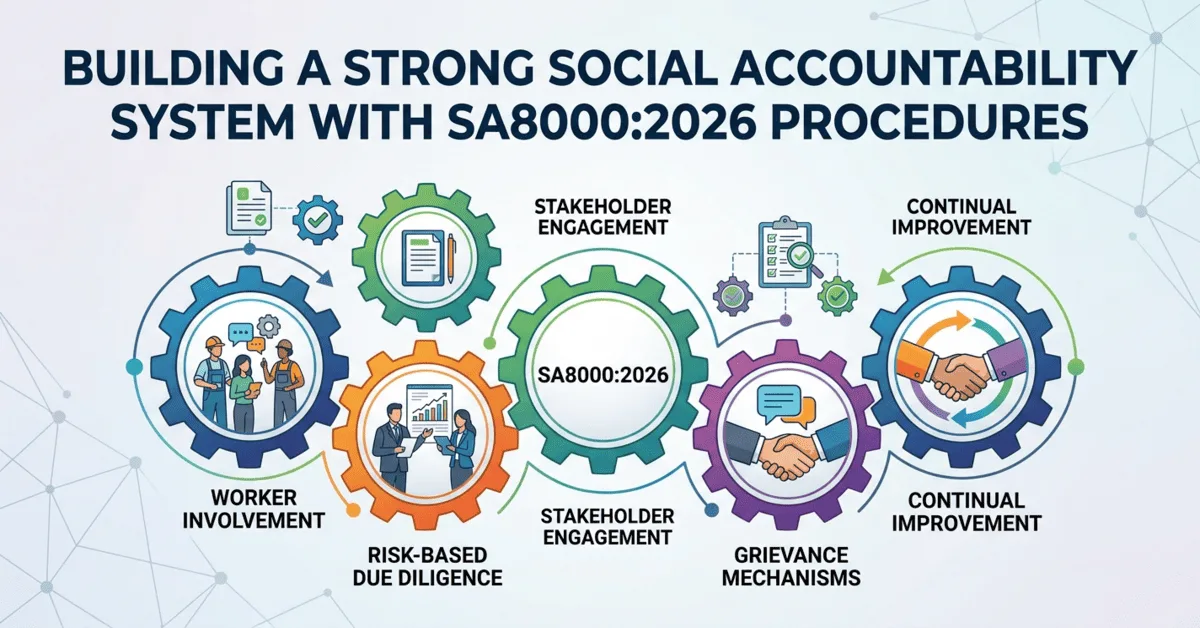
A strong social accountability system is not created by policies alone. Organizations need practical processes that help management address worker rights, workplace risks, employee concerns, and social performance consistently. SA8000:2026 procedures provide a structured way to translate the requirements of the SA8000:2026 Standard into controlled and repeatable workplace practices.
The 2026 edition places greater emphasis on management systems, worker involvement, risk-based due diligence, stakeholder engagement, grievance mechanisms, and continual improvement. Therefore, organizations need documented processes that are relevant to their operations and capable of supporting effective implementation.
Why SA8000:2026 Procedures Matter
Procedures help define how an organization will manage social accountability requirements in daily operations. Instead of treating worker rights and workplace compliance as isolated activities, a structured system connects responsibilities, controls, records, monitoring, and corrective action.
For example, procedures can establish how an organization identifies social risks, handles employee concerns, manages workplace health and safety, communicates with workers, and reviews social accountability performance. This gives management a practical framework for maintaining consistent controls and identifying areas that require improvement.
Key Areas Covered by the Social Accountability System
An effective system should address the issues that can significantly affect workers and other stakeholders. These include fair working conditions, working hours and wages, child labor prevention, forced labor prevention, discrimination prevention, health and safety, freedom of association, and worker involvement.
SA8000:2026 also strengthens the role of workers in the management system. Worker input can contribute to policy development, risk assessment, objectives, performance monitoring, grievance channels, and remediation decisions.
This means procedures should not simply be prepared for documentation purposes. They should help employees understand responsibilities, provide feedback, raise concerns, and participate in improving workplace conditions.
Connecting Procedures With Risk and Corrective Action
Risk assessment is an important part of an effective social accountability management system. Organizations should consider actual and potential impacts on workers and determine appropriate actions based on their significance. Using well-structured SA8000:2026 documents for managing workplace risks can help connect risk identification with responsibilities, controls, corrective action, and ongoing monitoring.
A practical procedure can define responsibilities for identifying risks, evaluating their potential impact, establishing controls, monitoring results, and taking corrective action when problems occur. This approach helps move the system from reactive problem-solving toward prevention and continual improvement.
Grievance mechanisms are also important. SA8000:2026 requires organizations to establish and monitor mechanisms through which personnel can raise concerns and grievances relevant to the organization or its business partners.
Making Documentation Easier to Implement
Preparing every document from the beginning can require considerable time, particularly when an organization is establishing or updating its social accountability system. A structured documentation package can provide a practical starting point while allowing organizations to adapt documents to their actual processes.
Organizations can simplify implementation by starting with structured, editable documentation rather than developing every document from scratch. A ready-to-use SA8000:2026 procedures documentation kit can provide a practical foundation for developing the social accountability management system, including procedures, policies, forms, operational guidance, risk assessment tools, and compliance resources. Organizations can then adapt the documentation to reflect their actual activities, workforce, and workplace risks.
Building a System That Supports Continual Improvement
The real value of documented procedures comes from how effectively they are implemented. Management should regularly review worker feedback, grievance information, risk assessments, monitoring results, audit findings, and other relevant information to identify opportunities for improvement.
SA8000:2026 specifically connects management review with risk assessment, worker engagement, grievance mechanisms, monitoring, and continual improvement.
By linking documented information with actual workplace practices, organizations can develop a more consistent and responsive social accountability management system. Well-structured procedures can therefore serve as practical tools for managing responsibilities, supporting worker participation, controlling risks, and strengthening social performance over time.