
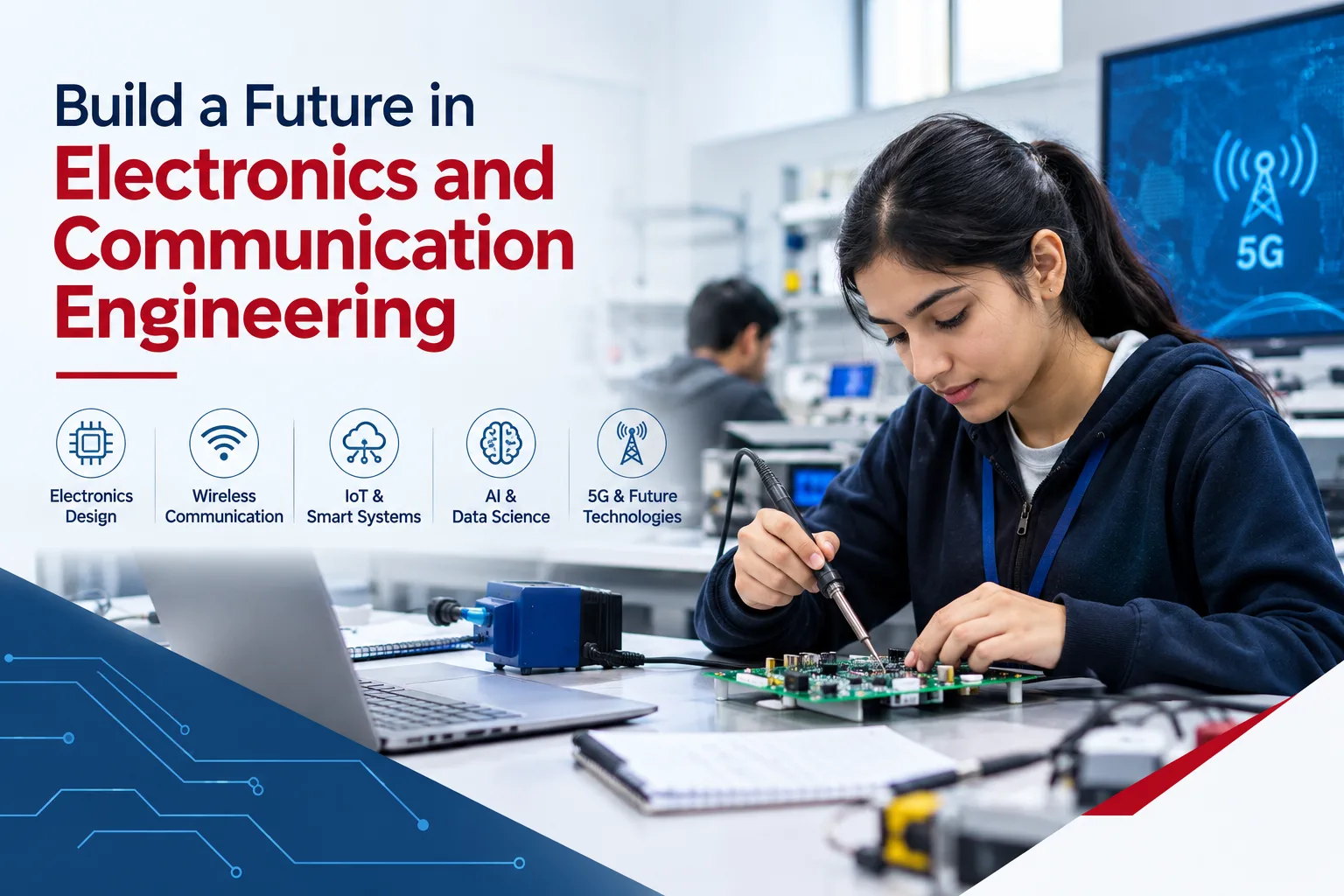
Electronics and Communication Engineering (ECE) is one of the most versatile engineering disciplines for students interested in electronics, communication technologies, embedded systems and emerging digital solutions. With rapid developments in 5G, Internet of Things (IoT), artificial intelligence, robotics, semiconductor technology and smart devices, the demand for skilled electronics and communication engineers continues to grow across multiple industries.
Why Choose B.Tech Electronics and Communication Engineering?
A B.Tech in Electronics and Communication Engineering provides students with a strong combination of theoretical knowledge, technical skills and practical exposure. The programme introduces learners to important areas such as electronic circuits, digital electronics, communication systems, microprocessors, signal processing, embedded systems and wireless technologies.
Students also gain an understanding of how electronic devices and communication networks are designed, developed and tested. This makes ECE a suitable choice for students who want to explore careers in both core engineering and technology-driven industries.
For students searching for the best btech ece university in punjab, it is important to consider factors beyond academics. A strong engineering programme should provide modern laboratories, industry-oriented curriculum, experienced faculty, practical projects and opportunities to work with emerging technologies.
Industry-Oriented Learning and Practical Exposure
Modern engineering education requires more than classroom learning. Practical experience enables students to understand how engineering concepts are applied to real-world challenges. B.Tech ECE programmes increasingly focus on laboratory experiments, simulations, project-based learning and technical activities.
Students can develop practical understanding in areas such as electronic circuit design, communication systems, microcontrollers, embedded systems, semiconductor applications and signal processing. Exposure to modern engineering tools and technologies can help learners develop problem-solving and analytical skills required by today’s technology industry.
Industry-integrated learning can further strengthen the academic experience by connecting students with real-world applications. Specialised programmes can also introduce learners to interdisciplinary areas such as Data Science & Artificial Intelligence, IoT and automation, allowing them to expand their technical capabilities.
Emerging Technologies in ECE
The scope of Electronics and Communication Engineering has expanded significantly with the emergence of advanced technologies. Students can explore several technology areas during their academic journey, including:
- Embedded Systems and Microcontrollers
- Internet of Things (IoT)
- Wireless and Mobile Communication
- 5G and Advanced Communication Technologies
- VLSI and Semiconductor Technology
- Artificial Intelligence and Machine Learning
- Data Science
- Robotics and Automation
- Signal Processing
- RF and Microwave Engineering
- Power Electronics
The combination of electronics with artificial intelligence and data-driven technologies is particularly relevant for the future. Interdisciplinary learning can help students understand how intelligent devices, connected systems and automated solutions are developed.
Career Opportunities After B.Tech ECE
One of the biggest advantages of Electronics and Communication Engineering is its broad career scope. Graduates can explore opportunities across telecommunications, electronics manufacturing, automotive technology, IT, networking, healthcare equipment, semiconductor industries and research.
Depending on their interests and technical skills, graduates can pursue roles such as:
- Electronics Engineer
- Embedded Systems Engineer
- Telecom Engineer
- Network Engineer
- VLSI Engineer
- RF Engineer
- Signal Processing Engineer
- Embedded Developer
- Electronics Design Engineer
- Communication Systems Engineer
ECE graduates can also prepare for higher education, research opportunities and competitive examinations. Those interested in software and emerging technologies can combine their electronics background with programming, AI, data science or cybersecurity skills to access a wider range of career opportunities.
Choosing the Right University for ECE
When selecting an electronics and communication engineering college, students should evaluate the curriculum, laboratory facilities, faculty expertise, industry exposure, placement support and opportunities for innovation. A university that combines theoretical concepts with practical learning can help students build stronger technical foundations.
Students should also look for opportunities to participate in technical projects, workshops, internships, competitions and research activities. Such experiences can improve their confidence and help them understand industry expectations before entering the professional world.
Start Your Engineering Journey with Future-Ready Skills
B.Tech ECE is no longer limited to traditional electronics and communication systems. The field now connects with AI, IoT, robotics, semiconductors, embedded technologies and advanced communication networks. This makes it an attractive engineering option for students who want to work with technologies shaping the future.
With an industry-focused curriculum, practical learning environment, modern engineering infrastructure and specialised opportunities in emerging technologies, CGC University,Mohali provides students with an environment to develop technical knowledge and career-ready skills in Electronics and Communication Engineering. Its ECE offerings also include pathways combining electronics with Data Science and Artificial Intelligence, supporting interdisciplinary learning for evolving technology careers.
Choosing the right B.Tech programme is an important step toward a successful engineering career. By developing strong fundamentals, gaining practical experience and continuously learning emerging technologies, students can prepare themselves for exciting opportunities in electronics, communication and the wider technology sector.