Docklands is changing. Not just in the way it always changes—new towers rising, old precincts maturing—but in a more fundamental way. The suburb is being knitted back into Melbourne's fabric through a series of major public infrastructure projects that will reshape what it means to live here.
For buyers considering a brand-new apartment, understanding these shifts is essential. Docklands has long been defined by what it lacks: a village feel, heritage character, seamless connections to the rest of the city. The projects now underway address exactly those gaps.
The Greenline Project: Docklands' Missing Link
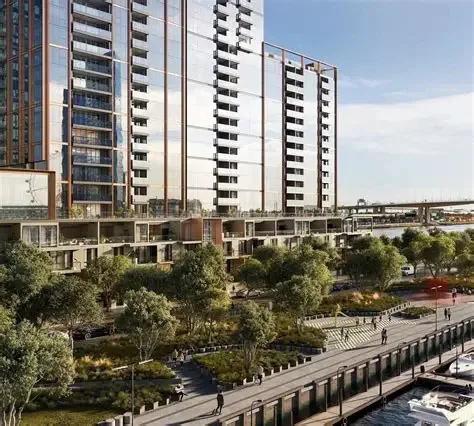
The City of Melbourne's Greenline Project is transforming the Yarra riverfront with new promenades, boardwalks, and parklands extending into Docklands . This isn't a cosmetic upgrade. It is the infrastructure that Docklands has needed since its inception—a continuous, walkable waterfront that connects the precinct to the CBD and beyond.
For apartment buyers, this matters in practical terms. Waterfront apartments have always commanded a premium in Docklands, but the Greenline extends that waterfront access further inland and along the river, potentially lifting values across a broader range of buildings. The project also addresses one of Docklands' persistent criticisms: that it feels disconnected from the rest of Melbourne. A continuous riverfront promenade changes that equation.
The Cycling Super-Highway
In April 2025, the Victorian Government opened a new 220-metre walking and cycling bridge over Footscray Road, suspended from two 40-metre steel pylons . This bridge links the Docklands retail precinct to the Capital City Trail and Moonee Ponds Creek Trail, forming part of what the government describes as "Australia's premiere cycling super-highway" .
The bridge is the first stage of a broader transformation of the Footscray Road corridor, including a 2.5-kilometre veloway that opened later in 2025 . For Docklands residents, this means genuinely safe, dedicated cycling infrastructure connecting to the city and the western suburbs.
For apartment buyers, this is a meaningful amenity shift. Docklands has always been car-dependent for anything beyond the free tram zone. The cycling network makes car-free living more practical for a wider range of residents—particularly the professionals and downsizers who are already the suburb's core buyer profile .
What's Actually Being Built
Collins Wharf: Lendlease's Waterfront Masterplan
The most significant for-sale development in Docklands remains Collins Wharf, Lendlease's waterfront precinct at 971 Collins Street. The development comprises 303 apartments across two towers—Ancora (28 storeys) and Regatta—both of which have reached full height .
Ancora secured over 50 percent in presales before construction commenced, indicating genuine demand for well-positioned waterfront stock . The development offers one, two, and three-bedroom apartments, plus a Premier Collection of three and four-bedroom townhouses, penthouses, and larger-scale residences.
Residents will have access to a hotel-style lobby with concierge, a private dining room, two rooftop terraces, and shared wellness facilities including an indoor swimming pool, spa, sauna, steam room, and gym . The building is all-electric with EV infrastructure, targeting a 5 Star Green Star certification.
Completion is expected in 2027.
Trielle at Yarra's Edge: Mirvac's Premium Play
Trielle at 16 Point Park Crescent comprises 188 residences across 45 floors, with a north-facing riverfront position that is genuinely difficult to replicate . Developed by Mirvac, the project includes one, two, three, and four-bedroom apartments, sub-penthouses, and a limited collection of terrace homes.
The amenity offering is extensive: a 25-metre lap pool, sauna, hot magnesium pool, biophilic gym, Yoga and Pilates room, day spa treatment rooms, resident library, business-class work pods, piano lounge, cinema room, golf simulator studio, and concierge service . A rainforest garden with a trickling stream sits seven stories above the Yarra River promenade.
Completion is estimated for mid-2027.
The Build-to-Rent Wave
A significant portion of Docklands' new housing supply is build-to-rent, meaning it will not be sold to individual buyers. This is critical context for anyone considering an investment purchase.
Lendlease's 899 Collins Street has reached full height—a 24-level tower delivering 499 build-to-rent apartments with studio, one, two, and three-bedroom configurations . The development includes a 25-metre heated outdoor pool overlooking Victoria Harbour, rooftop barbecue area, sauna, steam room, gym, co-working lounge, home theatre, pet spa, podcast studios, and private dining rooms . It will also deliver Bourke Dock, a new waterfront public park with 1,000 square metres of open space and a major public artwork .
District Living Docklands is even larger. Construction commenced in December 2025 on what Development Victoria describes as one of Australia's largest build-to-rent precincts . The two-stage project will deliver more than 925 build-to-rent homes, with Stage One comprising 626 apartments and over 2,200 square metres of communal amenities including a wellness centre, gym, plunge pool, sauna, steam room, and sky terrace .
A further 554 build-to-rent homes have been approved at 696-699 La Trobe Street, comprising a 38-storey tower with studio to three-bedroom apartments, positioned next to Marvel Stadium . The development includes a seven-storey podium with co-working space, fitness centre, and lounge, plus a contribution equivalent to 10 percent of homes being available as affordable housing .
The Market Context
Docklands' rental market remains the strongest in inner Melbourne, with gross yields well above the metro average . Well-presented apartments are leasing quickly, often attracting multiple applications within days . Interest is particularly strong in waterfront precincts like Victoria Harbour and Yarra's Edge, where downsizers and returning CBD professionals are seeking space and walkability .
However, the build-to-rent pipeline adds a new variable. When hundreds of professionally managed rental apartments reach completion simultaneously, tenants gain more choice—and individual investor-landlords face stiffer competition.
What to Watch For
Flood risk. Docklands carries a high flood risk classification due to its reclaimed-land geography. Independent property reports flag this as a material risk affecting insurance premiums and resale perception. Review strata building reports carefully.
Body corporate fees. In amenity-rich buildings, these can materially affect net returns. Verify them before purchasing.
Aspect and outlook. North-facing apartments with city skyline views command a premium over south-facing units overlooking the water. This is a genuine value driver in Docklands.
Building-specific risk. Defects, cladding, lift reliability, and short-stay concentration can matter more than the suburb name. Inspect the specific building, not just the location .
The Verdict
Docklands is no longer simply a high-yield, low-growth apartment market. The Greenline Project, the cycling super-highway, and the build-to-rent pipeline are reshaping the precinct's fundamentals. For buyers, the opportunity lies in understanding where for-sale apartments sit relative to these changes—and choosing buildings and positions that can compete.
Waterfront position, north-facing aspect, and quality amenities remain the differentiators. But the infrastructure now under construction addresses Docklands' historic weaknesses. The suburb is becoming more connected, more walkable, and more integrated with the city it sits beside. For patient, income-focused buyers, that shift is worth watching.