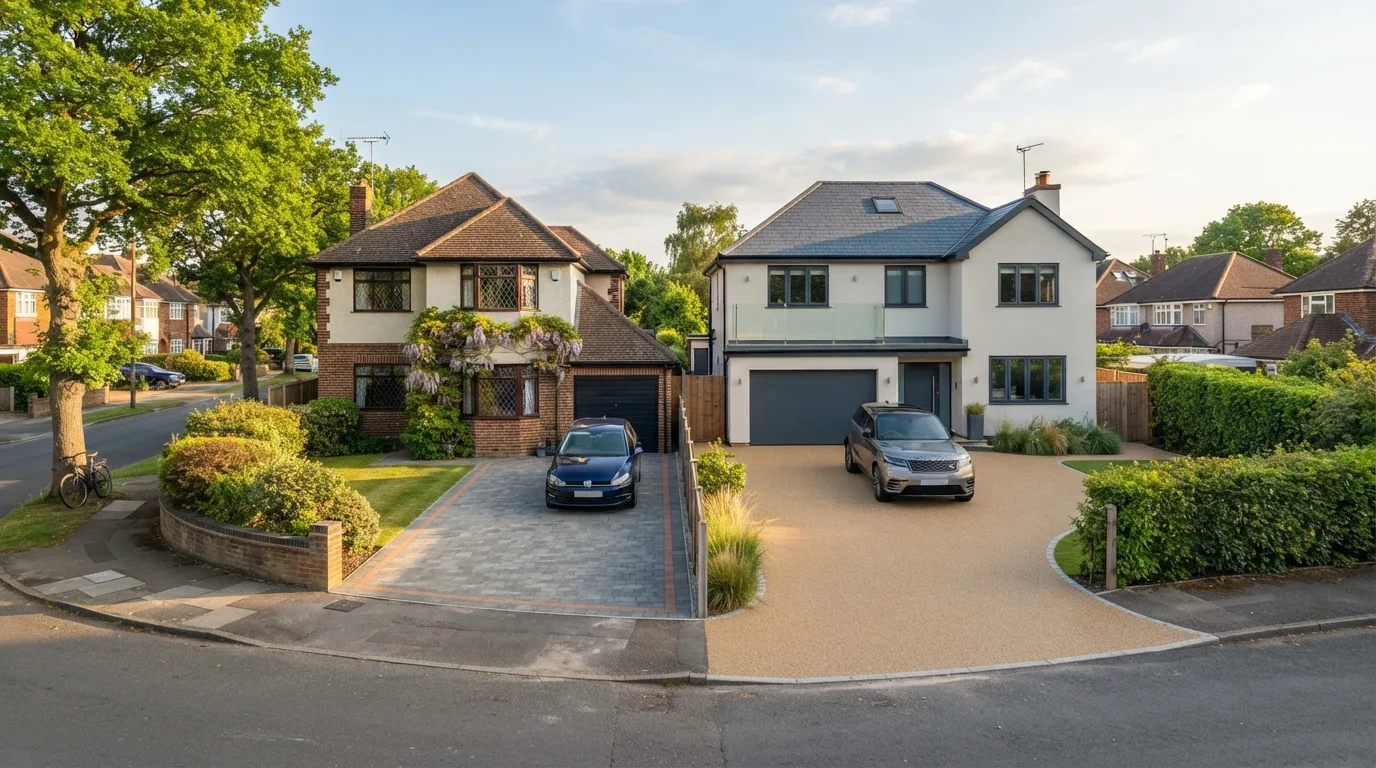
If you've started researching a new driveway, you've probably noticed something: almost every article online tells you both options are "great." That's not particularly useful when you're trying to decide where to spend several thousand pounds.
So let's skip the fence-sitting. Here's an honest, practical comparison of block paving and resin driveways: cost, durability, kerb appeal, and which one is more likely to pay you back when you sell, from the perspective of a local paving company in Enfield that installs both, every week, on streets just like yours.
The Quick Answer
There isn't a single winner. It depends on what "value" means to you. But if you're weighing resale value against a fixed budget: block paving generally wins on long-term durability and buyer familiarity, while resin wins on modern kerb appeal and low maintenance. The right choice depends on your property, your timeline, and how long you plan to stay.

Here's the detail behind that answer, including real 2026 UK pricing.
Upfront Cost
This is usually the first question, so let's put real numbers on it.
Block paving: typically runs £80 to £120 per m² for a quality installation with concrete blocks, rising to £120 to £160 per m² for clay brick, and £150 to £250 per m² for natural stone setts. For a standard one or two-car driveway, that usually lands the total job somewhere between £3,000 and £7,500.
Resin-bound driveways: typically cost £60 to £100 per m² fully installed, with most homeowners paying between £2,500 and £5,500 for a standard driveway depending on size and the resin system used.
On paper resin often looks cheaper per square metre. In practice, the gap narrows fast if your existing sub-base needs repair or replacing before resin can go down, since resin depends heavily on a solid, well-prepared foundation underneath. Block paving is more forgiving of an imperfect base because the sub-base work is part of the same job either way.
Practical takeaway: Get quotes for both on your specific driveway rather than going off average figures online. The material cost difference is often smaller than people assume; it's the groundwork that swings the price. Any reputable Enfield paving contractor should be quoting the sub-base work separately and clearly, not folding it into a vague lump sum.
Durability and Lifespan
This is where the two genuinely diverge.
Block paving: can last 20 to 25+ years with basic maintenance, and here's the underrated part: it's repairable. If one block cracks or sinks, which happens occasionally after ground movement or a heavy delivery van, you lift that block, fix the base, and put it back. The rest of the driveway is untouched.
Resin driveways: are excellent for the first several years: smooth, weed-resistant, and low-maintenance. But resin is a bonded surface, not individual units. If it's damaged (oil staining, a crack from ground movement, or poor original installation), you often can't do a discreet spot repair. Patch jobs can be visible against the surrounding resin, and in worse cases you're looking at redoing a whole section, typically £1,200 to £2,100 just for a small resurfacing job.
Quality of installation matters enormously here. A poorly mixed or poorly laid resin driveway can start "de-bonding," where the resin lifts off the surface, within a few years, while a well-installed one from a reputable contractor can last well over a decade (15 to 20 years is the realistic range).
Practical takeaway: If longevity and easy repairs matter most, block paving has the edge, and the higher upfront cost buys you 20+ years without a major resurfacing bill. If you want a smooth, contemporary look and you're working with a trusted, experienced installer, resin holds up well too, but installer quality matters more with resin than with almost any other driveway material. This is exactly why it's worth vetting paving contractors in Enfield on past resin work specifically, not just paving in general.
Kerb Appeal and Buyer Perception
Here's something estate agents will tell you that contractor blogs rarely mention: kerb appeal is genuinely one of the highest-ROI improvements you can make to a property. Your driveway is a huge part of that first impression, because it's the first thing anyone sees before they even reach your front door.
Block paving: reads as classic, established, and safe. It suits period properties, traditional streets, and buyers who aren't looking for anything unusual. It's also available in enough colours, patterns, and block styles that it doesn't have to look generic.
Resin: reads as modern, clean, and low-fuss. It suits newer builds, contemporary renovations, and buyers who want something that looks "finished" with minimal upkeep. The seamless surface and permeable options, good for drainage and SUDS compliance, are a genuine selling point for eco-conscious buyers.
Practical takeaway: Match the driveway style to your property type and your target buyer, not just your personal taste. A resin driveway on a Victorian terrace can look slightly out of place; block paving on a brand-new architect-designed new-build can look dated by comparison.
Maintenance
Block paving needs occasional re-sanding of joints and periodic pressure washing to stop weed growth and moss between blocks. It's not intensive, but it is ongoing, and it's a small, low, recurring cost rather than a one-off.
Resin is close to maintenance-free day to day. There are no joints for weeds to grow through, and a quick wash keeps it looking clean, a real selling point for buyers who don't want driveway upkeep on their list of chores.
Practical takeaway: If low maintenance is your priority (busy households, rental properties, older homeowners who don't want the hassle), resin has a clear advantage.

Quick Comparison Table
FactorBlock PavingResin BoundTypical cost (per m²)£80 to £250 depending on material£60 to £100Typical total cost (standard drive)£3,000 to £7,500£2,500 to £5,500Typical lifespan20 to 25+ years15 to 20 years (installer-dependent)Repair methodLift and replace individual blocksFull or sectional resurfacing, harder to patch discreetlyMaintenanceOccasional re-sanding, pressure washingMinimal, no joints for weedsBest suited toPeriod and traditional propertiesNew builds and contemporary renovationsDrainageRequires designed falls and jointingNaturally permeable, good for SUDS complianceInstaller sensitivityModerateHigh, poor installation fails fasterSo Which Adds More Value?
If you're renovating specifically to boost resale value before selling, the honest answer is: either can add value, but only if it's installed well and suits the property. A beautifully laid driveway in the wrong material for the house can actually undersell it, while the right material laid competently will consistently improve kerb appeal and buyer confidence.
A few rules of thumb:
- Selling within 1 to 2 years? Prioritise kerb appeal and buyer familiarity over which material is theoretically more durable. Most buyers won't be thinking about 20-year lifespan; they're reacting to how the house looks on the day they view it.
- Staying long-term? Weigh durability and repairability more heavily, since you're the one living with (and eventually maintaining) the surface, and the cost per year of ownership matters more than the upfront number.
- On a tight budget? Get comparable quotes for both, including any groundwork needed, before assuming one is cheaper. The base preparation often matters more than the surface material or the headline price per m².
Whichever you choose, installer quality matters more than the material. A well-installed resin driveway will consistently outperform a badly laid block paving job, and vice versa. Look for solid sub-base preparation, proper drainage falls, and, ideally, photos of the installer's previous work.
Conclusion
Block paving and resin aren't really competing on the same axis. Block paving is the safer long-term bet for durability, easy repairs, and predictable long-term cost; resin is the stronger choice for modern kerb appeal, lower upfront cost, and low-maintenance living. Neither is objectively "better" for adding value. The right one is whichever suits your property, your budget, and how long you're planning to stay.
If you're still torn between the two, the most useful next step isn't more research. It's getting a proper site visit and a like-for-like quote on both options for your specific driveway. As a local paving company in Enfield, ground conditions and existing sub-base often decide the answer, and the actual cost, more clearly than any general comparison article can, so get in touch for a free, no-obligation site assessment.