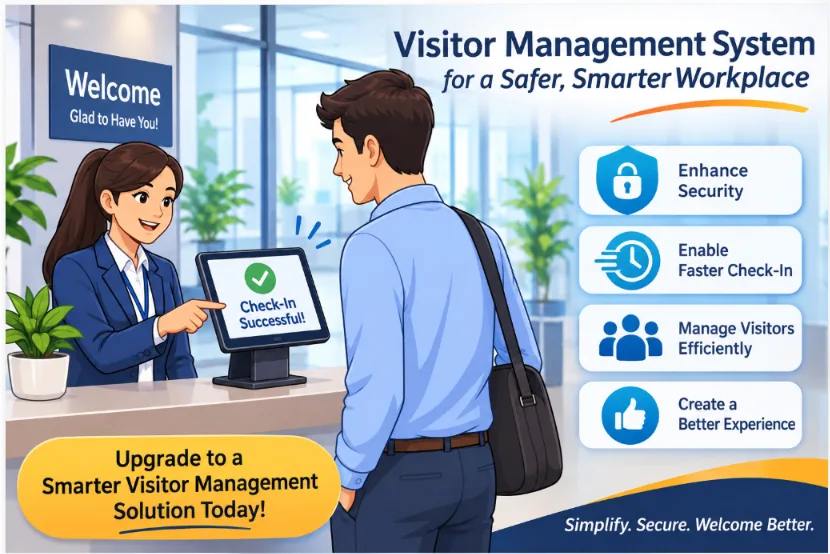
Imagine a busy office where guests come and go throughout the day, staff are busy in meetings and security teams need to manage a number of access points. Paper registers are often perceived as the simple answer but they can easily become a source of delay, security holes and unnecessary administration.
As businesses become more connected, they need smarter ways to manage people entering their premises. A modern visitor management system helps organizations to streamline check-ins, increase security, and offer a professional experience for all guests.
Digital visitor management is becoming a key component of facility operations, from corporate offices to manufacturing plants, hospitals and residential communities.
Why Traditional Visitor Management Is No Longer Enough
Many organizations still depend on handwritten registers, manual identity verification, and phone calls to employees before allowing visitors inside. Although these methods may work for a small number of guests, they become difficult to manage when visitor traffic increases.
Common challenges include:
- Long waiting times: Visitors spend unnecessary time completing manual registration.
- Security concerns: Paper records can be misplaced, damaged, or accessed by unauthorized individuals.
- Limited visibility: Security teams may struggle to identify who is currently inside the premises.
- Administrative workload: Maintaining and searching through physical records takes valuable time.
- Poor visitor experience: Manual processes can make an organization appear outdated.
These challenges highlight why businesses are moving towards technology-driven visitor management solutions.
How Visitor Management Software Improves Workplace Operations
A modern visitor management software solution replaces repetitive manual activities with a structured digital process. It allows receptionists and security personnel to register guests, notify employees, and maintain organized visitor records.
Visitors can complete registration using a tablet, kiosk, or QR code, depending on the organization's requirements.
Some useful capabilities include:
1. Faster Visitor Check-In
Digital registration reduces paperwork and helps visitors complete the check-in process more conveniently. Pre-registration can make the process even smoother by allowing employees to invite guests before their arrival.
2. Improved Security and Verification
Organizations can record visitor information, verify identities, and maintain entry records. These details help security teams monitor access and follow established security procedures.
3. Instant Employee Notifications
When a guest arrives, the concerned employee can receive an automatic notification. This reduces unnecessary calls and helps employees respond promptly.
4. Centralized Visitor Records
Digital records make it easier to review visitor history, track entry and exit activities, and retrieve information when required.
5. Better Visitor Experience
A smooth reception process creates a positive first impression. Visitors can spend less time waiting and more time focusing on their meetings or appointments.
Why Businesses Are Choosing an Automated Visitor Management System
The automated visitor management system is not just a digital registration. It integrates the various visitor-related activities into a more structured workflow.
For instance, when a guest arrives for a scheduled meeting, the system can recognize the appointment, log the visitor’s details, inform the host, and keep the check-in information.
It reduces the need for manual coordination and allows receiving teams to focus on more important tasks.
This is especially helpful for organizations with multiple departments and high volumes of visitors, contractors, delivery workers and external service providers.
Businesses can also benefit from features such as:
- Visitor pre-registration and appointment scheduling.
- QR-code-based check-in and check-out.
- Host notifications and visitor approvals.
- Badge printing and visitor identification.
- Emergency visitor reporting.
- Customizable access rules and digital records.
The exact features required will depend on the organization's size, industry, and security policies.
Digital Visitor Management System: Supporting Smarter Facilities
A digital visitor management system enables businesses to implement a more cohesive and transparent system for managing entry.
Unlike conventional systems, the digital option allows users access to systematic data whenever required. This feature becomes increasingly significant for large buildings that have multiple entries and departments that do work with visitors.
For example, a manufacturing plant has to be able to deal with employees, suppliers, contractors, and business partners on a daily basis. Establishing accurate identity and registration of visitors could prove very troublesome.
The digital solution helps security staff comply by following the same procedure in all situations – the digital option also permits supervisors to monitor all visitors.
The same method could be applied for IT companies, educational institutions, hospitals, shopping malls, and secured districts.
What Should Businesses Consider Before Selecting a Solution?
Choosing the right technology requires more than comparing features. Organizations should identify their operational challenges and select a solution that addresses their actual requirements.
Here are some important considerations:
Ease of Use: The interface should be simple for receptionists, security teams, and visitors.
Customization: Different industries may require different registration fields, approval workflows, and visitor categories.
Data Security: Check how visitor information is stored, protected, and accessed.
Reporting Capabilities: Look for useful reports that help management understand visitor activity.
Scalability: The solution should support future business growth and additional locations.
Integration: Consider whether the platform can work with existing access control systems or other workplace applications.
Selecting a suitable solution can help businesses improve daily operations without introducing unnecessary complexity.
Conclusion
A modern visitor management system is essential for creating safer, smarter, and more organized workplaces. By adopting visitor management software, businesses can reduce paperwork, strengthen security procedures, and provide a seamless experience for guests. Whether using an automated visitor management system or a digital visitor management system, organizations can simplify daily operations and manage visitors more effectively.
Still relying on paper registers and manual entry processes? It's time to upgrade to a smarter approach. The right digital solution can help your organization improve workplace security, streamline reception activities, and maintain accurate visitor records.
Looking to make visitor management easier and more secure? Get in touch with our team to explore a reliable solution that meets your business requirements and supports your organization's growth.
Frequently Asked Questions
1. What is a visitor management system?
A visitor management system is a digital solution that helps organizations register visitors, monitor entry and exit activities, notify employees, and maintain visitor records.
2. How does visitor management software improve security?
It helps maintain organized visitor information, supports identity verification, and provides authorized personnel with better visibility into visitor activities.
3. Is an automated visitor management system suitable for small businesses?
Yes. Small businesses can also benefit from faster check-ins, reduced paperwork, employee notifications, and organized visitor records.
4. Can a digital visitor management system support multiple locations?
Depending on the platform, businesses can manage visitor activities across different offices and facilities through centralized processes.
5. Which industries can benefit from visitor management solutions?
Corporate offices, manufacturing facilities, hospitals, schools, IT companies, commercial buildings, and residential communities can all benefit from digital visitor management.