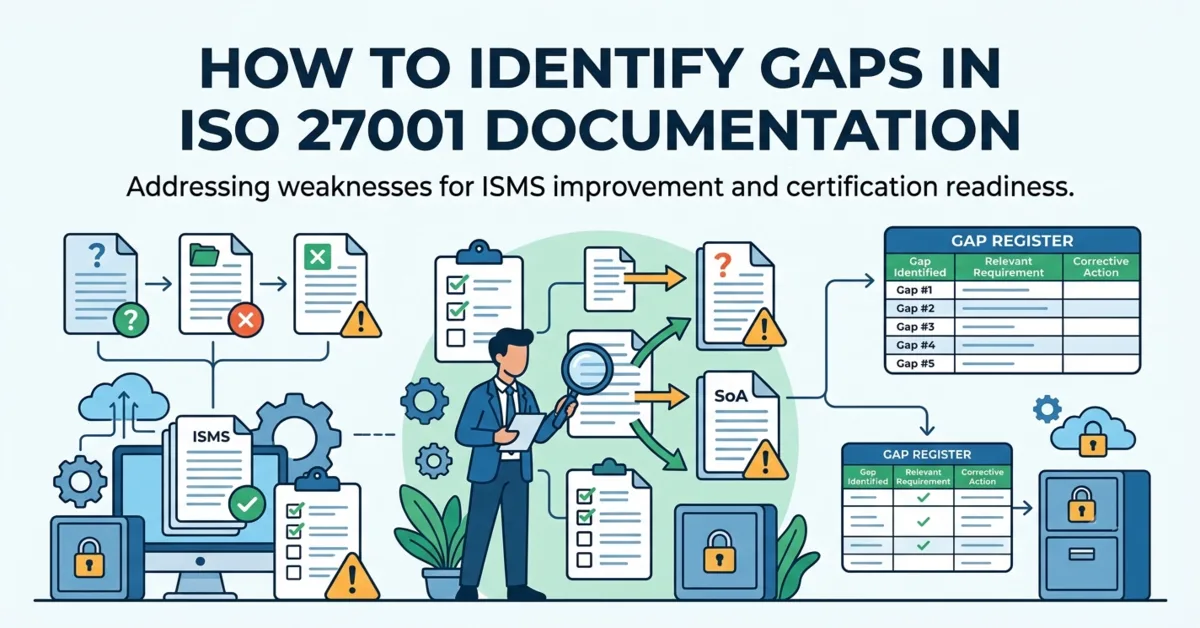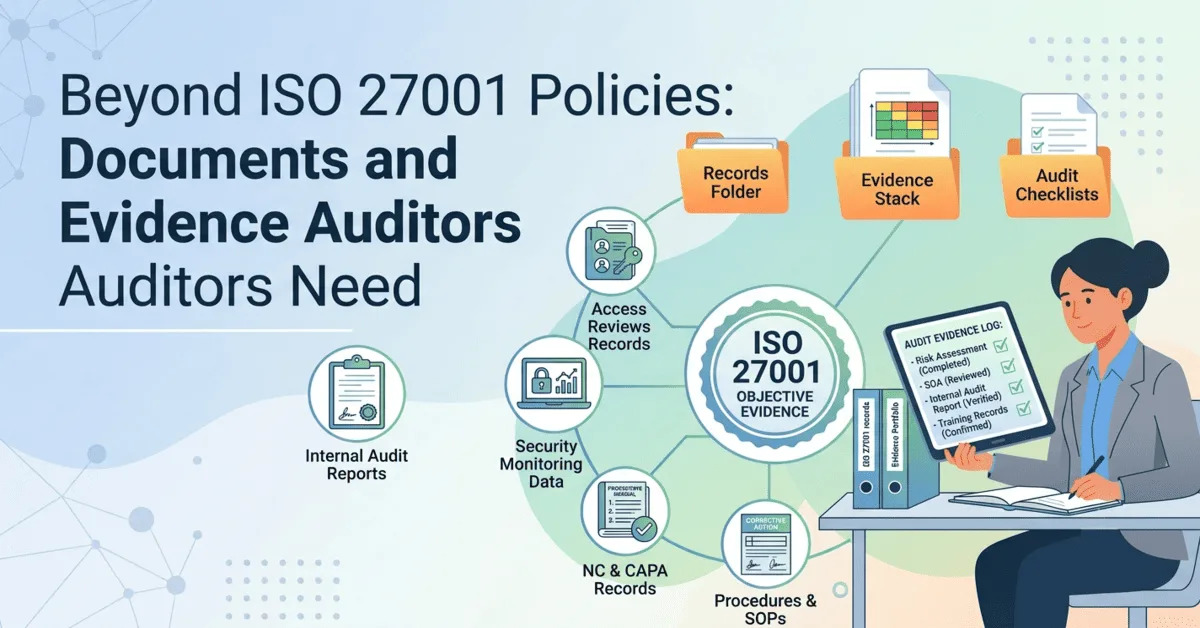
An ISO 27001 audit is not simply a review of whether an organization has an information security policy. Auditors need to see how the Information Security Management System (ISMS) is planned, implemented, monitored, and continually improved. This means organizations need more than policies; they need documented information and objective evidence showing that their security processes and controls operate as intended.
Why Are ISO 27001 Policies Not Enough?
Policies establish management direction and communicate expectations for information security. However, a policy alone does not demonstrate that an organization has implemented its requirements. During an audit, evidence may include procedures, records, risk assessments, internal audit results, management review outputs, training records, and other documented information.
ISO/IEC 27001 requires organizations to establish, implement, maintain, and continually improve an ISMS that addresses information security risks. Therefore, auditors may look for evidence connecting documented requirements with actual activities and results.
What ISO 27001 Documents May Auditors Review?
The exact documentation depends on the organization's scope, activities, risks, and ISMS arrangements. However, an audit can involve reviewing important ISO 27001 documents such as the ISMS manual, information security policies, procedures, standard operating procedures, risk assessment methodology, risk assessment results, risk treatment information, and the Statement of Applicability (SoA).
The SoA is particularly important because it explains which applicable controls have been selected, their implementation status, and the justification for including or excluding controls. The selection of controls should be supported by the organization's information security risk assessment and risk treatment process. Organizations can also review ISO 27001 information security risks to better understand how identified risks relate to the ISMS and its controls. ISO/IEC 27001 auditing guidance specifically addresses how auditors should interpret and use the SoA during assessment.
What Evidence Demonstrates That the ISMS Is Working?
Auditors generally need evidence that planned processes are actually being performed. This can include completed risk assessments, risk treatment records, information security objectives and monitoring results, training and competence records, access reviews, incident records, backup evidence, supplier-related records, internal audit reports, corrective action records, and management review outputs.
For example, having an access control procedure demonstrates how access should be managed. Evidence of completed access reviews or authorization records can help demonstrate that the defined process is being implemented.
Similarly, an internal audit procedure explains how audits are planned and conducted, while audit schedules, reports, findings, and corrective action records provide evidence of actual performance. BSI's ISO/IEC 27001 assessment guidance also highlights areas such as internal audits, management reviews, documented operating procedures, corrective actions, and controlled documents and records.
How Should Organizations Prepare for an ISO 27001 Audit?
A practical approach is to map each important ISMS requirement to the documentation and records that demonstrate implementation. Organizations should check whether documents are current, approved, controlled, and accessible to relevant personnel. They should also verify that records are complete, traceable, and consistent with actual activities.
This preparation helps identify gaps before the certification audit. It also makes it easier for employees to understand their responsibilities and demonstrate how security controls operate within daily business processes.
Build a Complete ISO 27001 Documentation Framework
Preparing every document, procedure, policy, form, and supporting record from scratch can take considerable time. A structured documentation framework can provide a practical starting point while allowing organizations to adapt the materials to their own scope, risks, processes, and control environment.
A well-organized ISO 27001 documentation set can bring policies, procedures, SOPs, risk documentation, the Statement of Applicability, compliance information, forms, and audit-supporting materials into one framework. This can help organizations prepare more systematically for implementation and certification activities.
The goal is not simply to have more documents. The goal is to maintain relevant documentation and reliable evidence that demonstrate how the ISMS operates and supports information security objectives.
Conclusion
ISO 27001 audits require more than policies. Proper procedures, records, risk documentation, and objective evidence help demonstrate that the ISMS is implemented and maintained effectively.