A customer calls to check an order, ask about a service, or book an appointment. Meanwhile, your support team is already handling several other conversations. The caller waits, the queue grows, and a simple question takes longer than it should.
This is where an AI Voice Bot can make a difference. Instead of relying only on recorded messages and keypad options, businesses can use conversational voice technology to understand customer requests, respond naturally, and handle routine tasks over the phone.
From “Press 1” to Conversations That Make Sense
Traditional IVR systems help direct calls, but customers may still need to navigate menus before reaching the right information. An AI Voice Bot takes this a step further by allowing callers to speak naturally and receive relevant responses.
Depending on how it is configured, it can help businesses:
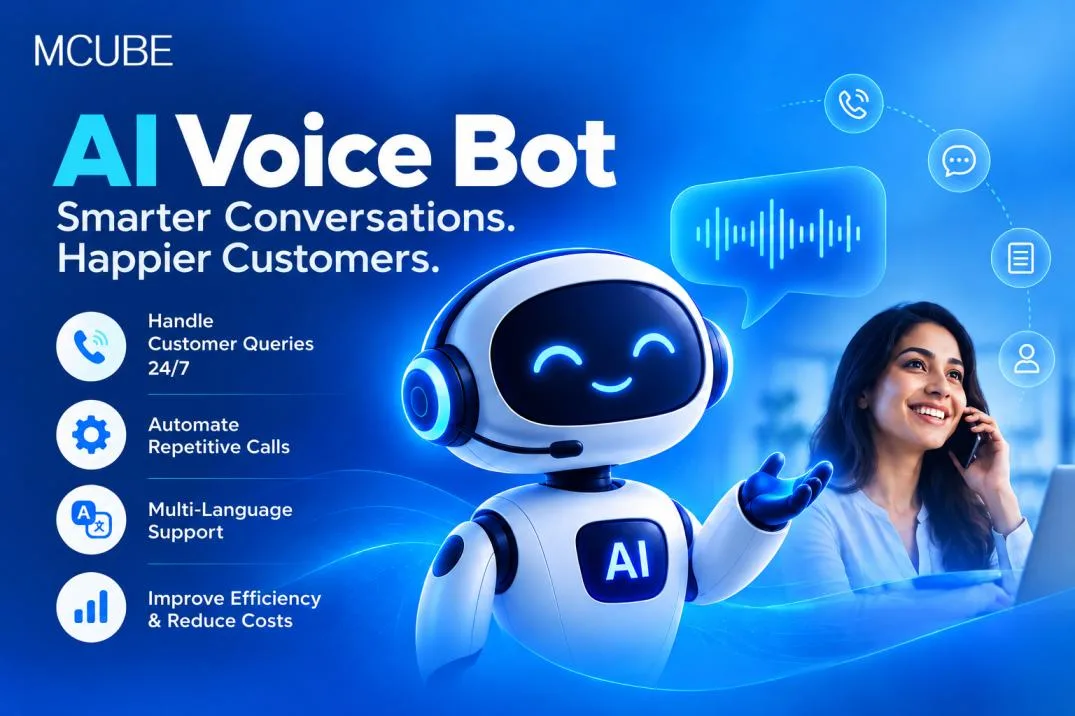
- Answer common questions: Share information about business hours, services, order updates, or appointment details.
- Manage routine requests: Support tasks such as appointment scheduling, enquiries, and basic information collection.
- Route calls intelligently: Direct customers to the appropriate team when a conversation requires human assistance.
- Handle calls beyond business hours: Provide automated responses when support teams are unavailable.
- Reduce repetitive work: Help agents spend less time answering the same questions and more time resolving complex issues.
The goal is not to make every conversation automated. It is to make simple interactions easier for customers and support teams.
What Makes AI Voice Agents More Useful?
An automated voice response works best when it understands what the caller needs and responds accordingly. This is where AI Voice Agents can add value.
Rather than following only a fixed sequence of recorded prompts, AI Voice Agents can be designed to understand spoken requests, ask relevant follow-up questions, and move a conversation towards the next step.
For example, a customer calling to reschedule an appointment may not need to speak with an agent at all. The voice system could collect the required details and help complete the request, depending on its integrations and configured capabilities.
Useful capabilities to look for include:
- Natural, conversational responses
- Support for relevant languages and customer queries
- Integration with CRM or business systems
- Configurable workflows and call routing
- A smooth transfer to a human agent when needed
These capabilities help businesses build a calling experience around customer needs rather than forcing every caller through the same process.
Where Can Businesses Use an AI Voice Bot?
AI voice automation can support several everyday business activities, including:
- Customer support: Answering frequently asked questions.
- Sales: Qualifying enquiries and capturing lead details.
- Appointment management: Helping customers book or reschedule appointments.
- Service updates: Sharing relevant information without requiring a live agent for every call.
- Follow-ups: Supporting reminders and outbound communication where appropriate.
The right use case depends on call volumes, the complexity of customer requests, and the information the system can access.
Choosing the Right Approach for Your Business
Not every business needs the same level of automation. Some may benefit from a voice bot that answers a handful of common questions, while others may need more advanced workflows connected to their CRM and contact centre.
Solutions such as MCUBE’s AI Voice Bot can be considered as part of this approach, particularly when businesses want to explore automated conversations alongside their existing telephony setup.
The next step in customer service is not simply answering more calls. It is making every conversation easier to complete >> https://mcube.com/ai-voice-bot/