Jaipur, the capital of Rajasthan, is a vibrant mix of royal heritage, monumental architecture, and bustling cultural bazaars. Founded in 1727 by Maharaja Sawai Jai Singh II, this UNESCO World Heritage city features pastel-pink walls, sprawling palaces, and hill fortresses perched over the Aravalli hills. For first-time visitors, navigating the sheer volume of sights in forty-eight hours can feel overwhelming. A structured, realistic plan ensures you experience the best architectural wonders, culinary delicacies, and historical landmarks without feeling rushed.
Planning your transportation and local logistics with an experienced tour operator in Rajasthan makes navigating the Pink City effortless, leaving you free to immerse yourself in its royal legacy.
Day 1: The Walled City and Royal Monuments
Morning: Hawa Mahal and Jantar Mantar
Begin your morning at the iconic Hawa Mahal (Palace of Winds). Built in 1799 from red and pink sandstone, this five-story facade features 953 honeycomb windows (jharokhas) engineered to catch cooling breezes while allowing royal women to observe street festivals undisturbed. The best lighting for photography hits the facade between 7:30 AM and 9:00 AM.
A five-minute walk through the Old City leads to Jantar Mantar, an extraordinary early-18th-century astronomical observatory. It houses the world's largest stone sundial, the Vrihat Samrat Yantra, which measures local solar time with an accuracy of two seconds. Hiring an accredited local guide here is invaluable, as they can explain how these massive geometric stone structures track constellations, planetary movements, and solar equinoxes.
Midday: City Palace Complex
Directly adjacent to Jantar Mantar stands the City Palace, the ceremonial seat of the Maharaja of Jaipur. The palace complex seamlessly blends Rajput, Mughal, and European architectural influences.
- Mubarak Mahal: A reception pavilion displaying royal textiles, Kashmiri shawls, and ceremonial robes.
- Diwan-i-Khas: Home to two gigantic sterling silver urns (Gangajalis), officially certified as the largest silver objects in the world.
- Pritam Niwas Chowk: An inner courtyard with four exquisite gateways dedicated to the seasons, including the iconic Peacock Gate.
Plan to spend approximately ninety minutes walking through the courtyards and galleries. If you are looking for an organized, guided schedule that bundles these central monuments seamlessly, booking a dedicated jaipur full day tour will maximize your sightseeing time and help you skip chaotic ticket queues.
Afternoon: Bazaars and Albert Hall Museum
Spend the early afternoon wandering through the historic markets of the Pink City. Head to Johari Bazaar for gemstone jewelry and handcrafted silver, or explore Bapu Bazaar for traditional bandhani textiles, camel leather juttis, and block-printed cotton.
After market shopping, take a short auto-rickshaw ride south to the Albert Hall Museum located in Ram Niwas Garden. This oldest museum in the state is a prime example of Indo-Saracenic architecture, housing an extensive collection of miniature paintings, metal crafts, antique arms, and a preserved Egyptian mummy.
Day 2: Hill Fortresses and Regal Lake Views
Morning: Amer Fort and Panna Meena Ka Kund
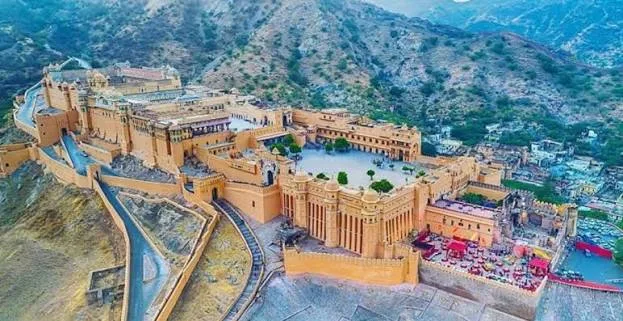
Start early on your second day by driving 11 kilometers north of the city center to the majestic Amer Fort (Amber Fort). Arriving by 8:00 AM helps you avoid peak crowds and midday heat. Overlooking the shimmering Maota Lake, Amer Fort is celebrated for its sandstone ramparts, ornamental gardens, and defensive gates.
Must-see sections inside Amer Fort include:
- Ganesh Pol: An ornate gate decorated with detailed frescoes and delicate latticework.
- Sheesh Mahal (Mirror Palace): A hall lined with concave mirrored glass tiles that illuminate the entire room when catching a single flame.
- Diwan-i-Aam: The pillared public audience hall commanding wide valley views.
Just ten minutes behind Amer Fort lies Panna Meena Ka Kund, an ancient 16th-century stepwell. Its crisscross geometric stairs and octagonal pavilions make it one of the most picturesque heritage corners in the region.
Midday: Jaigarh Fort and Jal Mahal
Continue up the hill to Jaigarh Fort, known as the Fort of Victory. Built to protect Amer Fort, it houses the massive Jaivana cannon—once considered the largest wheeled cannon in the world.
On your return journey to the city, stop along the banks of Man Sagar Lake to view Jal Mahal (Water Palace). While entry inside the palace is restricted, the lake promenade offers sweeping views of the four-story submerged red sandstone palace against the surrounding hills.
Evening: Sunset at Nahargarh Fort
End your two-day trip at Nahargarh Fort, perched along the edge of the Aravalli ridge. Built in 1734 by Maharaja Sawai Jai Singh, this fort provides panoramic views of Jaipur's urban landscape. Watching the sunset illuminate the Pink City below as dusk falls is an essential Jaipur experience.
For travelers who have extra time to spare and want to add side excursions to the sacred town of Pushkar or the historic stepwells of Abhaneri, exploring flexible jaipur three days tours provides a well-paced option to discover more of Rajasthan's heritage.
Essential Travel Tips for First-Timers
- Best Time to Visit: October through March offers pleasant weather suitable for walking and daytime exploration.
- Dress Code: Dress modestly when visiting functioning religious sites, stepwells, and palaces. Loose cotton clothing and comfortable walking shoes are recommended.
- Ticketing: Purchase the Department of Archaeology composite ticket at your first monument to save time and entry costs across multiple state-managed heritage sites.
- Culinary Highlights: Be sure to sample authentic Rajasthani delicacies like Dal Baati Churma, Pyaaz Kachori, Ghevar, and thick traditional lassi from heritage sweet shops in the old city.